
A Deep Dive into Understanding Online Insomnia Tests for Better Sleep
Facts:
- Most online tests are based on the Insomnia Severity Index (ISI).
- A growing trend is pairing self-assessments with wearable device data.
How Online Insomnia Tests Illuminate Your Sleep Patterns
In an age of digital health, gaining insights into your sleep has never been more accessible. The process of understanding online insomnia tests is a critical first step for millions seeking answers to their restless nights. These digital tools, often presented as quizzes or questionnaires, are designed to screen for symptoms commonly associated with insomnia, such as difficulty falling asleep, staying asleep, or experiencing non-restorative sleep. They serve as a preliminary, confidential way to gauge the severity of sleep problems from the comfort of your home. A proper understanding online insomnia tests involves recognizing them not as diagnostic tools, but as valuable screeners that can structure a more productive conversation with a healthcare professional.
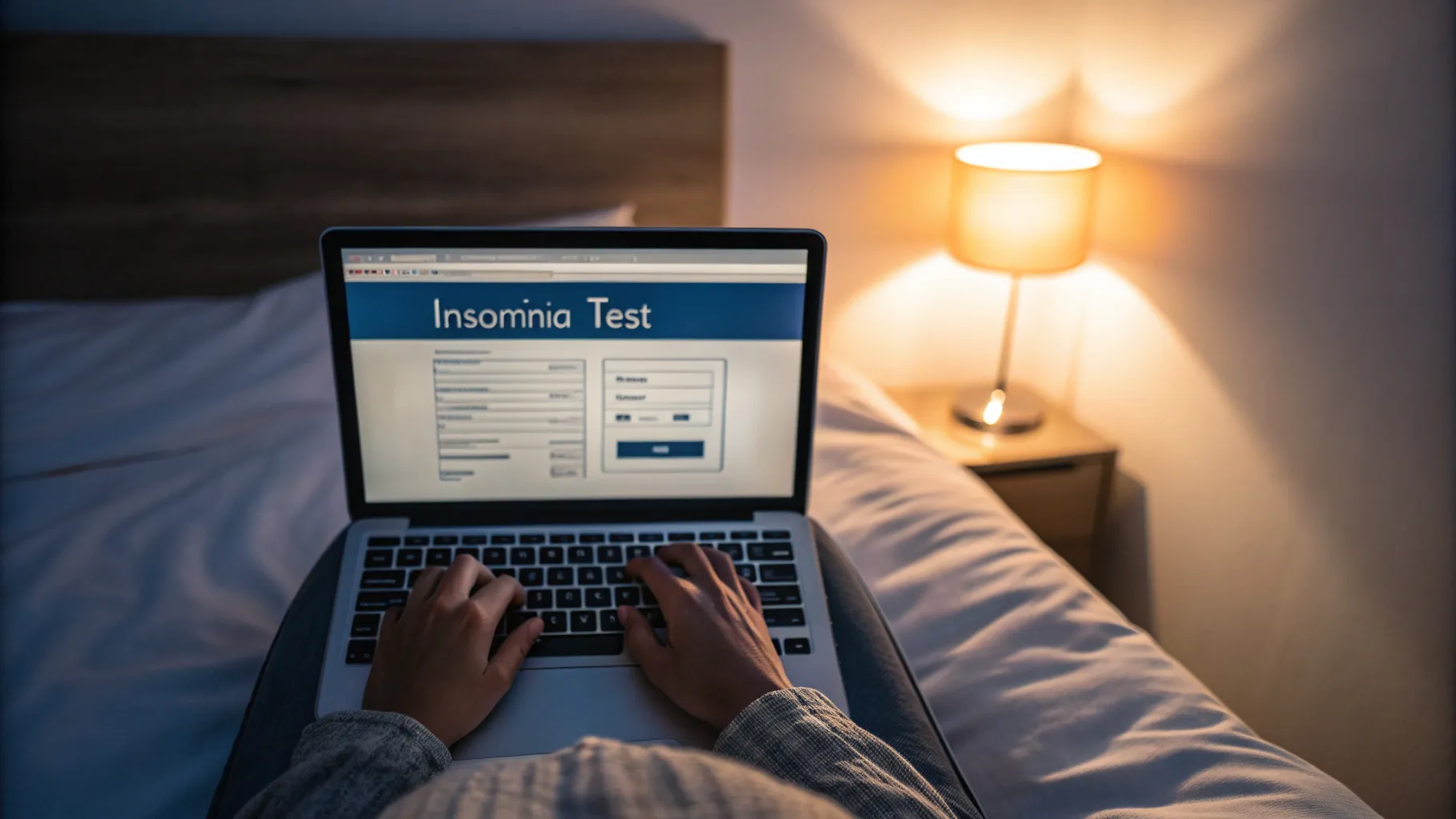
What Do Online Insomnia Tests Actually Measure?
To truly grasp the value of these tools, it's essential to look under the hood. Most reputable tests don't ask random questions; they are structured to assess specific dimensions of your sleep disturbance based on established clinical criteria. An insomnia self-assessment typically evaluates the severity of your symptoms, your satisfaction with your current sleep pattern, the degree to which your sleep issues interfere with daily functioning, and how noticeable your sleep problems are to others. They quantify aspects like sleep latency (how long it takes to fall asleep), wake after sleep onset (time spent awake during the night), and overall sleep efficiency. By answering questions about your experiences over the past few weeks, you provide data that helps create a snapshot of your sleep health. This structured approach is fundamental to understanding online insomnia tests and their outputs.
The Pros and Cons of Digital Sleep Evaluation
While incredibly useful, any digital sleep evaluation comes with its own set of advantages and limitations. It's crucial to weigh both to use these tools effectively. On one hand, their accessibility is unparalleled; they offer immediate, private, and often free feedback that can empower you to take the next step. They can help you organize your thoughts and articulate your concerns to a doctor. On the other hand, they lack the nuanced context that a clinical interview can provide. They cannot account for underlying medical conditions, medication side effects, or other sleep disorders like sleep apnea that might be causing insomnia symptoms. A key part of understanding online insomnia tests is acknowledging that they are a starting point, not the final destination for a diagnosis.
How to Choose a Reliable Online Insomnia Test
With countless options available, finding a credible test can be daunting. A critical aspect of understanding online insomnia tests is knowing how to vet them. Here are actionable steps to help you choose a reliable tool:
- Check the Source: Prioritize tests offered by reputable medical institutions, universities, or established sleep health organizations. These are more likely to be based on scientifically validated screening tools.
- Look for Clinical Foundations: A good online sleep quiz will often state that it is based on a standard clinical measure, such as the Insomnia Severity Index (ISI) or the Pittsburgh Sleep Quality Index (PSQI). This indicates a higher level of credibility.
- Review Privacy Policies: Before you enter any personal information, understand how your data will be used. A trustworthy site will have a clear and accessible privacy policy that protects your sensitive health information.
- Manage Expectations: Remember the tool's purpose. The best tests will clearly state that they are for informational or screening purposes only and do not provide a medical diagnosis. They should strongly encourage you to discuss the results with a healthcare professional.
Interpreting Your Results: The Next Steps After an Insomnia Self-Assessment
Once you've completed an insomnia self-assessment, you'll receive a score or a summary of your symptoms. This result is not a label but a data point. If your score indicates mild, moderate, or severe insomnia symptoms, the next step is not to panic, but to act. Use this information to facilitate a conversation with your doctor. Print out the results or save a screenshot. To add more context, consider keeping a simple sleep diary for a week or two, noting when you go to bed, when you wake up, and how you feel during the day. This, combined with your test results, provides a powerful and comprehensive picture for a healthcare provider, demonstrating the true value of understanding online insomnia tests as part of a proactive approach to your health.
Frequently Asked Questions
Are online insomnia tests accurate?
When based on validated clinical questionnaires like the ISI, they are generally accurate for screening purposes and assessing symptom severity. However, their accuracy is limited as they cannot diagnose the underlying cause of insomnia or rule out other medical conditions. True diagnosis requires a comprehensive evaluation by a healthcare professional.
Can an online sleep quiz replace a doctor?
Absolutely not. An online sleep quiz is a preliminary screening tool. It cannot replace the clinical judgment, diagnostic capabilities, and personalized treatment planning provided by a qualified doctor or sleep specialist. It is a tool to inform, not to diagnose.
What should I do after taking an insomnia self-assessment?
If your results from an insomnia self-assessment suggest a potential problem, the most important next step is to schedule an appointment with your doctor. Bring the results with you to help start the conversation about your sleep quality and daytime functioning.
References
- The Insomnia Severity Index: Psychometric Indicators to Detect Insomnia Cases and Evaluate Treatment Response.
- National Center for Biotechnology Information: Sleep Questionnaires.
- The Role of Digital Health in the Assessment of Sleep Disorders.