Understanding the Key Symptoms of Type 1 Diabetes
Type 1 diabetes is a condition where the body's immune system mistakenly attacks and destroys the insulin-producing cells in the pancreas. Unlike type 2 diabetes, its onset is often rapid and the symptoms can be quite pronounced. Understanding what to look for can lead to earlier medical intervention and better long-term health outcomes, particularly in children, teens, and young adults where it is most commonly diagnosed.
What Causes the Symptoms of Type 1 Diabetes?
The symptoms of type 1 diabetes arise from high blood sugar, also known as hyperglycemia. Without insulin, glucose from food cannot enter the body's cells to be used for energy. Instead, it builds up in the bloodstream. The body then tries to get rid of this excess sugar through various means, which in turn causes the characteristic symptoms of the condition.
This lack of cellular energy and the body's attempts to compensate for high blood sugar levels trigger a cascade of effects. From the kidneys working overtime to filter out glucose to the body breaking down fat for fuel, these internal processes manifest as noticeable external symptoms that should not be ignored.
The Classic Early Signs: Frequent Urination and Increased Thirst
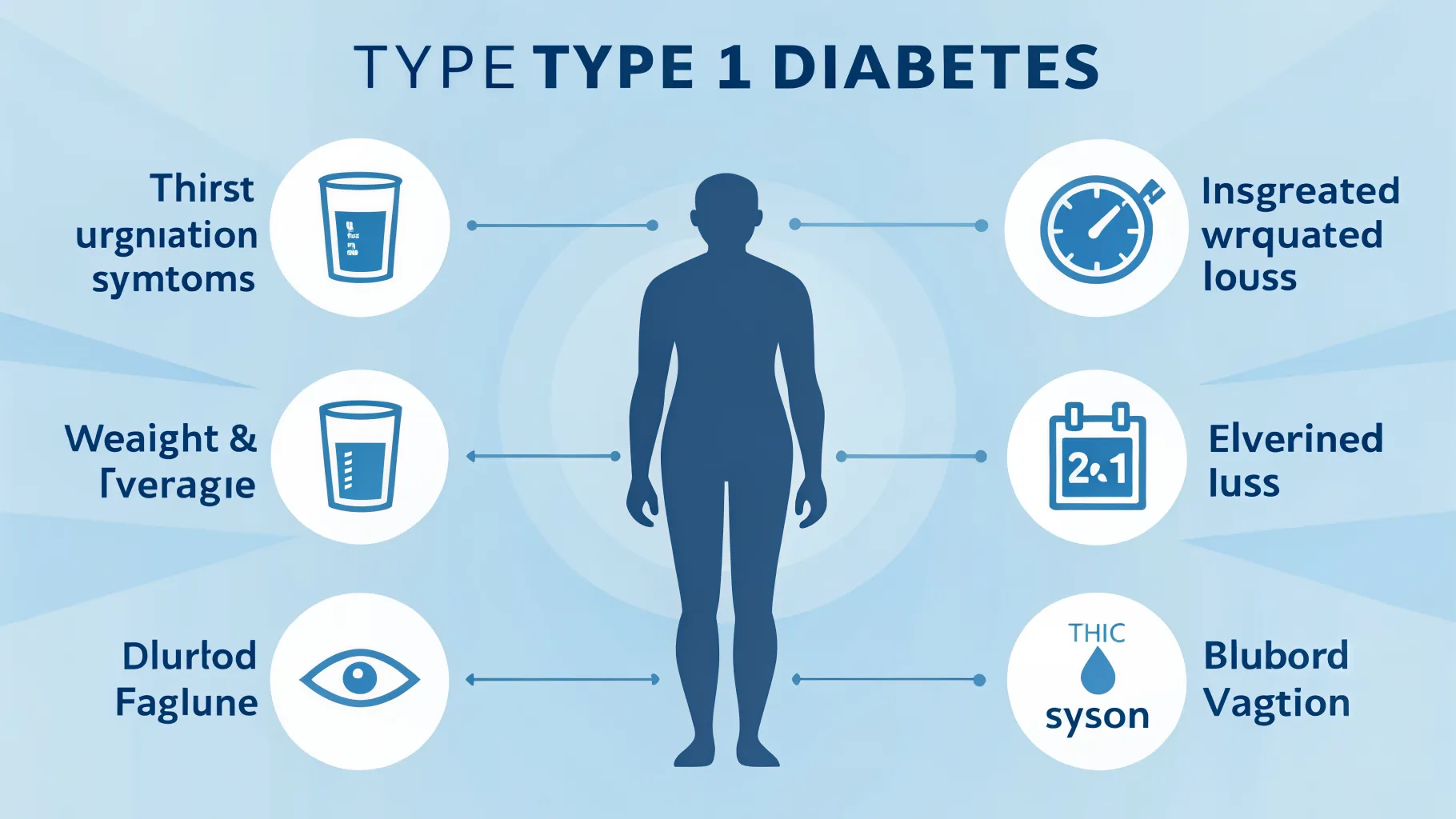
Two of the most common and earliest signs of type 1 diabetes are polyuria (frequent urination) and polydipsia (excessive thirst). When there's too much glucose in the blood, the kidneys are forced to work harder to filter and absorb it. When they can't keep up, the excess glucose is excreted into the urine, pulling fluids from your tissues along with it. This leads to more frequent urination than usual, including waking up at night to go to the bathroom.
This loss of fluids naturally leads to dehydration, which triggers an intense feeling of thirst. A person may find themselves drinking significantly more water or other fluids than normal but still feeling dehydrated. This cycle of frequent urination and excessive thirst is a hallmark of undiagnosed diabetes and is often what prompts individuals to seek medical advice.
Unexplained Weight Loss and Increased Hunger
Another key symptom is sudden, unexplained weight loss, even if you are eating normally or even more than usual. This occurs because, without insulin, your cells cannot get the glucose they need for energy. When this happens, your body starts breaking down muscle tissue and fat stores for fuel, leading to a drop in weight.
Paradoxically, alongside weight loss, a person might experience extreme hunger, or polyphagia. Because the body's cells aren't getting the glucose they need, they send signals to the brain that they are starving. This creates a persistent feeling of hunger that isn't satisfied by eating, as the consumed glucose still cannot be properly utilized for energy.
Pervasive Fatigue and Weakness
Feeling unusually tired or weak is another prominent symptom of type 1 diabetes. This fatigue stems directly from the body's inability to use glucose for energy. Every cell in your body needs glucose to function properly. When the cells are deprived of this primary fuel source, it results in a significant lack of energy, leading to feelings of lethargy, exhaustion, and overall weakness that don't improve with rest.
This isn't just the normal tiredness one might feel after a long day. It is a profound fatigue that can interfere with daily activities, concentration, and physical performance. The body is essentially running on empty, despite having high levels of fuel (glucose) circulating in the bloodstream that it cannot access.
Blurred Vision and Mood Changes
High blood sugar levels can also affect your vision. Elevated glucose can pull fluid from the lenses of your eyes, which affects their ability to focus. This can result in blurred vision that may come and go. For many, this is a temporary issue that often resolves once blood sugar levels are stabilized with treatment, but it can be an alarming symptom.
Furthermore, the physical stress of high blood sugar and the lack of energy can impact your mood. It's not uncommon for individuals with undiagnosed type 1 diabetes to experience irritability, anxiety, or mood swings. These emotional changes are a physiological response to the body being out of balance and struggling to function.
Other Significant Symptoms to Watch For
While the previously mentioned symptoms are the most common, other signs can also indicate type 1 diabetes. It's important to be aware of them, especially if they appear in conjunction with the primary symptoms.
- Fruity-smelling breath: When the body breaks down fat for fuel, it produces substances called ketones. A high level of ketones can cause the breath to have a sweet, fruity odor, similar to nail polish remover. This is a sign of a serious complication called diabetic ketoacidosis (DKA) and requires immediate medical attention.
- Slow-healing sores or frequent infections: High blood sugar can impair the body's immune system and its ability to heal. This can lead to cuts and sores taking longer than usual to heal and an increased frequency of skin, gum, or bladder infections.
- Tingling or numbness: Over time, high blood sugar can damage nerves, a condition known as neuropathy. This can cause tingling, pain, or numbness, often starting in the hands and feet.