
Understanding the Symptoms of a Herniated Disc
A herniated disc, sometimes called a slipped or ruptured disc, is a common source of neck, back, and leg pain. It occurs when the soft, jelly-like center of a spinal disc pushes through a tear in its tougher exterior, often irritating nearby nerves. Understanding the specific symptoms can provide clarity on what might be happening in your spine.
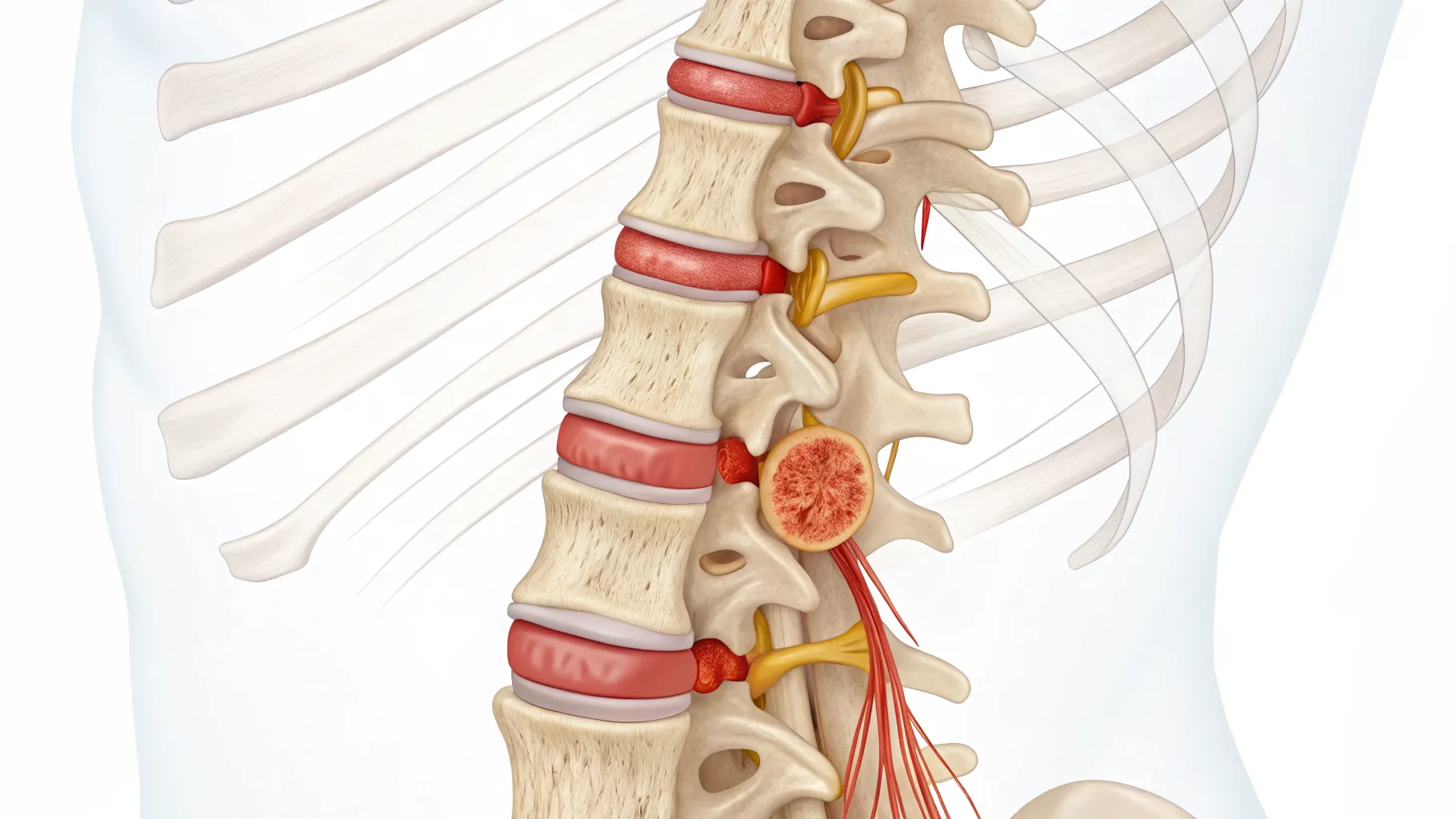
What Is a Spinal Disc and How Does It Herniate?
The human spine is made up of a series of bones called vertebrae, which are cushioned by discs. These discs act as shock absorbers, protecting the spine from daily activities like walking, lifting, and twisting. Each disc has two main parts: a soft, gel-like inner portion (the nucleus pulposus) and a tough, rubbery outer ring (the annulus fibrosus).
A herniation happens when a tear or weakness in the outer ring allows some of the inner gel to protrude. This displacement can put pressure on the spinal cord or, more commonly, one of the spinal nerve roots. This pressure is what leads to the characteristic symptoms of pain, numbness, or weakness in the area of the body that the affected nerve serves.
Common Symptoms in the Lower Back
Herniated discs are most common in the lower back, or lumbar spine. The most well-known symptom is sciatica, which refers to pain that radiates along the path of the sciatic nerve. This nerve branches from your lower back through your hips and buttocks and down each leg. Sciatica is typically felt in only one side of the body.
Beyond sciatica, other symptoms of a lumbar herniated disc can include a sharp, localized pain in the lower back, tingling or numbness in a leg or foot, and muscle weakness. You might find it difficult to lift your foot when you walk (a condition known as foot drop) or experience weakness in your leg muscles. The pain is often described as a burning or shooting sensation rather than a dull ache.
Symptoms Originating in the Neck
When a disc herniates in the neck, or cervical spine, the symptoms manifest differently. The pain typically affects the neck, shoulder blade, shoulder, and arm. It might be a sharp, shooting pain that worsens with certain neck movements, such as turning your head to one side. Some people describe it as an electrical jolt or a deep, burning ache.
In addition to pain, a cervical herniated disc can cause numbness or tingling that radiates down into the arm, hand, or fingers. You might also experience weakness in the muscles of your arm, shoulder, or hand. This can make tasks that require fine motor skills, like buttoning a shirt or writing, more difficult. Headaches, particularly at the back of the head, can also be associated with a cervical disc issue.
When and How Symptoms Can Worsen
The symptoms of a herniated disc are often dynamic and can change depending on your posture and activity level. Many people find that sitting for extended periods, especially in a slouched position, significantly worsens their pain. Activities like bending forward, lifting heavy objects, or even forceful actions like coughing or sneezing can increase the pressure on the nerve and intensify the symptoms.
Conversely, finding a comfortable position can sometimes provide relief. Lying down in a certain way, such as on your back with pillows under your knees, may ease the pressure on the affected nerve. Symptoms can also fluctuate throughout the day, sometimes feeling worse in the morning after a night of relative inactivity.
Factors That Influence Your Symptoms
Not every herniated disc causes symptoms. The presence and severity of symptoms depend heavily on the location and size of the herniation. If the disc material isn't pressing on a nerve, you might only experience a low-grade backache or have no pain at all. A larger herniation that significantly compresses a nerve is more likely to cause intense and debilitating symptoms.
The specific nerve being affected also determines where you will feel the symptoms. For example, a herniation at the L4-L5 level in the lower back will affect a different part of the leg and foot than a herniation at the L5-S1 level. An accurate diagnosis often involves identifying the pattern of symptoms to pinpoint the location of the problem disc.
Serious Symptoms That Require Attention
While most herniated disc symptoms can be managed with conservative approaches, certain signs indicate a more serious condition that requires prompt medical evaluation. This rare condition, known as cauda equina syndrome, occurs when the bundle of nerve roots at the end of the spinal cord is compressed.
Look out for the following red-flag symptoms, which warrant immediate attention:
- Loss of bladder or bowel control, or difficulty urinating even with a full bladder.
- Numbness or a loss of sensation in the areas that would sit on a saddle (inner thighs, back of legs, and the area around the rectum).
- Progressive weakness or numbness in both legs that causes stumbling or difficulty getting up from a chair.