Free eye tests and glasses grants through the HSE: who qualifies
Key facts
- Medical card holders are entitled to a free eye examination every two years and standard spectacles through the HSE 1.
- The Treatment Benefit Scheme, managed by the Department of Social Protection, provides eye test and glasses support for PRSI contributors 2.
- Children under 12 are entitled to a free pair of glasses if required, while those with sight problems receive free public care 1.
- Routine eye examinations in Ireland typically cost between 35 EUR and 70 EUR if not covered by a public scheme 3.
Navigating eye care in Ireland involves understanding that public support is not a single, universal program, but rather several distinct schemes tailored to different groups. While many residents associate optical care with the Health Service Executive (HSE), specific benefits are frequently administered through the Department of Social Protection or local primary care centers depending on a person's eligibility status. Distinguishing between these paths is essential for understanding whether an eye examination or assistance with the cost of spectacles is available.
Understanding Public Optical Support Schemes
In Ireland, public support for vision care is primarily divided into two main categories: the Medical Card system and the Treatment Benefit Scheme. Medical Card holders access their benefits through the HSE, typically by booking appointments via their local primary care centers rather than private high-street opticians 1. This entitlement includes a comprehensive eye examination every two years and provision of standard spectacles 1. It is important to note that this is a means-tested benefit, primarily intended for those on lower incomes, older individuals, or people with specific chronic health conditions 4.
For those who do not hold a medical card, the Treatment Benefit Scheme, overseen by the Department of Social Protection, is the most common route for optical assistance. This scheme is not means-tested; instead, eligibility depends on the individual's PRSI (Pay Related Social Insurance) contribution history 5. Insured workers, the self-employed, and retired individuals who meet the required PRSI threshold may qualify for a free routine eye examination once every two years 2, 6. This scheme also provides a fixed financial contribution towards the cost of prescription glasses or contact lenses, though recipients are responsible for any balance beyond the scheme's specified coverage 6.
Eligibility and Application Processes
Eligibility for the Treatment Benefit Scheme is determined by PRSI contributions. For individuals under 60 years of age, this typically requires a minimum of 260 paid contributions since entering employment, alongside a specific number of contributions in the relevant tax year 5. For those aged 66 and older, entitlement is often automatic, bypassing the need for a contribution check 5. Individuals can verify their status and check their last used benefit dates by logging into the MyWelfare platform using their MyGovID 5.
Medical card holders must engage with their local primary care facilities to access their entitlement 1. It is recommended that individuals confirm their eligibility directly with the service provider before attending an appointment, as the provider must verify the entitlement within the relevant system-whether it is the HSE database for cardholders or the Department of Social Protection system for PRSI contributors 2, 7.
Eye Care for Children and Specialized Services
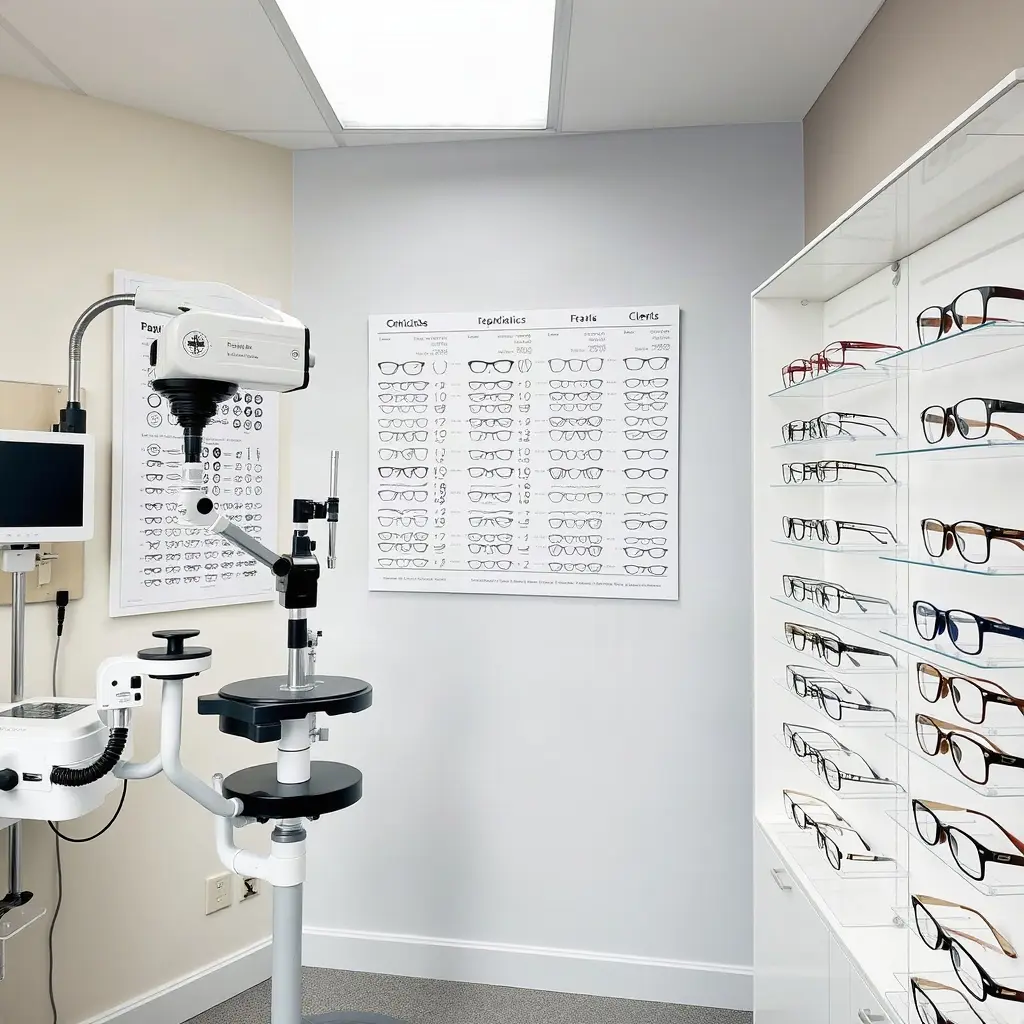
Children in Ireland follow a different pathway for vision care. The HSE provides eye examinations and treatment free of charge for pre-school and national school children who are identified as having sight problems through developmental or school-based health screenings 8. If a child under the age of 12 requires spectacles, they are entitled to a free pair provided through the public system 1. While these services are intended to cover children up to the age of 16, wait times for ophthalmology appointments in public hospital settings can sometimes extend beyond a year, which has led to ongoing discussions regarding the expansion of optometric roles in pediatric eye care 8, 9.
Routine Examinations vs. Hospital Eye Care
It is vital to distinguish between a routine sight test and clinical ophthalmology services. A routine eye examination-performed by an optometrist to assess vision and basic eye health-is the service covered by the Treatment Benefit Scheme or Medical Card programs 10, 3. Conversely, hospital eye services are generally reserved for patients requiring specialist diagnostics or surgical interventions, often accessed via referral from a GP, school screening, or an optometrist 8, 9. Public hospital care is free for everyone, whereas private optometry practices operate on a fee-for-service basis, with prices for a private eye test typically ranging from 35 EUR to 70 EUR as of 2026 4, 3.
Private Costs and Potential Out-of-Pocket Expenses
When public support does not cover the full cost of eyewear, individuals may face out-of-pocket expenses. The Treatment Benefit Scheme provides a capped contribution; if a patient selects frames or lens coatings that exceed this subsidy, they must cover the difference 2, 6. Private opticians may offer various lens options, such as anti-glare coatings or high-index materials, which are considered upgrades outside the scope of basic public provisions 11, 3. Consumers are encouraged to ask for a full price breakdown before proceeding with an order to avoid unexpected costs.
Regulatory Oversight and Professional Consultation
The provision of eye care is subject to professional standards set by the relevant regulatory bodies. Because sight test requirements vary based on clinical history-such as the necessity for repeat exams due to underlying conditions like diabetes-it is essential to consult a qualified optometrist or ophthalmologist 1, 3. A professional can determine whether a patient requires a standard routine test or a specialized ophthalmology referral. Patients should always clarify which services are included in an appointment and whether their chosen provider is contracted to accept the specific public scheme they intend to use 6, 3.
Sources
- Free Eye Tests and Glasses Ireland 2026: Medical Card, PRSI and Children | The People's Pocket: https://peoplespocket.com/guide-free-eye-tests-glasses
- Treatment Benefit Scheme - Citizens Information: https://www.citizensinformation.ie/en/social-welfare/disability-and-illness/treatment-benefit-scheme/
- Opticians Costs in Ireland (2026) | LocallyIrish.ie: https://locallyirish.ie/cost-guides/opticians
- Healthcare in Ireland 2026: Is It Free? What You'll Pay | Settle.ie: https://settle.ie/guides/healthcare-system-ireland/
- Treatment Benefit Ireland 2026 — Free Dental, Optical and Hearing for PRSI Contributors: https://irishbenefits.ie/treatment-benefit-ireland/
- Free Eye Test Ireland — What PRSI Treatment Benefit Covers: https://doconcall.ie/free-eye-test-ireland-prsi/
- Medical Card Benefits: Free Eye Tests at Swords Eye Centre: https://www.swordseyecentre.ie/news/guide-on-how-to-use-your-prsi-and-medical-card-benefits-at-swords-eye-centre/
- Departmental Schemes – Tuesday, 17 Feb 2026 – Parliamentary Questions (34th Dáil) – Houses of the Oireachtas: https://www.oireachtas.ie/en/debates/question/2026-02-17/1055/
- Young children missing out on eye care during “critical window ...: https://www.aop.org.uk/ot/features/2026/02/12/young-children-missing-out-on-eye-care-during-critical-window-in-ireland
- The State spent €80m on eye health last year, it could get a lot higher - The Currency :The Currency: https://thecurrency.news/articles/204720/the-state-spent-e80-million-on-eye-health-last-year-it-could-get-a-lot-higher/
- Eye tests are supposed to be free, so why does Specsavers charge for them?: https://www.thejournal.ie/specsavers-eye-test-charges-7182508-Oct2026/