Petite Jeans for Short Women: A Comprehensive Guide to Achieving a Proportional Fit
Key facts
- Petite sizing specifically adjusts garment proportions, including shorter inseams, rise, pocket placement, and higher knee breaks for frames under 5'4" 1 2.
- Effective petite denim shopping focuses on understanding individual body proportions, such as torso length and leg shape, rather than relying solely on height 3 2.
- Market prices for petite-specific denim typically range from approximately 23 USD for classic or budget-friendly options to over 300 USD for premium designer denim 4 5 6.
- Key fit indicators to check include waist gaping, horizontal hip tension, knee placement accuracy, and whether the hem naturally falls at the desired point 4 2 7.
For many women who are 5'4" and under, finding jeans that do not require professional hemming is a recurring challenge in wardrobe building. The term petite in the fashion industry refers to a specialized sizing category rather than just a smaller waist measurement. A garment designed for a petite frame is typically drafted to address the specific vertical proportions of a shorter stature, such as a shorter torso, smaller rise, and adjusted knee and pocket placement 2. Understanding these structural differences can help shoppers identify denim that fits more naturally off the hanger, potentially avoiding the cost and inconvenience of traditional tailoring 8 9.
Understanding Petite Proportions vs. Standard Denim
The distinction between petite and standard denim is significant because it affects the overall silhouette. While standard jeans are generally drafted for individuals 5'5" and taller, petite lines attempt to scale the entire pattern. This includes shortening the inseam, usually by two inches or more, and adjusting the rise to ensure the waistband sits appropriately on a shorter torso 9 2. Furthermore, the placement of the knees and pockets is critical; if these features are not repositioned, the jeans may bunch at the ankles or feel restrictive around the thighs 2.
It is important to note that petite sizing is not strictly standardized across all brands. Some manufacturers simply shorten the hem of a regular-sized pattern, while others perform a full re-draft of the garment construction 2. Consequently, a pair of jeans labeled as petite may fit differently depending on the brand and the specific cut. Shoppers are encouraged to consult individual brand size charts and garment measurement guides, focusing on inseam length, front rise, and hip measurements rather than relying solely on a generic size label 4 2.
Popular Styles and Denim Trends in 2026
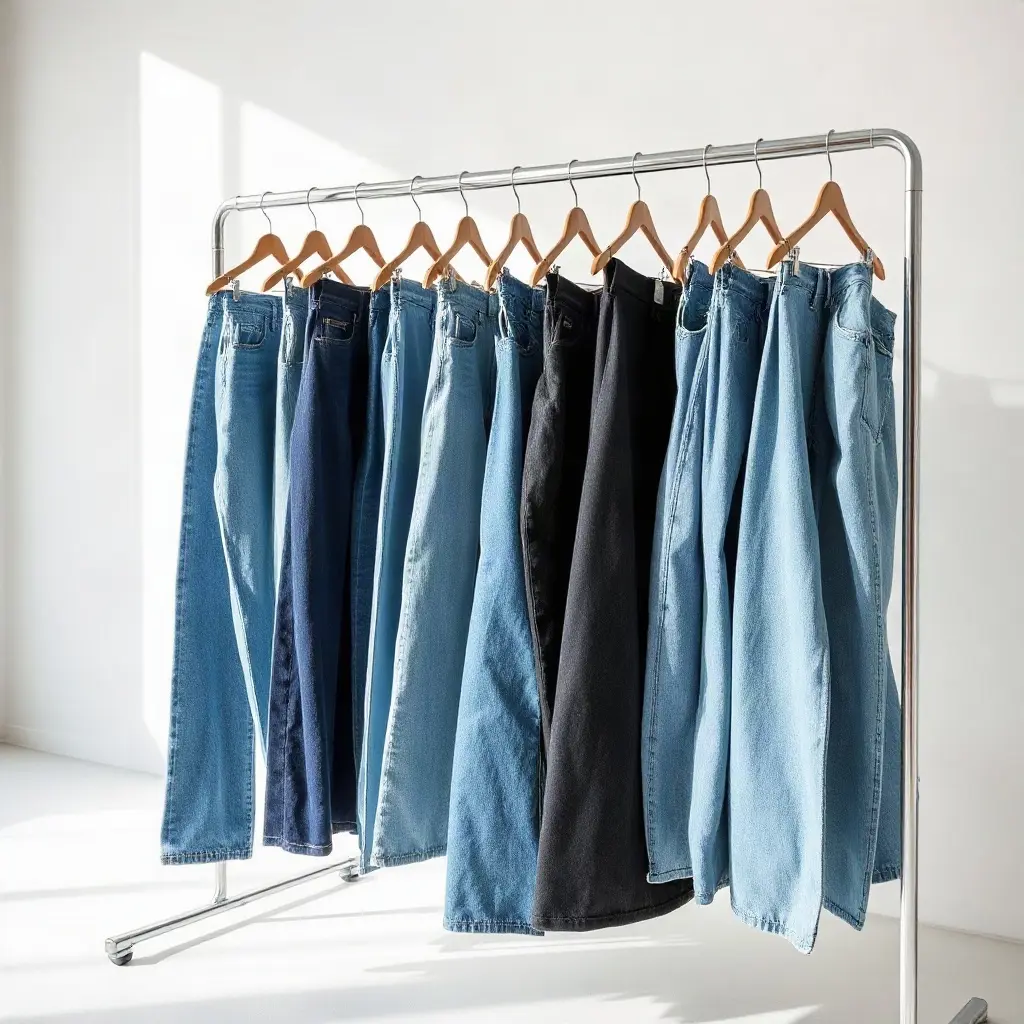
Current denim trends for 2026 offer a wide array of silhouettes, from classic straight-leg styles to trendy barrel-leg and flared cuts. Straight-leg jeans remain a staple for their versatility and balance, often considered an essential for various settings 10 7. Wide-leg and barrel-leg jeans, which provide a more relaxed and voluminous aesthetic, have gained popularity, though petite shoppers should ensure the volume does not overwhelm their frame by checking for proportional design details 8 1 9.
Bootcut and flared jeans are also prominent, with many brands now offering these in petite-friendly versions to help elongate the leg line visually 1 10. Market prices for these styles vary widely based on the brand's positioning. For instance, budget-friendly options, such as those from Lee or various Amazon-listed brands, often start around 23 USD to 50 USD 8 5 6. Mid-range brands like Levi's typically feature styles around 50 USD to 110 USD, while luxury designer labels can range from 250 USD to over 400 USD depending on the material and craftsmanship 8 4 5.
Measurement Guide for a Better Fit
Successful denim shopping often relies on a methodical approach to measurements. The inseam, which is the distance from the crotch seam to the bottom of the hem, is the primary metric for length 4. For many women around 5'1" to 5'4", an inseam between 25 and 30 inches is frequently cited as a versatile range 4 9. The rise, representing the distance from the crotch seam to the top of the waistband, is equally important; a mid-rise or high-rise may be chosen based on personal comfort and the desire to create a balanced look on the torso 8 4.
Beyond length and rise, evaluating the hip and waist measurements is essential to prevent common fit issues like waist gaping or horizontal pulling 4 7. When trying on jeans, it is advisable to check for restricted movement in the seat and ensure that the knee break aligns with the actual knee position 2. If the fit is near-perfect but requires slight adjustment, a local tailor may be able to shorten the hem, though complex modifications such as altering the rise or pocket placement can be significantly more difficult and costly 2 10.
Fabric Composition and Comfort
Denim materials vary, significantly impacting how a pair of jeans fits and holds its shape over time. Rigid denim, which often consists of 100% cotton, lacks stretch and typically requires a very precise size selection to ensure comfort and long-term durability 5. Stretchy denim blends, which incorporate small percentages of elastane or spandex, are generally more forgiving and allow for a closer fit around the hips and thighs 9 7 6. When browsing product details, checking the cotton-to-elastane ratio can provide insight into how much give the fabric will have during daily wear 5 7.
Evaluating Alternatives to Petite-Specific Lines
While petite-specific lines are designed with shorter proportions, some individuals may find success with standard length jeans, particularly when selecting cropped or ankle-length styles. A cropped pair from a standard collection might naturally hit a shorter woman at the correct ankle length, serving as a functional alternative to petite sizing 2. This approach broadens the shopping options considerably, as it allows for the consideration of standard collections. However, the success of this strategy remains dependent on the specific design and the wearer's unique body measurements, reinforcing the importance of inspecting product-specific measurement charts rather than assuming a universal fit 2 6.
Sources
- 16 Best Petite Jeans That Actually Fit—and Look Amazing: https://www.oprahdaily.com/style/a73534517/best-petite-jeans/
- Jeans For Short Women: The Complete Fit and Buying Guide - Tumbleweed Thrift: https://tumbleweedthrift.com/jeans-for-short-women-guide/
- 9 Best Petite Jeans for Women, Celebrity Stylists Say - Parade: https://parade.com/shopping/petite-jeans-for-women
- My Endless Quest to Find the Best Jeans for Petite Women: https://www.vogue.com/article/best-jeans-for-petite-women
- Hilary Duff's Petite High-Rise Straight-Leg Jeans Start at $23: https://www.instyle.com/hilary-duff-high-rise-straight-leg-petite-jeans-11926162
- Petite Jeans for Spring Start at $23 on Amazon: https://www.instyle.com/editor-approved-petite-jeans-amazon-11892892
- The 10 best jeans for women, according to style editors who've tried them all: https://shopping.yahoo.com/style/clothing/article/best-jeans-193623018.html
- 9 Best Petite Jeans for Short Women, According to a 5'2" Editor: https://www.glamour.com/gallery/best-petite-jeans-for-short-women
- Best Petite Clothing Brands for Women 2026 - Business Insider: https://www.businessinsider.com/guides/style/best-petite-clothing
- 5 Best Bootcut Jeans for Petite Women 2026 | Who What Wear: https://www.whowhatwear.com/fashion/denim/best-bootcut-jeans-for-petite-women