Former farms with residential buildings in the Southern Downs for sale: 2026 overview | A practical market and due-diligence guide
Key facts
- Queensland farmland had a median value of $9,558 per hectare in the first half of 2025, according to a 2026 market report. 1
- Rural property values in Queensland rose 5.8 per cent during 2025, while buyers became more selective about asset quality and water security. 2
- Average marketing time for Queensland and Northern Territory rural properties fell from about 165 days in January to 140 days in April 2026. 3
- Former agricultural land requires separate checks for zoning, water, wastewater, access, building condition and environmental history.
Former farms with residential buildings in the Southern Downs sit between agricultural real estate and lifestyle acreage. A 2026 assessment needs to consider not only land size and the condition of the house, but also lawful land use, water reliability, access, fire exposure, infrastructure and the cost of maintaining rural improvements. The figures below describe broader Queensland rural-market conditions rather than the value or availability of any particular property.
What former farms with homes usually represent
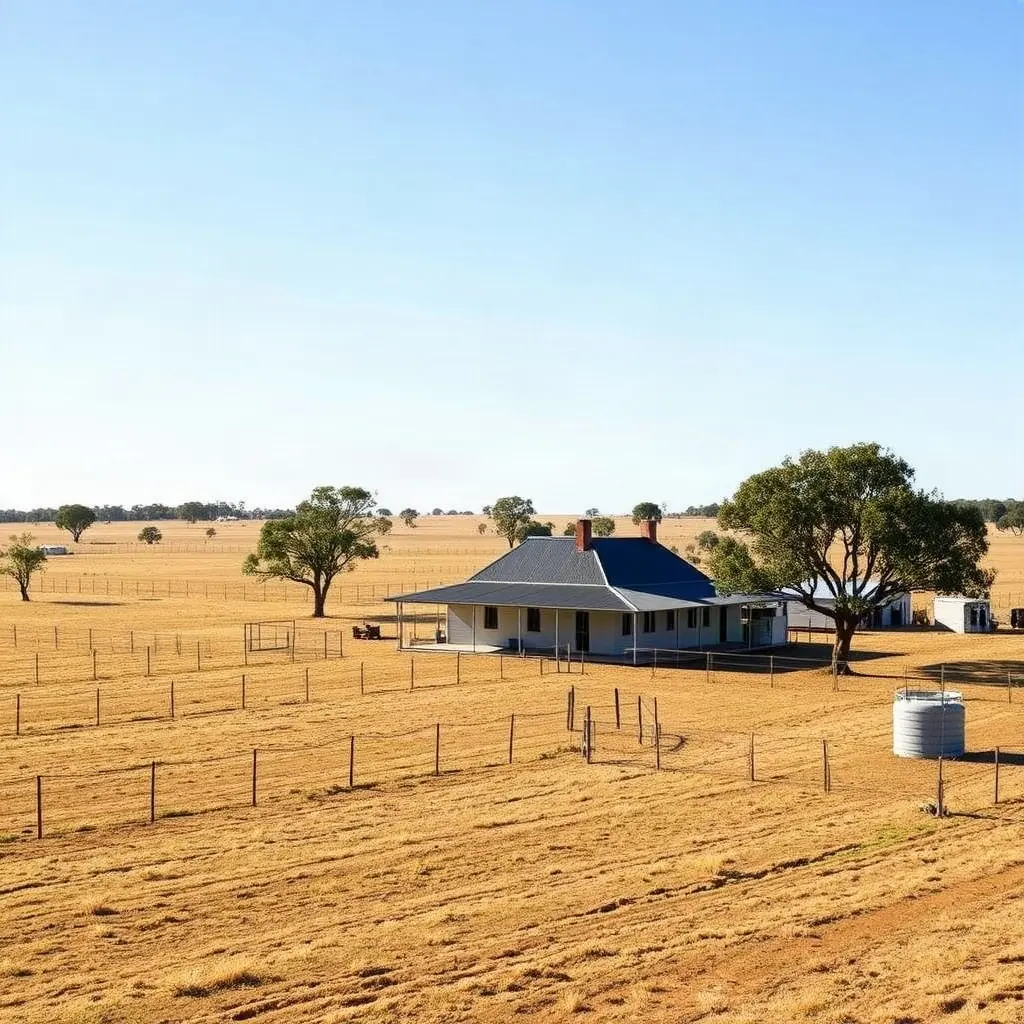
A former farm may be a small lifestyle property, a previously productive holding, or a larger grazing enterprise where the residence remains useful after agricultural activity has reduced. The land may include paddocks, sheds, yards, fencing, dams, tanks, machinery areas and an older homestead. These features can add practical value, but they can also create obligations that do not arise with an ordinary suburban dwelling.
The presence of a house does not automatically mean every structure is approved or suitable for habitation. A dwelling, detached cabin, workers’ quarters and agricultural shed can have different planning and building histories. Independent building, pest and structural inspections should distinguish habitable rooms from outbuildings, identify unapproved alterations and assess roofs, foundations, wiring, plumbing, insulation and termite or moisture damage.
2026 market signals and price interpretation
Queensland farmland values softened during the first half of 2025, when the median reached $9,558 per hectare, down 3.4 per cent for the half-year and 2.8 per cent year on year, according to a Queensland agricultural-market review. 1 This is a broad land measure, not a Southern Downs price for a residence-equipped holding, so it should not be applied mechanically to a specific parcel.
Another 2026 report described Queensland farmland values as rising 5.8 per cent in 2025, while national farmland values increased 2.8 per cent to a median of $10,516 per hectare. 2 The difference reflects varying datasets and property mixes. Productive country with reliable water, sound fencing, good access and a maintained home may attract stronger interest than marginal land, but larger acreage and ageing infrastructure can also increase total ownership costs.
How rural market conditions affect comparison
Rural property markets are less uniform than suburban markets because land quality, rainfall, enterprise history and improvements vary substantially from one holding to another. A national rural-property analysis reported that average time on the market rose to about 170 days across Australia by April 2026, while Queensland and the Northern Territory moved in the opposite direction, from about 165 days in January to 140 days in April. 3
These figures describe market movement rather than a forecast for Southern Downs. A separate national rural outlook expected measured rather than rapid value growth in several grazing regions, with buyers concentrating on productive land, reliable infrastructure and water access. 4 Comparisons should therefore use comparable acreage, building quality, road access, water systems and permitted uses rather than relying on land area alone.
Zoning, approvals and lawful residential use
Queensland planning controls are administered through local government planning schemes, zoning maps and overlays. In the Southern Downs, the relevant category may support agricultural activity, rural living, rural residential use or a combination subject to conditions. Zoning can affect whether a dwelling is permitted, whether a second home or cabin is possible, whether land can be subdivided, and whether commercial or tourist activity requires approval.
Before any contract becomes binding, a conveyancer or solicitor should examine the title, easements, covenants, planning information, development approvals and any notices affecting the land. A buyer should also confirm that the existing residence and significant outbuildings have the approvals expected for their current use. A change from agricultural use to a purely residential purpose may require planning assessment, building work or additional approvals rather than an informal change of intention.
Utilities and rural infrastructure to investigate
Water is often a central difference between rural and suburban ownership. Supply may depend on rainwater tanks, dams, bores, licensed extraction or shared arrangements. Checks should cover tank capacity, pump condition, water quality, bore yield, drought resilience, dam safety and any recording or licensing requirements. A rural residence can appear well serviced while still carrying substantial costs for pumping, filtration, repairs and water replacement.
- Wastewater: confirm whether the property uses septic tanks, aerobic treatment or another approved on-site system, and obtain servicing and approval records.
- Electricity: inspect poles, private lines, switchboards, generators and the distance between the dwelling and the connection point.
- Access: review the legal road connection, driveway condition, creek crossings, drainage and emergency-vehicle access.
- Connectivity: test mobile coverage and internet performance at the house, sheds and likely work areas rather than assuming urban-level service.
Purchase process, taxes and ongoing costs
The Queensland purchase process generally involves reviewing the contract, completing searches and due diligence, arranging independent inspections, satisfying any stated conditions, paying the deposit, settling and registering the transfer of title. Conveyancing checks can identify easements, encumbrances, rates information and title restrictions. Rural contracts may also require careful attention to water rights, inclusions, fencing boundaries, access arrangements and equipment that remains with the land.
Transfer duty, commonly called stamp duty, is a Queensland state tax calculated according to the transaction value and the buyer’s circumstances. Other costs can include conveyancing, searches, inspections, valuation, surveying, building approvals and registration charges. The continuing budget should include fencing, gravel roads, vegetation management, septic servicing, tank pumps, dams, machinery areas, larger insurance requirements and repairs to older buildings. These expenses can materially exceed routine suburban maintenance.
Risks when adapting agricultural buildings
Old sheds, barns and worker accommodation may have historical value but are not automatically compliant residences. Retrofitting can expose hidden defects such as asbestos-containing materials, inadequate footings, poor drainage, non-compliant wiring, unsafe stairs, vermin damage or fire risks. Structural work may require engineering advice, building approval and specialist trades, particularly where a building was designed for storage or livestock rather than continuous human occupation.
Environmental history also matters. Former yards, fuel storage areas, chemical sheds, rubbish pits and intensive animal-use zones may require investigation for contamination or soil problems. Bushfire exposure, flood mapping, erosion and vegetation restrictions can affect both existing buildings and future improvements. A cautious assessment treats the house, land, water system and agricultural infrastructure as separate components, then combines their condition, legal status and maintenance burden before estimating overall value.
Sources
- Queensland (QLD) Farm Trends 2026: Regions to See Demand: https://www.grainshed.com.au/qld-farm-trends-2026/
- Farmland growth steadies | Queensland Farmer Today: https://queenslandfarmertoday.com.au/news/06/07/2026/farmland-growth-steadies/
- Rural properties taking longer to sell, but confidence remains: https://www.sheepcentral.com/rural-properties-taking-longer-to-sell-but-confidence-remains/
- National Rural Property Outlook for 2026 | Herron Todd White: https://htw.com.au/national-rural-property-outlook-for-2026/