Residential solar energy systems: hybrid inverters and efficiency standards in 2026: An Australian homeowner guide
Key facts
- A typical 6.6kW Australian solar installation costs about $4,000 to $6,400 after STC assistance in 2026. 1
- Hybrid inverters combine solar conversion, battery charging and battery discharge management in one system component. 2
- Mainstream and premium solar panels generally range from roughly 21% to 25% conversion efficiency in 2026. 3
- Grid-connected solar and battery installations require appropriately licensed and accredited professionals for compliance and safety. 4
Residential solar energy systems in Australia typically combine photovoltaic panels, roof mounting, electrical protection, monitoring equipment and an inverter. In 2026, hybrid inverters are attracting attention because they can coordinate panels, household loads, the electricity grid and battery storage. The practical questions concern how the equipment differs, which efficiency measures matter, what installation costs, which certificates or approvals apply, and how to select a qualified installer without treating a quoted price as a guaranteed outcome.
How a hybrid inverter works
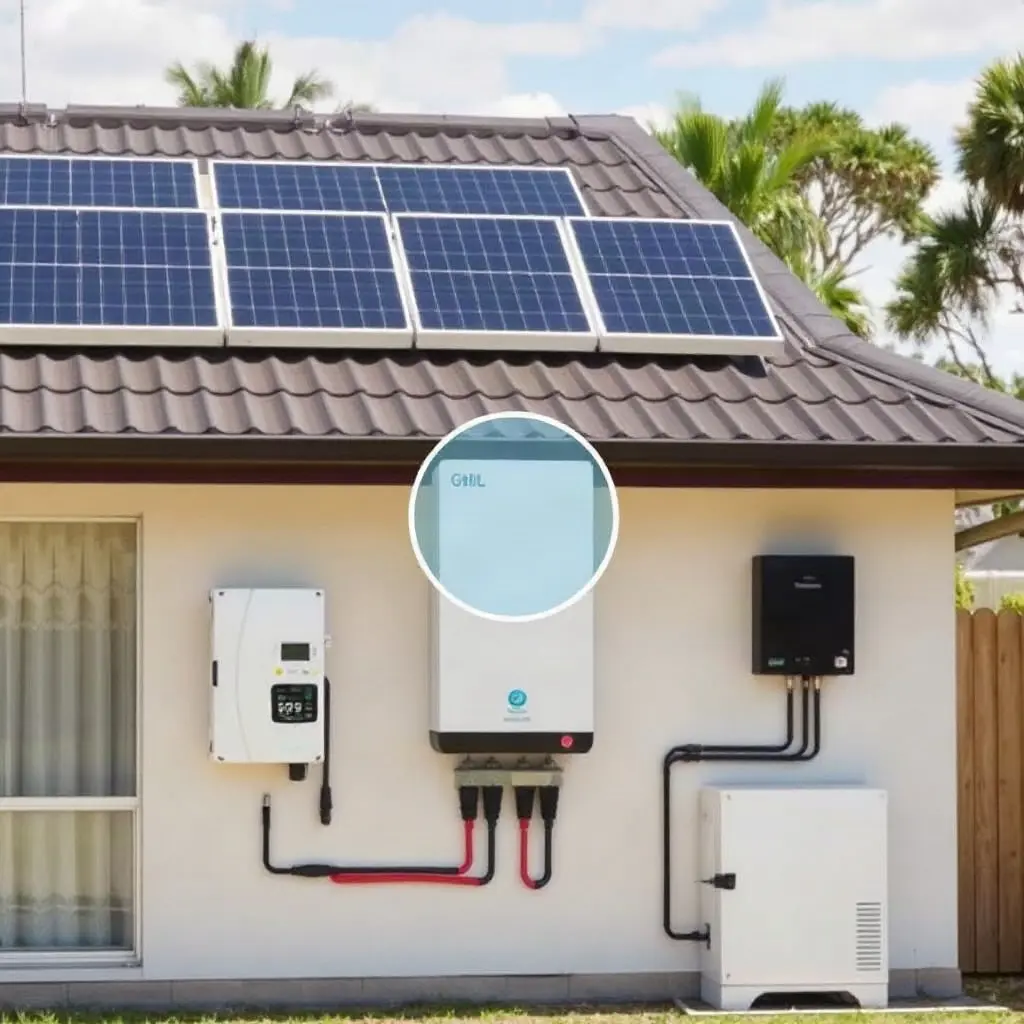
A hybrid inverter combines the functions of a conventional solar inverter and a battery inverter. It converts direct current from panels into alternating current for household circuits, while also charging a battery and converting stored electricity back into household power. During daylight, its control system can direct solar electricity to appliances, storage or the grid. After sunset, it can draw from the battery or grid. Backup operation is possible only when the model, wiring and switchboard design include that capability. 2
The distinction matters because a standard string inverter normally handles panel output but has no direct battery port. Micro-inverters place conversion equipment at individual panels, which can help with panel-level operation on roofs affected by shade or multiple orientations. A hybrid design is more integrated, but it may impose specific battery, communication, phase and backup requirements. A 5kW inverter rating describes power delivery, whereas a 5kWh battery rating describes stored energy, so the figures should not be treated as interchangeable. 4
- String inverter: one central conversion unit serving several panel strings.
- Micro-inverters: separate conversion units associated with individual panels.
- Hybrid inverter: solar conversion plus coordinated battery charging and discharge.
Panels, efficiency and the 2026 standards question
Panel efficiency is the percentage of sunlight converted into electrical output under standard test conditions. A 2026 Australian comparison places mainstream and premium module efficiency at roughly 21% to 25%, while also noting that heat, ultraviolet exposure, degradation and installation conditions affect practical production. Higher efficiency can be useful where roof space is limited, but it does not by itself establish superior whole-system performance. Temperature behaviour, warranty terms, shading and inverter compatibility remain relevant. 3
Australian eligibility is not determined by a headline efficiency number alone. Equipment selection involves approved product lists, electrical safety rules, network connection requirements and the configuration submitted for certificates. The Clean Energy Council approved inverter list is identified as part of current Australian product checking, while guidance reviewed in August 2026 warns that approved models, certificate values and network rules can change. The exact panel, inverter and battery combination therefore needs verification before installation. 5 4
| Measure | What it indicates | Why it matters |
|---|---|---|
| Panel efficiency | Sunlight converted by the module under test conditions | Useful for comparing output from limited roof area |
| Inverter efficiency | Electricity retained during DC to AC or battery conversion | Helps assess conversion losses |
| System approval | Whether the model and configuration meet applicable requirements | Relevant to certificates, safety and grid connection |
Battery storage, backup and system design
A hybrid system stores surplus daytime generation for later use, potentially increasing household consumption of solar electricity after sunset. Its value depends on the household load profile, battery capacity, charge and discharge limits, tariff structure, export settings and the amount of solar available in winter. A battery does not automatically provide whole-home backup. Backup circuits, changeover equipment, phase design and essential-load limits must be specified, and some systems will not operate during an outage unless the installation includes suitable islanding protection.
Three-phase homes require particular attention. A single-phase hybrid inverter may not distribute energy correctly across a three-phase switchboard, while a three-phase model is designed to manage solar, storage and grid power across all three phases. High-demand equipment such as ducted air conditioning, pool pumps, induction cooking and electric vehicle charging can affect the required inverter size and backup plan. 6
- Check usable battery capacity rather than only the advertised nominal capacity.
- Confirm maximum continuous output and whether backup covers selected circuits or the whole dwelling.
- Match battery communication, voltage and software requirements to the inverter.
- Ask whether the home has single-phase or three-phase electrical service.
Typical Australian installation costs in 2026
Published Australian 2026 pricing places a typical 6.6kW residential solar installation at about $4,000 to $6,400 after STC assistance. A 3kW system is reported at approximately $2,600 to $4,000, while a 10kW system is reported at about $7,000 to $10,500. These are market estimates, not fixed quotations, and can vary with roof access, switchboard work, regional conditions, panel and inverter selection, system design and certificate treatment. 1
Battery storage adds capital cost because it requires the battery, compatible control equipment, protection, commissioning and sometimes changes to the inverter or switchboard. A hybrid installation may be more coherent when solar and storage are designed together, while an AC-coupled battery can be less disruptive where an existing solar inverter remains serviceable. One 2026 comparison describes the hybrid route as more suitable when an older or unreliable inverter is already approaching replacement. 7
| System size | Reported 2026 installed range | Typical context |
|---|---|---|
| 3kW | $2,600 to $4,000 | Smaller homes |
| 6.6kW | $4,000 to $6,400 | Common family-home system |
| 10kW | $7,000 to $10,500 | Higher household use or electric vehicle demand |
Incentives, certificates and eligibility
Australian residential systems may receive upfront value through Small-scale Technology Certificates, commonly handled through the installation process rather than paid as a separate household transaction. Eligibility depends on system size, location, approved equipment, installation date and other scheme conditions. The value and rules can change, so an installer’s certificate estimate should be checked against current government and approved-product requirements rather than assumed from an older advertisement. 4 8
The federal Cheaper Home Batteries Program began on 1 July 2025, according to an Australian 2026 guide, but participation still depends on the relevant equipment and installation conditions. State and territory network rules can add separate technical requirements, including export limits, connection applications and mandated safety equipment. A certificate or program benefit does not remove the need for compliant electrical work, nor does it guarantee a particular payback period. 7
- Confirm the precise model numbers, not only the brand family.
- Check whether the proposed configuration appears on the applicable approved lists.
- Obtain written details of certificate treatment and any network approval steps.
- Recheck eligibility if installation is delayed into a later policy year.
Finding a compliant installer and comparing quotes
Grid-connected solar and battery systems are not ordinary do-it-yourself home projects. Design, roof work, DC wiring, AC connection, protection, commissioning and network paperwork require appropriately licensed and accredited professionals. A sound quote should identify system capacity, panel and inverter models, battery usable capacity, backup circuits, warranties, monitoring, switchboard alterations and assumptions about roof access. Product guides also advise confirming network approval and current eligibility before purchase. 4
Equipment is commonly encountered through specialist solar installers, electrical contractors, manufacturer channels and electrical or renewable-energy retailers. Wiltronics is one named Australian retailer discussed in a buying guide, while comparison coverage includes Sungrow, Fronius, Sigenergy, GoodWe, Solis, SolarEdge and Fox ESS as examples of hybrid platforms available in Australia. These names represent options for independent comparison, not endorsements. 5 4
- Verify the installer’s electrical licence and renewable-energy accreditation.
- Compare like-for-like system capacity, battery capacity and backup scope.
- Check warranty exclusions, monitoring access, maintenance responsibilities and replacement conditions.
- Be cautious of quotes that omit switchboard, scaffolding, network or commissioning work.
Sources
- Solar Power Installation Price in Australia 2026: What You'll Actually Pay: https://www.solarincentives.com.au/solarguides/solar-power-installation-price-australia/
- What Is a Hybrid Inverter? How It Works: A Clear 2026 Guide: https://nrgpal.com.au/what-is-a-hybrid-inverter/
- Solar Panel Efficiency Comparison 2026: Top Modules - Solazone AustraliaSolazone Australia: https://www.solazone.com.au/solar-panel-efficiency-comparison-2026/
- Hybrid Solar Inverter & Battery Storage Buying Guide | Wiltronics: https://www.wiltronics.com.au/wiltronics-knowledge-base/hybrid-solar-inverter-battery-storage-buying-guide/
- The 7 Best Hybrid Inverters in Australia for 2026 | Solar Cobber: https://www.solarcobber.com/blog/best-hybrid-inverters-australia
- 3 Phase Hybrid Inverter Guide | SolaXs: https://solaxs.com.au/3-phase-hybrid-inverter/
- Hybrid Inverter vs AC Battery Retrofit in Australia (2026): https://www.energymeterhub.com/articles/hybrid-inverter-vs-ac-battery-retrofit
- Buying Solar Panels: What You Need to Know: https://www.solarquotes.com.au/panels/