Could Your Old Stamps Be Worth More Than 2?
An old stamp can be a small piece of postal history, but its age does not tell you what it is worth. A common stamp used by millions may have little collector demand, while a scarce variety in sound condition can attract serious interest. This article explains what it means for old stamps to be worth more than 2, how to assess that possibility, and how valuations are made.
The figure 2 has no currency symbol, so it means 2 units of whatever currency is relevant, not a universal price. A stamp may exceed that amount through its usable postal denomination, where it remains valid, or through collector demand. Rarity, condition, identifiable printing varieties, and recent completed sales are the main evidence to consider. A catalogue estimate alone does not establish what a buyer will pay.
What does the 2-unit threshold mean?
Stamps can have two different kinds of value. Face value is the denomination printed on a stamp and relates to postage under the rules of the postal system that issued it. Collector value is the amount someone may pay for the stamp as an object, and it can be higher or lower than face value. The ad does not name a currency, so the threshold cannot be converted into a specific dollar, pound, or other amount.
Even face value is not automatically usable postage. Postal services set rules about which stamps remain valid, and those rules differ by issuer and can change over time. A stamp with a printed denomination above 2 units might therefore have more than 2 units of face value but no current postal use. Collector value is assessed separately, based on demand for that exact stamp and its condition.
Which old stamps are most likely to be worth more?
Age is only one clue. A stamp is more likely to exceed a modest threshold when collectors want it and relatively few sound examples are available. That can happen with a low-print-run issue, an early stamp from a postal system, a scarce denomination, or a complete set that collectors seek as a group. A common stamp from the same period may still be inexpensive because many copies survive.
Distinctive varieties can matter more than the general design. Examples include a genuine inverted or missing design element, a misperforated stamp, an unusual watermark, or a printing flaw documented as a recognized variety. Ordinary smudges, folds, fading, and damage are not automatically collectible errors. A stamp with a clear link to an unusual letter or event may also have added postal-history interest, especially when the envelope and postmark remain intact.
How condition changes an old stamp's value
Collectors often distinguish unused stamps with original gum, unused stamps without gum, and used stamps bearing a cancellation. Which state is more desirable depends on the issue; for some stamps, a clean cancellation is more appealing than a damaged unused copy. On a mint stamp, disturbed or missing gum can reduce value. On a used stamp, a light, readable postmark may be preferable to one that obscures the design.
Centering, perforations, and physical damage also affect price. A design well centered within its perforated edges may be more sought after than a copy cut close to the design. Tears, thins, creases, stains, fading, missing perforations, and repairs generally lower value. Do not peel a stamp from an envelope or try to flatten, clean, or regum it: treatment can cause damage that is hard to reverse and may make an otherwise interesting item less desirable.
What determines a stamp's market value?
Market value is shaped by the exact issue, how many examples are known or available, collector demand, and condition. Supply is not the same as the number originally printed: survival rates vary, and particularly fine or genuinely scarce examples can be much harder to find. Demand can also change with collecting interests. Two stamps that look similar may differ substantially because of a small watermark, perforation, paper, or printing distinction.
Catalogue values are reference figures, not promises of a sale price. They may distinguish unused and used copies or different grades, but the stated amount may not reflect a recent transaction or the condition of a particular stamp. Actual prices can be lower or higher, and an auction result may include buyer charges that are not part of the amount received by a seller. For an ordinary stamp, its market price may be only a small fraction of a currency unit; a rare, documented example can be worth far more than 2.
How to identify an old stamp before estimating its value
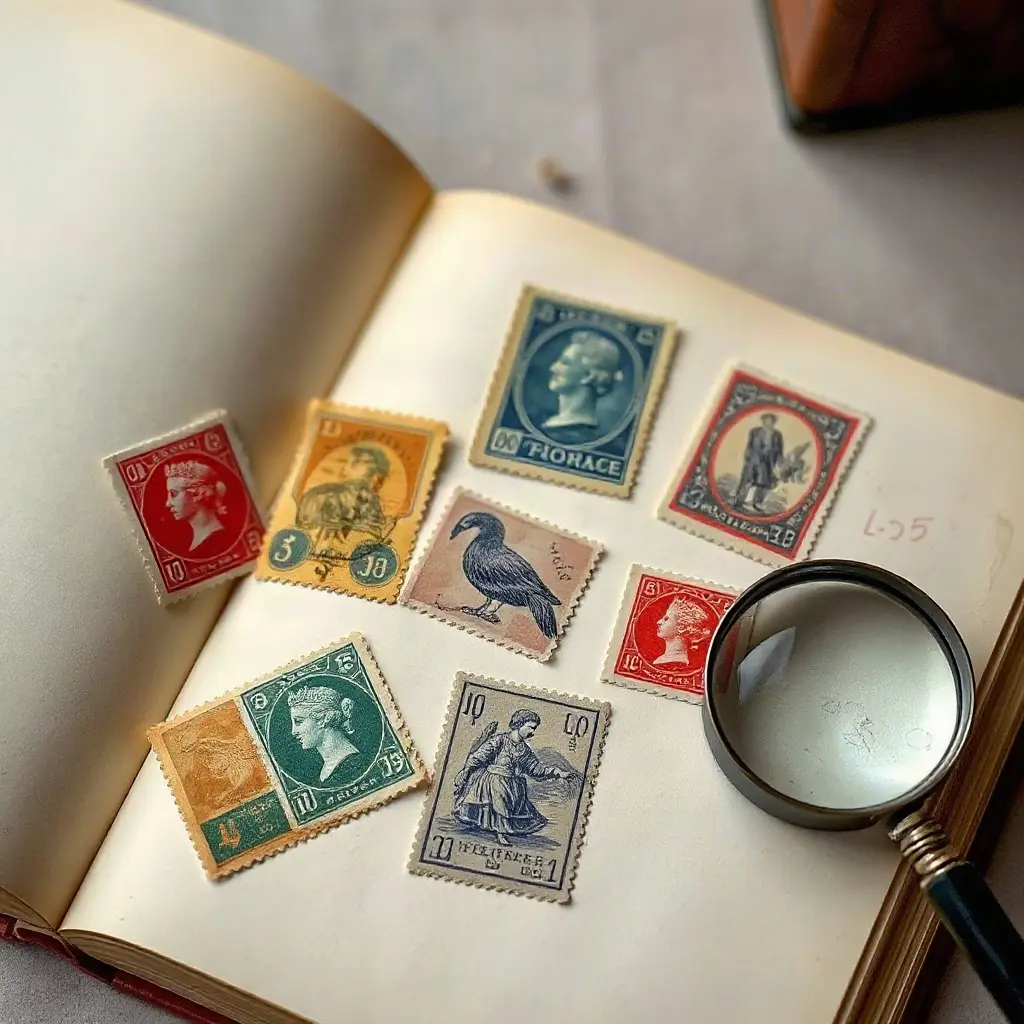
Start with what can be read without separating or altering the stamp: the printed denomination, wording, design, colors, and any visible date or postmark. Record whether it is attached to an envelope, whether it is used or unused, and whether other stamps form part of the same issue or set. A stamp's country or issuing authority is often printed on it, but older issues may use unfamiliar names or scripts, so visual resemblance is not enough to identify an exact edition.
Collectors and catalogues distinguish stamps by technical details as well as artwork. Perforation gauge measures the number of perforation holes across a standard length; watermarks are patterns in the paper; and printings can differ in paper, shade, or design. These differences may be difficult to see with the naked eye. A watermark tray or magnification can help, but handling should be minimal, using stamp tongs rather than fingers when appropriate. Do not soak an item to inspect it if its paper, ink, or postal history is uncertain.
How to compare a stamp with evidence of actual sales
A useful comparison must match the same issue and, where possible, the same variety. Check the denomination, design, printing, watermark, perforations, and whether the example is mint or used. Then compare condition: a catalogue entry for a well-centered stamp with intact gum does not describe a copy with a crease or disturbed gum. For a set, determine whether all required values are present and whether they are in comparable condition.
Completed sale records are more informative than asking prices because they show that a transaction occurred, though they do not guarantee another sale at the same amount. Compare several recent results when available, noting the sale date, currency, condition description, and any buyer charges. If no close match exists, the stamp may be uncommon or simply hard to identify; in either case, a single online listing is weak evidence. A specialist opinion is more useful when the possible variety would materially change the estimate.
Who assesses old stamps, and how do they reach the market?
Valuations may come from a qualified philatelic appraiser, a specialist stamp dealer, or an auction house with a stamp department. Each has a different role: an appraiser assesses and documents an item, a dealer may make an offer based on resale demand, and an auction house estimates and presents material for competitive bidding. Their estimates and terms are not interchangeable. The currency, fees, commission, and suitability for sale depend on the provider and the item.
The usual path is to identify and sort the stamps, record their condition, and share clear images or arrange an in-person examination if the material appears significant. The specialist may then identify varieties, compare them with market records, and explain whether individual sale, a group lot, or no sale is realistic. If an auction or dealer transaction follows, that provider sets its own acceptance criteria and terms. A small group of common stamps may not justify individual specialist handling, while a rare item may need expert authentication before a serious valuation.
Common valuation pitfalls and risks
One frequent mistake is assuming that an old stamp, a high printed denomination, or a striking visual flaw must be valuable. A printed denomination is not a collector price, and many apparent errors are ordinary production variation or damage after printing. Another risk is treating a catalogue figure or an unsold listing as proof of market value. Use evidence tied to the exact issue and condition rather than broad claims about a whole stamp collection.
Alterations can be difficult to spot in photographs. Perforations may have been reperforated, a thin or tear may be repaired, gum may have been added, and a cancellation may be forged or manipulated. For a stamp that appears scarce or unusually valuable, authentication by a suitably experienced specialist can reduce uncertainty, though it does not guarantee a sale or a particular price. Keep envelopes and old album notes with the stamps, since provenance and postal context can help explain what an item is.