Public dental care for medical card holders: a guide for 2026: coverage, access and costs explained
Key facts
- The DTSS covers medical card holders aged 16 and over through participating dentists and public dental services. 1
- Annual DTSS care includes an examination, two fillings, extractions and a scale and polish without a patient charge. 1
- One first-stage root canal treatment each year may be available for front teeth, subject to the scheme rules. 2
- Dentures, extra fillings and broader complex care generally require approval from the local HSE Principal Dental Surgeon. 1
Public dental care for medical card holders in Ireland is mainly delivered through the Dental Treatment Services Scheme, known as the DTSS. This 2026 guide explains what the scheme covers, how participating providers work, when approval is required, and why access and waiting times can differ between areas. Coverage is not identical to unrestricted dental treatment, so a qualified dental professional should confirm the clinical plan and scheme position before treatment begins.
How the Dental Treatment Services Scheme works
The DTSS is the main public arrangement for adult medical card dental care. It applies to medical card holders aged 16 and over and operates through dentists who hold contracts with the HSE, alongside dental services provided through local public health structures. The scheme is therefore dependent on participating practitioners and local capacity rather than every registered dentist offering the same service. 2 1
Government information published in 2026 describes DTSS oral healthcare as available without a patient charge for eligible adults. The scheme lists routine examination and preventative elements, two fillings, extractions and a scale and polish as annual or on-demand services, depending on the treatment. A valid medical card and a dentist participating in the relevant arrangement remain important practical requirements. 1 3
Treatments commonly included
A medical card holder can generally receive one dental examination during each calendar year, together with extractions when clinically required. The published treatment description also includes two fillings per calendar year and one scale and polish. A first-stage endodontic, or root canal, treatment may be available once yearly for teeth at the front of the mouth, but the dentist should establish whether the particular case meets the scheme conditions. 2 1
| Treatment or service | Typical DTSS arrangement |
|---|---|
| Dental examination | One examination each calendar year, including preventative elements |
| Fillings | Two fillings each calendar year; repeat work may need approval |
| Extractions | Included when clinically necessary |
| Scale and polish | Once each calendar year |
| Front-tooth root treatment | One first-stage treatment each year, subject to clinical confirmation |
Dental bleeding control, denture repairs and the issuing of prescriptions are also identified in the public information on medical card dental services. These services should not be assumed to cover every laboratory, replacement or restorative expense. The treating dentist can explain whether a proposed item is included, requires approval, or falls outside the relevant DTSS terms. 2
Approvals, exclusions and clinical limits
Some treatment extends beyond the routine annual package. Additional fillings, dentures and a broader range of care for people with additional needs or high-risk circumstances may require approval from the local HSE Principal Dental Surgeon. Repeat filling of a tooth treated within the previous five years also requires an explanation and approval where the dentist considers the repeat work necessary. 2 1
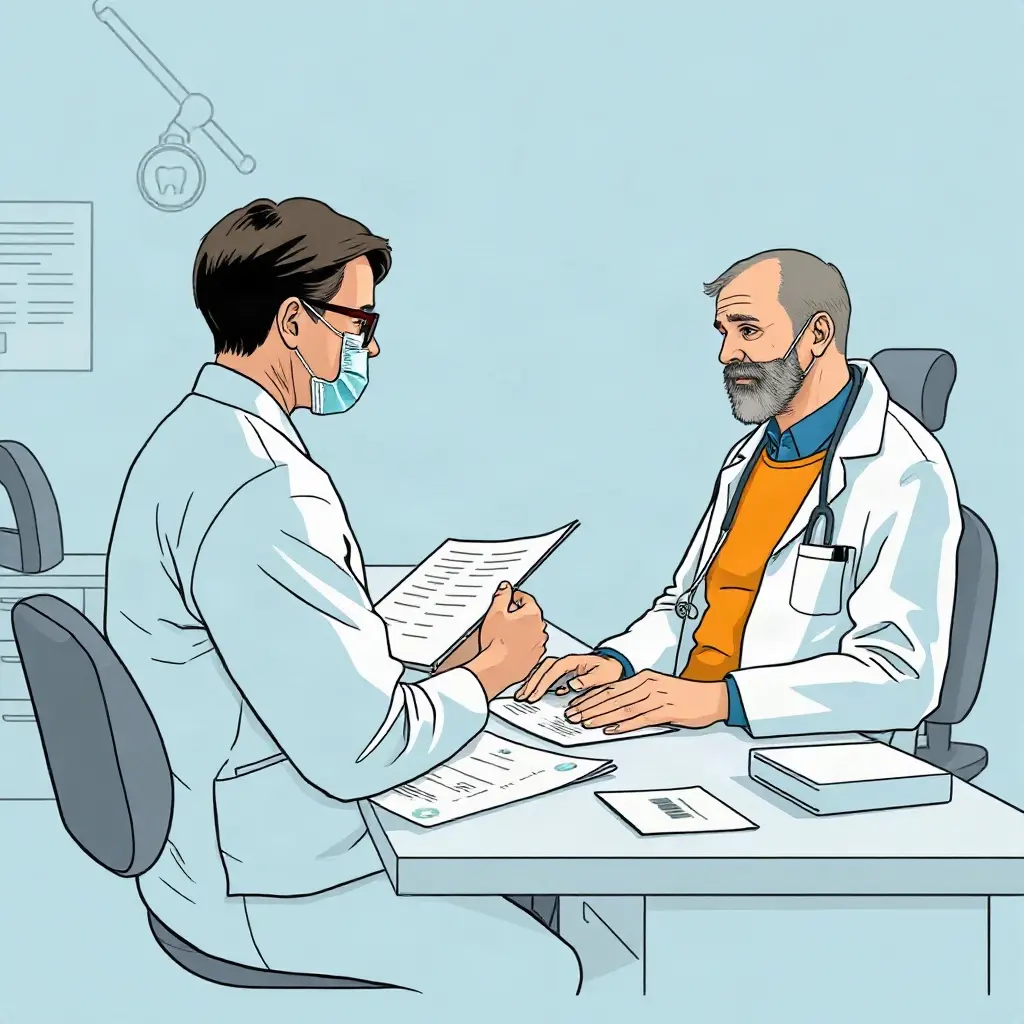
Routine cosmetic dentistry, such as whitening or elective appearance-focused procedures, should not be treated as part of the standard DTSS package. Complex orthodontic care, extensive restorative treatment and specialist procedures may also sit outside routine entitlement or require a separate clinical pathway. Coverage depends on clinical necessity, age, scheme rules and authorization, so a qualified dentist should explain alternatives, risks, side effects and any patient contribution before work proceeds.
Finding a participating provider and handling urgent care
Public dental services are provided through local HSE dental structures, while contracted private practices may also provide DTSS care. A practical starting point is the local HSE dental service or a dental practice that confirms participation in the scheme. Because not every registered dentist participates, availability can differ by county, practice capacity and the type of treatment required. 2
For urgent dental care, a medical card holder should contact a participating practitioner and describe the urgency when requesting an appointment. The dentist can assess whether examination, extraction, bleeding control or another intervention is clinically appropriate under the scheme. Emergency treatment is not a substitute for clinical assessment, and arrangements may differ outside normal practice hours. A qualified professional should determine whether referral to a public dental service or hospital-based service is needed.
Costs, private treatment and waiting times
Covered DTSS services are described by the Department of Health as provided without charge to eligible medical card holders. However, a treatment that is outside the scheme, exceeds an annual limit, lacks required approval or involves a private option may create a separate cost. Before treatment, the dentist should distinguish covered care from optional or non-covered work and explain any proposed charge in writing where possible. 1 3
No single national waiting time applies to every DTSS appointment. Routine access can be affected by the number of participating dentists, local staffing, referrals, laboratory work and the urgency of the treatment. Parliamentary information records continuing access pressure and long waiting lists in public oral healthcare, while also reporting increased treatment activity after measures introduced in 2022. These figures describe system performance, not a guaranteed appointment period. 4 3
Eligibility checks and safeguards for 2026
The dental entitlement discussed here is linked to a valid medical card, rather than simply residence in Ireland or possession of a GP Visit Card. Eligibility rules and public-service arrangements can be reviewed by health authorities, so the card status and the applicable DTSS terms should be confirmed before an appointment. The scheme specifically identifies adults aged 16 and over in its current public descriptions. 1 5
Clinical safety remains separate from payment status. Extractions, fillings, root treatment and dentures have different indications, risks and aftercare requirements, and a dentist may recommend referral where the case is complex. A participating provider should confirm the examination findings, treatment sequence, approval requirement, expected waiting period and any excluded element. The 2026 framework is also subject to continuing policy reform, so official HSE information and professional advice should be checked when circumstances change. 5 3
Sources
- Dental Services – Thursday, 22 Jan 2026 - Oireachtas: https://www.oireachtas.ie/en/debates/question/2026-01-22/110/
- Dental services - Citizens Information: https://www.citizensinformation.ie/en/health/health-services/dental-aural-and-optical-services/dental-services/
- Dental Services – Tuesday, 28 Jul 2026 – Parliamentary Questions (34th Dáil) – Houses of the Oireachtas: https://www.oireachtas.ie/en/debates/question/2026-07-28/4139/
- Dental Services – Wednesday, 12 Nov 2025 – Parliamentary Questions (34th Dáil) – Houses of the Oireachtas: https://www.oireachtas.ie/en/debates/question/2025-11-12/1017/
- Dental Services – Tuesday, 14 Apr 2026 – Parliamentary Questions (34th Dáil) – Houses of the Oireachtas: https://www.oireachtas.ie/en/debates/question/2026-04-14/3052/