Decommissioned utility vehicles for sale in as-is condition: Understanding market dynamics and procurement realities
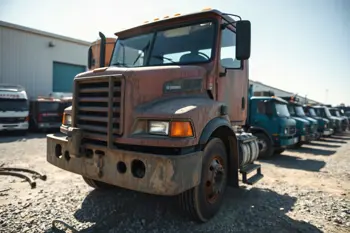
The market for decommissioned utility vehicles often involves assets sold in an as-is, where-is condition, a term that signifies the buyer accepts the equipment in its current state, including any hidden defects or non-operational components 1. Procuring such machinery from government or commercial entities requires a rigorous understanding of the risks involved, as these transactions typically lack the warranties or guarantees found in standard retail environments 1. Whether dealing with specialized equipment like rail car movers or standard utility vehicles, prospective buyers must navigate specific legal, logistical, and safety frameworks before finalizing a purchase 3.
Procurement and Asset Disposal Realities
Government agencies and large corporations frequently utilize formal solicitation processes to divest themselves of aging or non-operational fleets 3. For instance, sales conducted by organizations like Amtrak for surplus machinery, such as a Rail King Car Mover, are often structured as firm fixed-price contracts where the buyer assumes full responsibility for dismantling, removal, and site restoration 1. These sales often mandate that the purchaser maintain specific insurance coverage, such as an A.M. Best rating of A-, to mitigate potential liabilities during the extraction process 1.
Beyond the legal framework, these acquisitions often carry significant operational requirements. Buyers may be tasked with employing pre-approved site superintendents, adhering to stringent U.S. Department of Transportation drug and alcohol regulations, and completing mandatory contractor training 1. Failure to meet these obligations or delays in removing equipment from the host facility can trigger daily storage fees or contract penalties, making the logistics of the purchase as critical as the bid price itself 1.
Condition Assessment and Operational Status
In the secondary market, vehicles are typically categorized by their functional utility. Dealers often distinguish between units that are ready to use versus those sold as run and function or as-is 2. A ready-to-use unit generally undergoes comprehensive servicing, including oil changes, filter replacements, and the addressing of worn components like hoses and bushings 2. Conversely, an as-is designation indicates that the seller provides no assurance of functionality, and the buyer should anticipate the need for immediate repairs, parts procurement, and potentially significant labor investment to restore the vehicle to service 2.
Buyers searching for utility vehicles should expect to encounter varying levels of documentation. While some auction houses may provide basic maintenance records, many surplus disposals from state agencies arrive without comprehensive histories, and they are offered strictly on a caveat emptor basis 3. Potential buyers should physically inspect assets-or hire a third-party expert to do so-before submitting a bid, as the burden of determining the actual condition of engines, transmissions, and electrical systems rests entirely with the participant 3.
Market Channels and Regional Considerations
The marketplace for these vehicles extends from specialized online auction platforms to government procurement portals. In regions like New Zealand, for example, providers such as Turners Auctions, Pickles, and Manheim facilitate the disposal of ex-fleet and commercial equipment 11, 13, 14. These platforms allow a wide range of buyers to access equipment that has reached the end of its corporate or government lifecycle. However, users must be aware of the specific terms of sale, including GST, buyer premiums, and collection deadlines, which can significantly alter the total cost of acquisition 17.
Digital auction platforms, such as Purple Wave or Grays, offer transparent bidding environments where current bid counts and historical data provide context for current market valuations 8, 15. Despite the digital convenience, the fundamental risk remains: utility vehicles sold as-is often lack basic protections. Regulatory bodies, such as the New Zealand Transport Agency or equivalent regional authorities, advise that buyers must verify legal status, including registration, warrant-of-fitness compliance, and odometer accuracy, before assuming ownership 18, 19.
Financial and Regulatory Compliance
When evaluating as-is utility vehicles, the purchase price is only one component of the total cost of ownership. Ancillary fees, such as insurance bonds, transport logistics for oversized equipment, and mandatory site cleanup, can be substantial 1. For instance, some contracts may include nominal insurance fees but require the buyer to indemnify the seller against all claims arising from the removal activity 1. Furthermore, legal restrictions may apply to the resale of materials salvaged from the site, and subcontracting the removal process often requires explicit, prior written consent from the issuing agency 1.
Prospective purchasers must also consider the regulatory environment regarding street legality. Vehicles purchased from industrial or municipal settings may be designated for off-highway use only, which can complicate or prohibit registration for public road operation 8. Utilizing professional services, such as vehicle history report providers, is a standard practice to identify any outstanding liens or encumbrances that could negatively affect the transfer of title 20.
Technical Specifications and Maintenance Realities
Utility vehicles come in diverse configurations, from heavy-duty digger derricks with thousands of miles of operation to lighter, electric-powered groundskeeping units 4, 6. An electric utility vehicle, while potentially requiring less engine-related maintenance, presents different challenges, such as the degradation of battery packs and the proprietary nature of charging systems 5, 7. Buyers must assess the remaining design life of these systems, as replacing a lithium-ion battery array can represent a significant portion of the vehicle's residual value 5.
For older internal combustion vehicles, such as a 1993 water truck with over 500,000 miles, the reality of parts availability and mechanical complexity becomes paramount 6. Collectors and fleet operators often look for models with standardized components, such as Cummins engines or Allison transmissions, which are more easily serviced through a broad network of parts suppliers 4, 6. Regardless of the make, the condition of the frame, chassis, and body-particularly regarding corrosion-is a primary factor in determining whether an as-is purchase is a viable investment or an unsustainable expense 5.
Risk Mitigation Strategies for Buyers
To mitigate the inherent risks of as-is acquisitions, professional buyers employ a structured due diligence process. This involves verifying the serial number, researching the specific model's common failure points, and calculating a worst-case scenario for repair costs before determining a maximum bid 2. It is also important to review the legal documents associated with the bid, as these often contain clauses that supersede verbal representations made by auction house staff or site representatives 3.
Finally, maintaining a realistic outlook on utility is essential. An as-is utility vehicle that has been decommissioned is frequently at the end of its serviceable life for the original owner. While these assets can provide value for secondary applications, they require a proactive maintenance culture and a readiness to handle unexpected mechanical failures. By understanding the full breadth of the procurement process-from insurance requirements to physical site access-buyers can better navigate the complexities of the as-is marketplace 1.
Sources
- Rail King Car Mover SS4200 - Amtrak | CLEATUS
- Cutter Online - 2019 Club Car Carry All 500 Utility Vehicle
- Starbridge - As-Is Sale of 2006 Mack Granite CV713 Dump Truck
- Charter Trucks - 2020 International HV Digger Derrick Truck
- Turf Star Western - Club Car Carryall 500 Lithium-Ion
- Preferred Pump - 1993 Autocar 1400-Gal Water Truck
- Turf Star Western - Toro Workman GTX Electric
- Purple Wave Auction - Utility Vehicles For Sale
- C2 Vehicles - Used 2022 Club Car Carryall 502 Electric
- Turf Star Western - Toro Ultra Buggy e2500
- Turners Auctions (https://www.turners.co.nz/)
- Trade Me Motors (https://www.trademe.co.nz/a/motors)
- Pickles Auctions New Zealand (https://www.pickles.co.nz/)
- Manheim New Zealand (https://www.manheim.co.nz/)
- Grays (https://www.grays.com/)
- Lloyds Auctions (https://www.lloydsauctions.co.nz/)
- BidSpotter (https://www.bidspotter.co.nz/)
- Consumer Protection New Zealand (https://www.consumerprotection.govt.nz/)
- Waka Kotahi NZ Transport Agency (https://www.nzta.govt.nz/)
- MotorWeb (https://www.motorweb.co.nz/)