Modern indoor air conditioners: Navigating the ventless cooling landscape
Modern indoor air conditioners are often discussed alongside ventless cooling, but the two terms do not always describe the same technology. Conventional air conditioning removes heat from a room and sends it elsewhere, while ventless devices generally cool through evaporation, thermoelectric components, or localized airflow. Understanding that distinction makes the growing range of indoor cooling equipment easier to navigate.
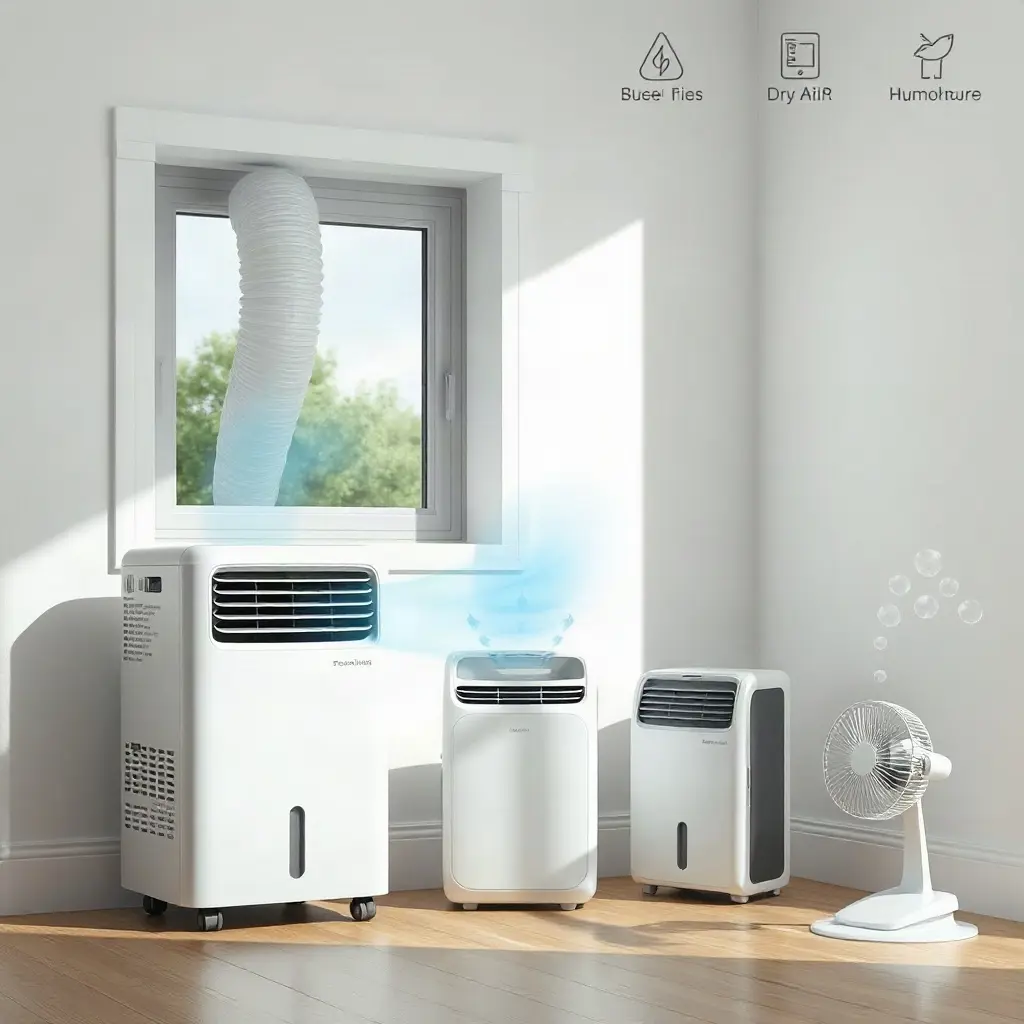
What ventless cooling means indoors
A conventional air conditioner uses a refrigeration cycle. Refrigerant absorbs heat from indoor air at the evaporator coil, a compressor raises the refrigerant pressure, and a condenser releases the collected heat. Because that heat has to leave the room, the system normally needs an outdoor unit, a window opening, or a duct that leads outside.
Ventless cooling equipment does not normally send a hot exhaust stream outdoors. Instead, it may lower the temperature of air passing over water, move air across the skin, or transfer heat into a small internal heat sink. These methods can make a person feel cooler or reduce temperatures in a limited area, but they do not always produce the same room-wide cooling as a ducted or window-mounted air conditioner.
Why most portable air conditioners need a hose
Portable air conditioners are frequently mistaken for ventless appliances because the entire machine sits inside the room. In reality, most use a flexible exhaust hose that carries condenser heat through a window kit, wall opening, or another approved outlet. A single-hose model draws some room air into the machine, while a dual-hose design usually separates intake air from exhaust air.
Without an exhaust path, the heat removed from the room would be released back indoors. The compressor and fan also generate heat of their own, so an unvented refrigeration air conditioner would eventually add heat rather than provide sustained room cooling. Some products described in casual language as ventless are therefore evaporative coolers or personal cooling devices rather than portable refrigerant air conditioners.
Evaporative coolers and the role of humidity
Evaporative coolers use a fan to draw air across a damp pad or water reservoir. As water changes into vapor, it absorbs heat from the air. The cooled air is then circulated through the room. This process uses considerably less mechanical equipment than vapor-compression air conditioning, but it adds moisture to the indoor environment.
The method works more effectively in hot, dry conditions because dry air can absorb more water vapor. In humid climates, the cooling effect is usually weaker and the added moisture can make a room feel uncomfortable. Evaporative units also require regular attention to water reservoirs, pads, and internal surfaces because stagnant water and mineral deposits can affect operation and indoor air quality.
- Direct evaporative coolers add moisture to the air and are generally intended for dry environments.
- Indirect evaporative systems transfer some cooling without adding as much moisture, though their design is more complex.
- Personal evaporative units cool the air near one occupant rather than conditioning an entire room.
Small thermoelectric and personal cooling devices
Thermoelectric coolers use the Peltier effect to move heat from one side of a solid-state component to the other. A fan may blow air across the cooler side, while another heat sink and fan release heat from the warm side. These systems have no refrigerant compressor and can be compact, but their cooling capacity is generally limited.
Small thermoelectric devices are more suitable for a desk, bedside area, or close personal space than for a large bedroom or living room. Their internal heat still has to be released somewhere, and the warm side can offset part of the cooling effect in an enclosed room. Their performance also depends on the room temperature, airflow around the device, and the amount of heat that needs to be moved.
Other approaches in the ventless cooling landscape
Several less common approaches may appear in discussions of indoor cooling. Chilled-water fan coils can circulate cool water through a coil and blow room air across it, but the water must be cooled by another system. Ice-based units can provide short periods of cooling as ice melts, although they require a continuing supply of frozen material and do not provide the same continuous operation as a standard air conditioner.
Desiccant-based systems reduce moisture through a drying material, and some advanced designs combine dehumidification with evaporative cooling. They can be useful in specialized settings, but they are not usually simple room appliances. In every case, the important question is where the removed heat, moisture, or stored cooling capacity ultimately goes.
Cooling performance, room size, and comfort
Cooling claims should be interpreted in relation to the space being treated. A fan can make skin feel cooler without substantially lowering the air temperature. An evaporative cooler may lower air temperature in a dry room but become less effective as humidity rises. A small thermoelectric device may cool a narrow stream of air while having little effect on the rest of the room.
Room size, ceiling height, insulation, sunlight, open doors, appliances, and the number of occupants all influence results. Cooling is also affected by air circulation. A unit placed in a corner may create a cold spot nearby while leaving distant areas warm. For whole-room temperature control, equipment capacity and heat removal matter more than the impression of cool airflow directly in front of a fan.
Humidity, ventilation, and indoor air quality
Ventless cooling can change indoor humidity, which is one of its main practical trade-offs. Evaporative equipment raises humidity, while conventional refrigeration air conditioners typically remove some moisture as indoor air passes over a cold coil. Excess humidity can encourage condensation, musty odors, and mold growth on cool surfaces, especially in poorly ventilated rooms.
Ventilation is a separate issue from cooling. A cooling device may circulate indoor air without replacing stale air or removing cooking odors and pollutants. Opening windows can improve air exchange, but it may also bring in heat and humidity. Filters, water hygiene, and regular cleaning are important because fans can distribute accumulated dust or biological growth if maintenance is neglected.
Noise, electricity, and everyday operation
Fans, compressors, pumps, and water movement all produce sound, though the character of the noise differs by technology. Compressor-based portable units often create a cycling hum, while evaporative coolers produce fan noise and may include pump sounds. Thermoelectric units tend to use small fans, but their limited capacity can mean that the airflow must run continuously.
Energy use depends on the cooling method and how long it operates. Fans generally use less electricity than compressor systems but do not remove much heat. Evaporative equipment can use modest electrical power in dry air, while water consumption and maintenance become part of its operating requirements. Portable refrigeration units may provide stronger temperature control but require an exhaust arrangement and can draw substantially more power.
Choosing a practical type of indoor cooling
The suitable category depends on whether the goal is personal relief, lower room temperature, humidity control, or occasional cooling in a space where outdoor venting is difficult. A fan or thermoelectric unit may address a small personal area. An evaporative cooler may fit a dry climate with adequate ventilation. A portable air conditioner is more likely to provide measurable room cooling, but its hose must be installed correctly.
Safety and building conditions also matter. Electrical equipment should be used on an appropriate circuit and kept away from standing water. Water-based units need cleaning and drainage procedures, while portable air conditioners need a stable exhaust connection and, in some cases, condensate management. Noise tolerance, window design, floor space, and local humidity can be just as important as the stated cooling capacity.
What to expect from modern ventless cooling
The phrase ventless air conditioner covers several different ideas, not one universal appliance type. Devices without outdoor exhaust can improve perceived comfort, cool a small zone, or lower air temperature under suitable conditions. They generally cannot bypass the basic heat balance of a room, however. Sustained refrigeration cooling requires a place for heat to go.
A clear distinction between air movement, evaporative cooling, thermoelectric cooling, and true heat-pump refrigeration helps set realistic expectations. The most useful comparison is not simply whether a unit has a hose, but how it handles heat, moisture, airflow, maintenance, and the size of the space being cooled.