Surplus military storage units for industrial workshops: A comprehensive guide to procurement and installation
Types of Surplus Military Storage Assets
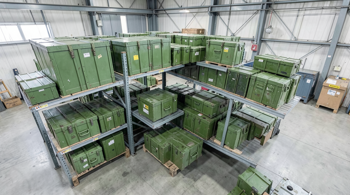
Industrial workshop operators often evaluate military surplus as a robust alternative to conventional commercial storage solutions. Available assets typically fall into three primary categories: heavy-duty steel ammunition and gear boxes, containerized shipping units, and larger-scale prefabricated structures such as Quonset huts 1. Specialized containers like the PA156 mortar box or the L17A1 medium calibre ammo box offer high-capacity, airtight, and watertight protection for delicate tools and sensitive components 2, 3. These units are engineered to MILSPEC standards, featuring heavy-gauge carbon steel and corrosion-resistant coatings, making them suitable for demanding workshop environments where dust and moisture ingress must be minimized 4, 5.
For larger workspace requirements, shipping containers, often referred to as Conex boxes, provide a standardized modular solution. These units, originating from the U.S. Army's Container Express logistics program, are available in 20-foot and 40-foot configurations 6. They are frequently repurposed into mobile workshops by incorporating integrated shelving, dual-access doors, and passive ventilation systems 7. Beyond these, Quonset-style arch buildings offer significant open-span floor space without interior columns, suitable for larger industrial fabrication projects where clear structural height is required 8.
Procurement Channels for Surplus Property
Acquiring military surplus for industrial use requires navigation through various government-managed disposition channels. The Defense Logistics Agency (DLA) Disposition Services is the primary federal organization responsible for the transfer or sale of excess military property 9. Concurrently, the General Services Administration (GSA) manages the auction of federal personal property, which may include specialized storage equipment and facility assets 10. These items are frequently listed on public-facing auction platforms such as GovDeals and GovPlanet, which serve as intermediaries for both federal and municipal government agencies looking to dispose of idle equipment 11, 12.
Market participants must recognize that surplus inventory fluctuates significantly, necessitating regular monitoring of multiple auction sites rather than reliance on a single source 13. Platforms such as IronPlanet and BidSpotter provide additional reach into commercial and industrial equipment liquidations, which may offer relevant heavy-duty storage assets 14, 15. Because many surplus items are sold in an as-is state, buyers should conduct comprehensive pre-bid assessments regarding the physical condition of the assets, specifically looking for signs of structural oxidation, compromised seals, or past modifications that could impact performance 16.
Structural Integrity and Operational Safety
Transitioning a military-grade storage unit into a functioning industrial workshop necessitates a rigorous review of safety and structural standards. OSHA regulations mandate that stored materials within a workplace must be kept stable and secured against sliding, collapse, or accidental falling, which becomes particularly critical when modifying containers for shelving or overhead storage 17. Operators should be aware that while military containers are built for extreme field conditions, they are not inherently designed for occupancy, and any transformation into a workshop space should account for proper egress, interior climate control, and electrical safety standards 18.
Environmental considerations are also paramount when utilizing used industrial or military materials. Many older structures or components may contain legacy coatings or hazardous materials that require professional assessment before any cutting, grinding, or sanding occurs 19. For example, renovations involving structures with pre-1978 coatings must adhere to EPA requirements regarding lead-based paint to ensure the safety of the workforce 20. Failure to address these environmental factors during the initial setup phase can lead to significant regulatory hurdles or long-term health liabilities for workshop personnel.
Logistical and Placement Requirements
The total cost of integrating a surplus unit into a workshop project is often heavily influenced by logistical variables beyond the acquisition price. Shipping and site preparation represent significant capital requirements, as containers and large arch structures require specialized heavy-lifting equipment for offloading and placement 21. Ensuring that the site provides adequate truck access for flatbed transport is a mandatory prerequisite for successful deployment. Furthermore, the selection of a foundation type, whether it be a simple concrete pad or a more permanent engineered slab, must align with local geotechnical conditions and the specific load-bearing requirements of the intended storage or machinery 22.
Buyers should also investigate the necessity of permanent versus temporary installation. If a container is intended to remain as a fixed workshop, it may be subject to local zoning ordinances that differ significantly from portable, field-deployed assets. Failure to verify the necessary structural approvals and utility permits can result in costly delays or the requirement to relocate the unit after it has already been commissioned. Consulting with local building authorities during the procurement phase ensures that the planned installation complies with adopted fire and mechanical codes 23.
Maintenance and Long-Term Asset Management
To maximize the utility of surplus storage in an industrial setting, ongoing maintenance protocols must be established. While high-quality steel containers and boxes feature robust anti-corrosion coatings, exposure to industrial chemicals, fluctuating humidity, and salt air can degrade protective layers over time. Regular inspections of rubber O-ring gaskets and locking mechanisms are essential for maintaining the airtight characteristics of the units, particularly in environments where moisture sensitive equipment is kept 24. Touch-up painting and the application of rust inhibitors should be performed proactively to prevent the propagation of oxidation on exposed metal surfaces.
Effective utilization also relies on interior organization strategies. Utilizing stackable units, such as those with interlocking ribs, can optimize vertical floor space without compromising structural stability 25. When retrofitting units with custom shelving, it is imperative that the modifications do not exceed the original load-bearing capacity of the container structure. Maintaining an organized, clearly labeled inventory system within these containers not only satisfies workplace safety guidelines but also improves the efficiency of workshop workflows, ensuring that critical tools and materials are immediately accessible.
Compliance and Regulatory Oversight
Adhering to local building and safety codes is the final, critical step in the successful deployment of surplus military storage units. The International Code Council provides the model building codes that many jurisdictions adopt to regulate structural, mechanical, and fire-safety aspects of new installations 26. When a container or structure is converted to a workshop, it may be viewed by municipal inspectors as a permanent addition to the property, necessitating compliance with electrical codes, fire suppression requirements, and occupancy limits. Neglecting these regulatory requirements is a common pitfall that can jeopardize the operation of the workshop.
Ultimately, the successful deployment of surplus assets hinges on careful due diligence during the acquisition, transportation, and installation phases. By treating the project with the same systematic approach applied to conventional construction-conducting pre-acquisition inspections, securing proper permits, and ensuring environmental compliance-workshop operators can effectively leverage these durable military-grade assets to create highly functional, secure, and long-lasting storage and fabrication environments.
Sources
- U.S. General Services Administration (gsa.gov/buying-selling/government-property-for-sale-or-disposal)
- MilitaryMart PA156 Large Metal Mortar Ammo Box Specifications
- MilitaryMart L17A1 Medium Calibre Ammo Box Specifications
- Feltons Army Surplus: PA156 Technical Specification
- Fury28: M19A1 .30 Cal Ammo Can Quality Standards
- YesContainers: Conex Box History and Standardization
- Universal Containers LLC: 40ft Tunnel Container Workshop Configurations
- SteelMaster Buildings: Quonset-style Structures
- Defense Logistics Agency (dla.mil/Disposition-Services/)
- U.S. General Services Administration (gsa.gov)
- GovDeals Auction Marketplace
- GovPlanet Surplus Marketplace
- Public Surplus Auction Database
- IronPlanet Industrial Auctions
- BidSpotter Commercial Assets
- General Government Surplus Auction Documentation
- Occupational Safety and Health Administration (osha.gov/laws-regs/regulations/standardnumber/1910/1910.176)
- TM & Outdoor: Waterproof Storage Application Guide
- EPA Lead Renovation, Repair and Painting Program
- U.S. Environmental Protection Agency (epa.gov/lead)
- Conexwest: Shipping Container Transport and Placement Requirements
- International Code Council (iccsafe.org/products-and-services/i-codes/2024-i-codes/)
- International Code Council (iccsafe.org)
- TheCasePlace: Inspection and Maintenance of Surplus Cases
- Commando Australia: BXG019 Storage Trunk Features
- International Code Council: 2024 I-Codes for Industrial Buildings