5 kW home solar system with battery backup: typical prices in 2026
Key facts
- A 5 kW solar system with a 10 kWh battery typically costs between R74,500 and R90,500 fully installed in South Africa as of 2026 1 2.
- Systems are comprised of photovoltaic panels, a hybrid inverter, mounting structures, and lithium-ion storage batteries 3 1.
- Professional installation must include a Certificate of Compliance (CoC) to ensure safety and insurance validity 4 1.
- Grid-tied configurations allow homeowners to supplement solar and battery power with municipal grid electricity when required 5 6.
Investing in a 5 kW home solar system with battery backup has become a standard approach for South African households seeking to manage energy costs and improve supply reliability. As of 2026, the market offers various configurations that allow homeowners to balance initial capital investment with daily energy requirements. Because these systems function as integrated units, understanding the interplay between solar generation capacity, storage volume, and the existing municipal grid connection is essential for effective household planning.
Understanding 5 kW System Capacity
A 5 kW inverter capacity is frequently selected for medium-sized residential homes because it aligns well with typical household demand profiles. In the South African context, where solar conditions are favorable with an average of approximately 5.5 peak sun hours per day, a system of this size can generate significant energy for daily use 5. This capacity is generally sufficient to cover the majority of daytime electricity consumption for a two-to-three-bedroom household, depending on the specific appliance load and usage patterns 7 2.
The effectiveness of a 5 kW system is highly dependent on environmental factors, particularly roof orientation and the absence of shading. In the Southern Hemisphere, north-facing roofs are considered optimal for maximizing sunlight absorption throughout the day. When paired with a battery backup, the system can store excess power generated during peak daylight hours, providing a reliable energy source for evening use. This setup is capable of covering roughly 80% to 90% of a typical household's total energy consumption, significantly reducing reliance on municipal supply 5.
Essential Components of a Solar Setup
A residential solar system consists of several critical components that must function in harmony. The solar panels capture sunlight, while the hybrid inverter acts as the system's core, managing the flow of electricity between the panels, the battery, and the home's distribution board 1 6. Hybrid inverters are essential for modern setups, as they allow the home to draw from the battery or solar array first, and switch seamlessly to the municipal grid when demand exceeds current production and storage capacity 6.
Battery storage is usually composed of Lithium Iron Phosphate (LiFePO4) technology, favored for its safety profile and long cycle life. When a 5 kW inverter is paired with a 10 kWh battery, the system provides a robust backup that can typically sustain essential household loads for several hours during outages 2. Homeowners should evaluate the quality of these components, as efficiency and longevity vary by manufacturer. High-quality inverters with advanced monitoring capabilities allow users to track energy production in real time, aiding in the effective management of household energy budgets 6.
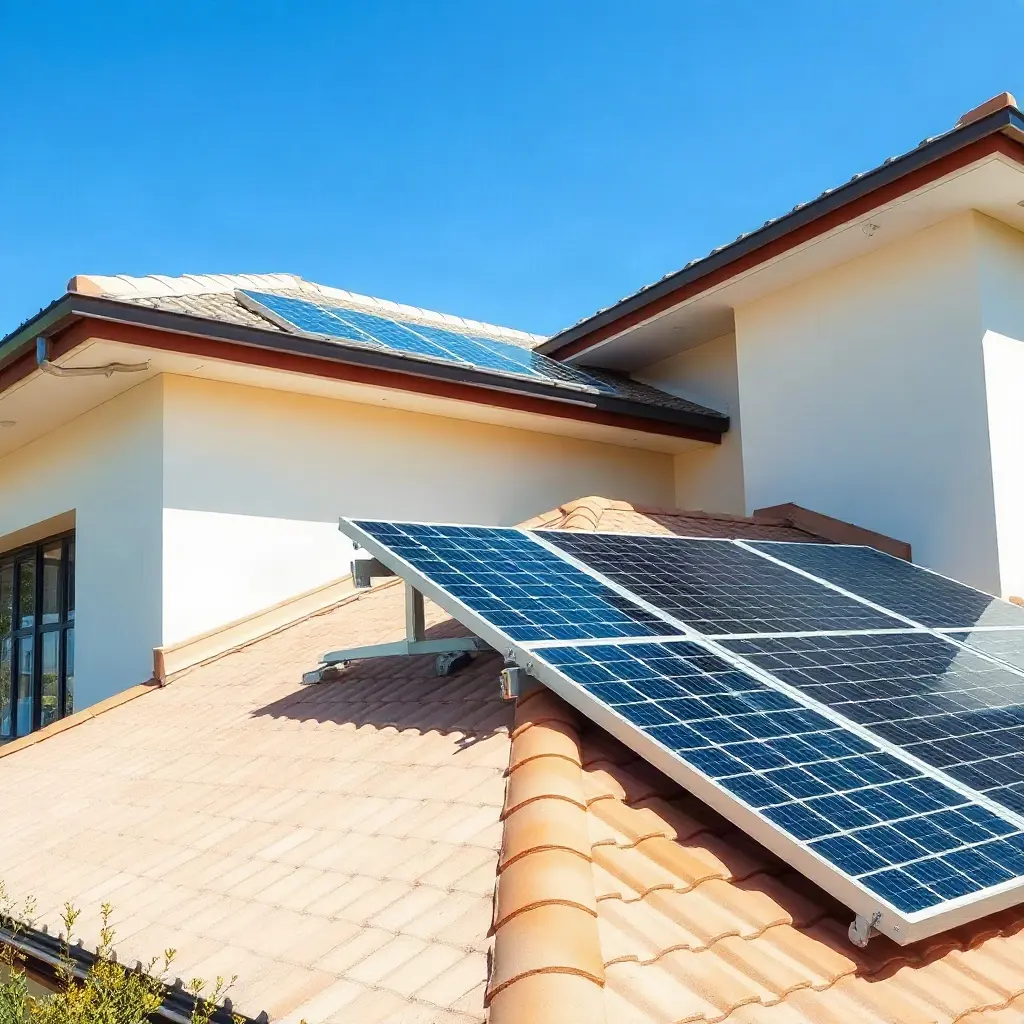
Typical Market Prices in 2026
Pricing for a 5 kW system with battery storage reflects a comprehensive package that includes panels, the inverter, mounting structures, electrical cabling, labour, and formal commissioning 3 1. In 2026, the fully installed market price for a 5 kW system with a 10 kWh battery generally ranges from R74,500 to R90,500 1 2. For systems without battery storage, which are designed solely for daytime grid-tied savings, market estimates typically fall between R75,000 and R100,000, though these figures can vary depending on hardware tiers and installation complexity 7 2.
It is important to note that these figures are estimates and can be influenced by site-specific factors. Variations in roof material, such as tiles versus corrugated iron, the distance from the inverter to the distribution board, and whether the home has a three-phase electrical connection, all contribute to the final quote 2. Homeowners are encouraged to obtain multiple written quotes from different installers to ensure that all necessary work, including the Certificate of Compliance (CoC), is included in the quoted price 4 7.
Professional Requirements and Compliance
Professional installation is a critical requirement for residential solar systems. Legitimate installers should be registered with professional bodies such as the South African Photovoltaic Industry Association (SAPVIA) and must be authorized to issue a Certificate of Compliance (CoC) under the Department of Employment and Labour 4. The CoC is a legal necessity for electrical safety, property insurance coverage, and home resale processes 1.
Furthermore, grid-tied systems must comply with municipal regulations regarding Small-Scale Embedded Generation (SSEG). Each municipality-such as the City of Cape Town, City Power in Johannesburg, or Tshwane-maintains its own registration and inspection timelines 4 8. Engaging an installer who has experience working within a specific municipality is beneficial, as they will be familiar with the local paperwork and technical standards required for grid synchronization and, where applicable, net metering programs 4 8.
Strategic Considerations for Homeowners
Before proceeding with a solar installation, homeowners should conduct a thorough assessment of their energy usage. Comparing the cost of the system against current electricity tariffs is a primary method for determining the potential payback period. As municipal electricity tariffs in South Africa have historically seen annual increases, many homeowners find that solar installations provide long-term predictability for energy costs 5.
Finally, while the upfront cost is a major consideration, the long-term value of a system depends on the durability of the chosen hardware and the quality of the installation. Opting for a professional who performs a site visit rather than providing a phone-based estimate is the most reliable way to receive an accurate, final quote. By focusing on verified credentials and municipal compliance, homeowners can ensure their solar investment is safe, legal, and capable of meeting their energy needs for years to come 4 6.
Sources
- Rooftop Solar Installation Cost SA 2026: From R74,500: https://energybee.co.za/guides/rooftop-solar-installation-cost-south-africa
- 5kW Solar System South Africa: Price, Sizing & Full 2026: https://energybee.co.za/guides/5kw-solar-system-price-south-africa-2026
- Rooftop Solar Installation Cost 2026: R45k–R180k SA Guide: https://energybee.co.za/guides/rooftop-solar-installation-cost-south-africa-2026
- Solar Installation Companies South Africa 2026 | EnergyBee: https://energybee.co.za/guides/solar-installation-companies-south-africa-2026
- Should I Go Solar? Free Decision Tool for South Africa (2026): https://www.ourpower.co.za/tools/solar-decision-wizard
- Cost of a 5KW Solar System in South Africa Explained: https://bfosolar.co.za/how-much-5kw-solar-system-cost/
- Is My Solar Quote Fair? What Solar Should Cost: https://energybee.co.za/guides/is-my-solar-quote-fair-south-africa-2026
- Solar Installation in Cape Town 2026 - Prices, CoCT SSEG: https://energybee.co.za/guides/solar-installation-guide-cape-town-2026