Queensland rural acreage developments in 2026: Assessing regional inventory and demand
Key facts
- The median farmland price in Queensland reached a record $11,047 per hectare during the first half of 2026 1.
- Statewide transaction volumes fell by 10.8 percent year-on-year in early 2026, marking the lowest half-yearly volume in over 32 years 1.
- Demand remains highest for premium, well-watered productive assets, while interest in more marginal, less-developed country has softened 2 1.
- Buyers are increasingly prioritizing land quality, water security, and infrastructure when evaluating rural acreage opportunities 2.
The Queensland rural acreage market in 2026 is characterized by a recalibration of growth as market participants adapt to shifting economic and environmental conditions. While the state saw a significant surge in property values over the preceding five years, the current environment is defined by more discerning buyer behavior and tightening sales volumes 1 3. Understanding the nuances of this market requires an assessment of both regional inventory levels and the broader factors driving demand, ranging from commodity market performance to infrastructure accessibility.
Statewide Market Trends and Price Benchmarks
As of mid-2026, the Queensland farmland market remains resilient despite a slowdown in the rapid price appreciation observed in recent years 2 3. The median price for farmland in the state reached approximately $11,047 per hectare in the first half of 2026, representing an 11.9 percent year-on-year increase, though this aggregate figure masks significant regional variability 1. Industry analysis highlights that while the overall trajectory remains positive, the market is no longer seeing the uniform, widespread growth that characterized the 2021-2025 period 2.
Regional differences are particularly pronounced when comparing central and coastal hinterland areas. For instance, while some areas continue to attract premium interest, regions such as Central Queensland and the Central Highlands have experienced declines in median farmland prices during the first half of 2026 1. These shifts are often tied to localized seasonal conditions, commodity price fluctuations, and a general trend where buyers are prioritizing high-quality, well-watered assets over marginal land 2 4.
Inventory and Transaction Dynamics
One of the most notable features of the 2026 rural property market is the significant tightening of supply. Transaction volumes across Queensland fell by nearly 11 percent year-on-year in early 2026, reaching their lowest levels in more than three decades 1. This contraction in inventory is driven by a combination of factors, including land consolidation, where larger holdings are being absorbed, and a lack of selling appetite among established owners benefiting from favorable seasonal conditions 2 1.
The scarcity of high-quality inventory on the open market has intensified the focus on due diligence. Prospective buyers often find that the most desirable acreage does not reach public portals or stays on the market for very short periods 5. As a result, market participants are increasingly relying on localized knowledge regarding soil quality, water rights, and development potential, as these factors significantly influence the true value of an asset beyond its listed price per hectare 5.
Regulatory and Planning Frameworks
Purchasing rural acreage in Queensland involves navigating a complex regulatory landscape that differs significantly from urban residential real estate. Local council planning schemes dictate the permissible uses for land, and these designations-such as primary production, conservation, or rural residential-can fundamentally change the property's utility and value 5. Buyers must verify zoning requirements before contemplating any development or intensive land use, as permits for residential construction on rural-zoned land are not guaranteed and are subject to stringent local government criteria.
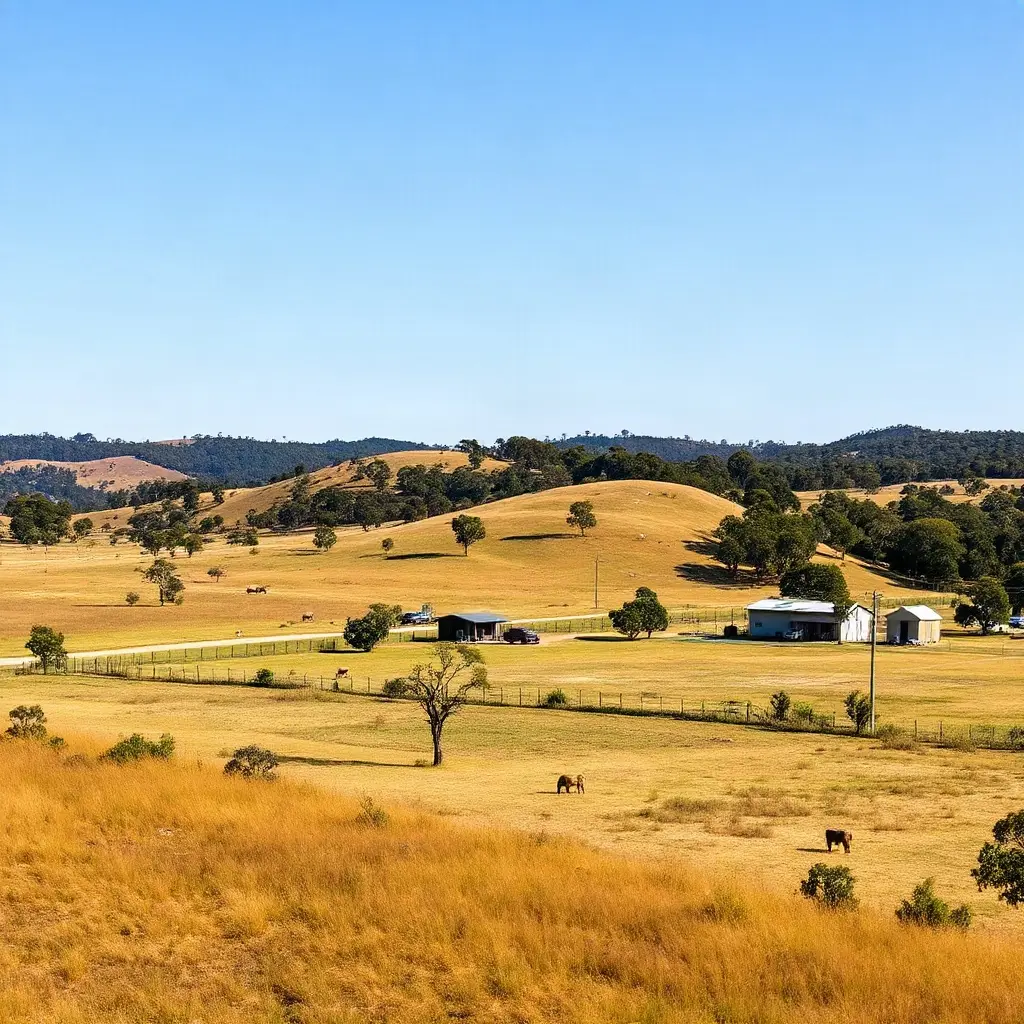
Water management is another critical component of the Queensland regulatory environment. Access to water, whether through irrigation licenses or riparian rights, is highly regulated and often essential for maintaining the productivity of acreage 5. Furthermore, prospective owners should be aware of overlay restrictions related to bushfire risks, flooding, and environmental protections. These constraints are typically documented in local council records, and failing to assess them adequately during the due diligence process can lead to significant financial or operational risks post-acquisition 5 6.
Infrastructure and Ongoing Costs
Unlike urban environments where infrastructure is largely provided by local authorities, rural acreage often requires the owner to manage independent utility solutions. This includes the installation and maintenance of water supply systems, sewage management (typically via septic or aerobic treatment units), and off-grid electricity or extended power grid connections 5. The cost and complexity of these requirements vary based on the location of the block and its existing improvements.
Ongoing ownership costs also include council rates, which can vary widely depending on the local government area, and land taxes, which are subject to state-level thresholds. Primary production land often benefits from specific tax concessions, but transitioning land from production to lifestyle usage can shift these tax obligations. Investors should consult independent tax professionals to understand the specific implications of their land use and ownership structure, ensuring that their budget accounts for these long-term maintenance and compliance expenses 6.
Drivers of Demand and Future Outlook
Demand for rural acreage in Queensland is currently driven by a mix of lifestyle aspirations and productive agricultural interests. Hybrid work patterns have enabled a segment of the population to move further from major metropolitan hubs, provided they have access to national highway networks or digital infrastructure 7. Simultaneously, strong cattle markets and commodity price trends continue to underpin interest in larger, high-performing grazing properties 4 3.
Looking ahead to the remainder of 2026, analysts suggest that the sector will likely face increased volatility. Factors such as interest rate cycles, input costs, and seasonal climate outlooks are expected to influence decision-making 2 3. While the era of rapid price growth appears to be moderating, the market remains supported by a cohort of discerning buyers who prioritize quality and long-term viability over speculative acquisition 2 3.
Sources
- Central Queensland farmland values fall as buyers turn cautious - The Rockhampton News: https://rockynews.com.au/central-queensland-farmland-values-fall-as-buyers-turn-cautious/
- Farmland growth steadies | Queensland Farmer Today: https://queenslandfarmertoday.com.au/news/06/07/2026/farmland-growth-steadies/
- Queensland grazing land: price growth to slow after 2025 surge | Queensland Country Life | QLD: https://www.queenslandcountrylife.com.au/story/9237527/queensland-grazing-land-price-growth-to-slow-after-2025-surge/
- How are property values looking in Central and Southern Qld? - Beef Central: https://www.beefcentral.com/property/how-are-property-values-looking-in-central-and-southern-qld/
- Buyers Agent for Acreage Properties in Greater Brisbane 2026: https://www.purposeproperty.com.au/buyers-agent-acreage-properties-greater-brisbane
- Buying Rural Property Australia 2026 | Australia Develops: https://australiadevelops.com.au/buying-rural-property-australia-2026-finance-due-diligence-and-what-you-need-to-know/
- Moving to Curra QLD 🏍️: https://bestratedtransport.com.au/blog/moving-to-curra-qld