7-night all-inclusive holiday in Costa Rica with flights and meals: A 2026 Canadian travel guide | Costs, routes and entry rules explained
Key facts
- True all-inclusive resorts are concentrated mainly around Guanacaste and the Gulf of Papagayo, near Liberia Airport. 1
- Published 2026 resort guides place typical all-inclusive rates at about USD 175 to USD 680 per couple per night, depending on category. 1
- Nonstop Canadian routes to Costa Rica commonly take about five to seven and a half hours, with Liberia and San José as the main gateways. 2
- Canadian visitors generally need a valid passport and onward-travel proof for short tourist stays, with entry conditions subject to official advice. 3 2
A 7-night all-inclusive holiday in Costa Rica with flights and meals can combine a scheduled international flight, resort accommodation, daily food and selected drinks, but the phrase describes a travel format rather than one guaranteed product. For Canadian travellers planning 2026 travel, the main questions are which airport serves the resort, what the meal plan excludes, how much the resort category costs, and whether a beach stay fits the wider geography of Costa Rica.
What a seven-night package usually includes
Seven nights is a common holiday length because it fits a weekly resort pattern and can align with recurring international flight schedules. A fly-and-stay arrangement typically joins return economy flights with seven nights of accommodation, airport transfers and resort services. Meals commonly mean breakfast, lunch, dinner, snacks and standard local beverages, although the precise definition varies by property. À la carte restaurants, premium drinks, spa services, excursions, room upgrades and some water activities may carry separate charges.
Package wording should therefore be read as a checklist rather than a promise of unlimited access to every facility. Important details include baggage allowance, transfer destination, taxes, child policies, restaurant reservations, tipping practices and whether the resort is genuinely all-inclusive or simply offers an optional meal supplement. A 2026 comparison guide specifically recommends checking buffet and à la carte access, house and premium alcohol, reservation rules, transfers, tips and taxes before assessing the overall cost. 1
Typical costs for Canadian travellers in 2026
Published 2026 resort comparisons put Costa Rican all-inclusive accommodation at roughly USD 175 to USD 180 per couple per night at the lower end, around USD 250 for a mid-range example, and approximately USD 500 to USD 680 for upscale properties. A further luxury category is reported at about USD 1,000 per couple per night. These are market reference points for resort accommodation, not quotations for a complete flight package, and room type, season, occupancy and location can change the final amount. 1
| Resort category | Published typical rate | Main cost consideration |
|---|---|---|
| Lower-cost all-inclusive | About USD 175 to USD 180 per couple per night | More limited facilities and dining choice may apply |
| Mid-range | About USD 250 per couple per night | Usually balances standard rooms, meals and activities |
| Upscale | About USD 500 to USD 680 per couple per night | Higher service level and broader facilities |
| Luxury | About USD 1,000 per couple per night | Specialised accommodation and resort services |
Airfare is normally the largest variable outside the resort rate, and published package totals depend on the Canadian departure city, travel month, baggage, transfers and room occupancy. Prices shown in US dollars also require attention to currency conversion and foreign transaction costs. A realistic comparison should separate the resort component from flights, ground transport, excursions, travel insurance and spending money rather than treating every advertised inclusion as identical.
Where all-inclusive resorts are concentrated
Guanacaste, in northwestern Costa Rica, is the principal resort region for this style of trip. The Papagayo Peninsula and Gulf of Papagayo have the strongest concentration of true all-inclusive properties, while the wider Pacific coast includes Tamarindo, Conchal, Flamingo and other beach areas with different resort structures. The region is known for a relatively dry Pacific climate, beaches, surfing, marine activities and access to wildlife and dry-forest landscapes. 4 1
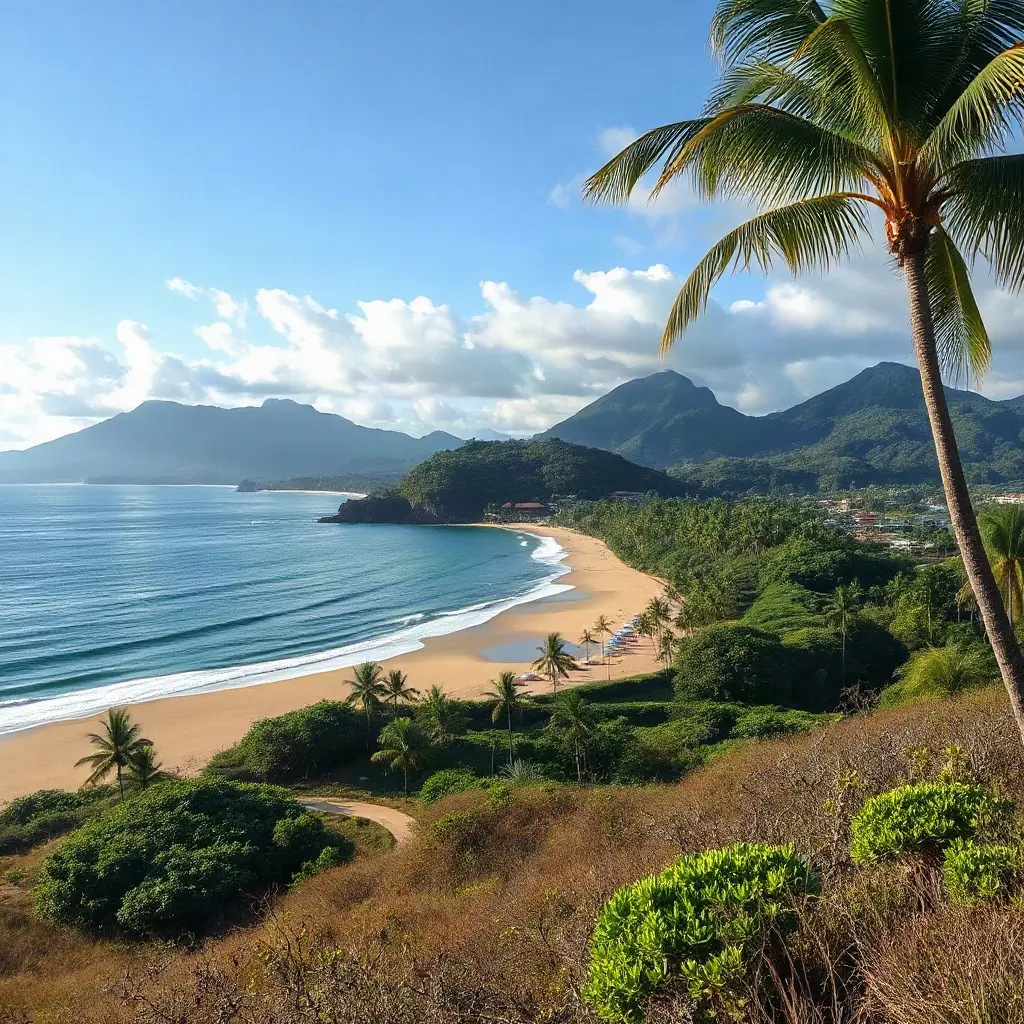
Manuel Antonio and Jacó offer a different balance, with beaches close to rainforest, wildlife areas and adventure activities, but they are not as strongly associated with large all-inclusive resort clusters. Arenal and La Fortuna are known for volcanic scenery, hot springs and waterfall visits, while Monteverde is associated with cloud forest, hanging bridges and guided wildlife walks. A travel guide describes the Arenal to Monteverde route as a classic inland pairing, but mountain roads can make a seven-night beach-and-interior itinerary feel busy. 5
Flights, airports and transfers from Canada
Costa Rica has two principal international gateways for this itinerary. Daniel Oduber Quirós International Airport in Liberia serves Guanacaste and the Papagayo area, while Juan Santamaría International Airport near San José is the main central gateway. A 2026 Canadian travel overview reports nonstop flying times of roughly five to seven and a half hours, with Toronto, Montréal and Calgary among the cities associated with direct seasonal or scheduled services. 2
Liberia is generally the more practical arrival point for Guanacaste resorts because it reduces the overland journey to the Pacific coast. San José can work well for Central Valley, Arenal or Manuel Antonio itineraries, but reaching Guanacaste from the capital involves a longer road transfer. Flight schedules vary by departure city and season, so the airport named in a package description should be checked against the actual resort location, transfer duration and baggage terms rather than judged only by the airfare.
Entry requirements and practical rules
Canadian citizens travelling for tourism generally do not need a visa for a short Costa Rican visit, but entry officers can require a valid passport and evidence of onward or return travel. A 2026 Canada travel advisory remains the appropriate authority for current entry, health and safety conditions, including any passport-validity or documentation details that may change. 3 A Canadian travel guide published in 2026 describes tourist stays of up to 180 days without a visa, although the permitted period is determined at entry. 2
Travel insurance is worth considering because medical care, evacuation, cancellations and delays can create costs outside a resort package. Personal documents should be kept secure, and copies should be stored separately. Canadian government advice identifies frequent petty theft, including incidents in airports, hotels, restaurants, public transport and popular viewpoints. Passports should be carried securely, especially during peak visitor periods, and valuables should not be left in rental vehicles or unattended beach areas. 3
Weather, seasons and the trade-offs of resort travel
The Pacific dry season generally runs from December to April and offers the most reliable beach weather, but it also brings higher visitor demand and potentially higher accommodation costs. The rainy season, generally May through November, produces greener scenery, fuller waterfalls and fewer crowds in many areas, although afternoon rain can affect excursions and road travel. September and October are highlighted as particularly appealing on the Caribbean coast, which has a different rainfall pattern from Guanacaste. 6
A resort-only week provides predictable meals, pools and beach access, but it can limit exposure to Costa Rica's volcanic, cloud-forest and rainforest landscapes. Conversely, adding Arenal or Monteverde introduces driving time, separate accommodation and more planning. The main practical trade-off is therefore convenience versus geographic variety. For a seven-night stay, Guanacaste offers the simplest airport-to-resort arrangement, while a split itinerary may suit travellers who value wildlife and inland scenery more than a fully packaged beach schedule.
Sources
- 2026 Costa Rica All Inclusive Resorts by Traveler Type · Outbound Lynx: https://outboundlynx.com/costa-rica-all-inclusive-resorts/
- Costa Rica from Canada: what to expect · Tres Mares: https://tresmares.co/guides/costa-rica-from-canada-what-to-expect/
- Costa Rica travel advice: https://travel.gc.ca/destinations/costa-rica
- Costa Rica Vacation Packages from Toronto 2026 | Air Valet: https://deals.airvalet.vacations/costa-rica-vacation-packages
- Costa Rica Travel Guide: Arenal, Monteverde & the Pacific Coast - Travel With Paarunga: https://travel.paarunga.com/destinations/costa-rica-travel-guide-arenal-monteverde/
- The Essential Guide to Visiting Costa Rica | National Geographic: https://www.nationalgeographic.com/travel/article/costa-rica-essential-travel-guide