Used chassis cab trucks from government fleet auctions: evaluating mechanical condition: a UK inspection and risk guide
Key facts
- Government surplus vehicles are usually sold through appointed commercial auctioneers rather than a single official auction website. 1
- A chassis cab inspection should cover the engine, drivetrain, frame, suspension, brakes, tyres, electrics and maintenance records. 2
- Public-sector vehicles may have structured service records while still experiencing intensive stop-start, load-carrying or off-road use.
- UK road use requires attention to registration, MOT status, vehicle identity, roadworthiness and any inspection requirements applicable to the vehicle category. 3
Used chassis cab trucks from government fleet auctions require a different assessment from ordinary passenger vehicles. The cab and ladder frame may be serviceable while the engine, suspension, brakes, hydraulic interfaces or frame attachments have experienced years of demanding public-sector work. Mechanical condition should therefore be judged through a combination of physical inspection, cold-start testing, documentation and UK compliance checks, rather than catalogue photographs or mileage alone.
What a government chassis cab actually is
A chassis cab consists of the driver’s cab, engine, axles and bare frame, leaving the rear structure ready for a dropside, box, tipper, recovery body or other specialist installation. That configuration is common in logistics, construction, highways maintenance and municipal work because the body can be matched to the operating task. The frame and its cross-members are structural components, not merely mounting points, so corrosion, cracks or poor repairs can affect the entire vehicle.
Government fleet disposal is fragmented across central government, defence, police, councils and other public bodies. UK public-sector sellers generally appoint commercial auctioneers instead of operating one unified government auction website. Lots may be sold as seen, and the final transaction can include a buyer’s premium and VAT depending on the auction terms. 1 This structure means the public-sector label describes provenance, not a guaranteed mechanical standard.
Maintenance history and fleet use
Fleet maintenance can be more structured than private ownership because vehicles are commonly managed against schedules, inspections and internal records. A service history may include mileage, dates, repairs, defect reports and component replacement, making it possible to identify patterns rather than relying on a seller’s verbal description. Commercial vehicle guidance also stresses that mileage should be compared with service history and MOT advisories, since a high-mileage vehicle with consistent records may be easier to assess than one with incomplete documentation. 4
Records still need context. A council chassis cab may have spent its life on short, stop-start routes, while a utility or logistics vehicle may have accumulated longer motorway journeys. Repeated towing, carrying heavy equipment, idling, rough access roads and frequent body loading can accelerate clutch, suspension, brake and frame wear. Match the documented work to the intended use, and look for gaps between recorded inspections, unexplained mileage changes, repeated warnings and repairs that appear to have been postponed.
Mechanical inspection checklist
Begin with identification and a cold engine. Match the VIN or chassis number with the paperwork, confirm the stated mileage and examine the engine for oil, coolant, fuel, power-steering or air-system leaks. A cold start can reveal extended cranking, abnormal knocking, excessive smoke or unstable running that may be hidden after the engine has been warmed. Inspection guidance for commercial trucks also highlights the charge-air system, cooling system, drivetrain and diagnostic information as important parts of a pre-purchase assessment. 2
Inspect the gearbox, clutch, propshaft, differentials, steering, suspension and axles during a controlled road test where permitted. Look for clutch slip, difficult gear selection, driveline vibration, steering play, uneven tyre wear and harsh suspension movement. Brakes deserve particular attention, including air pressure behaviour, warning lamps, hoses, chambers, discs or drums and signs of overheating. Wheels, rims, tyres, lights, electrical harnesses and reflective markings should also be checked because defects in these areas can prevent safe operation even when the engine performs normally. 2
Frame, body interfaces and red flags
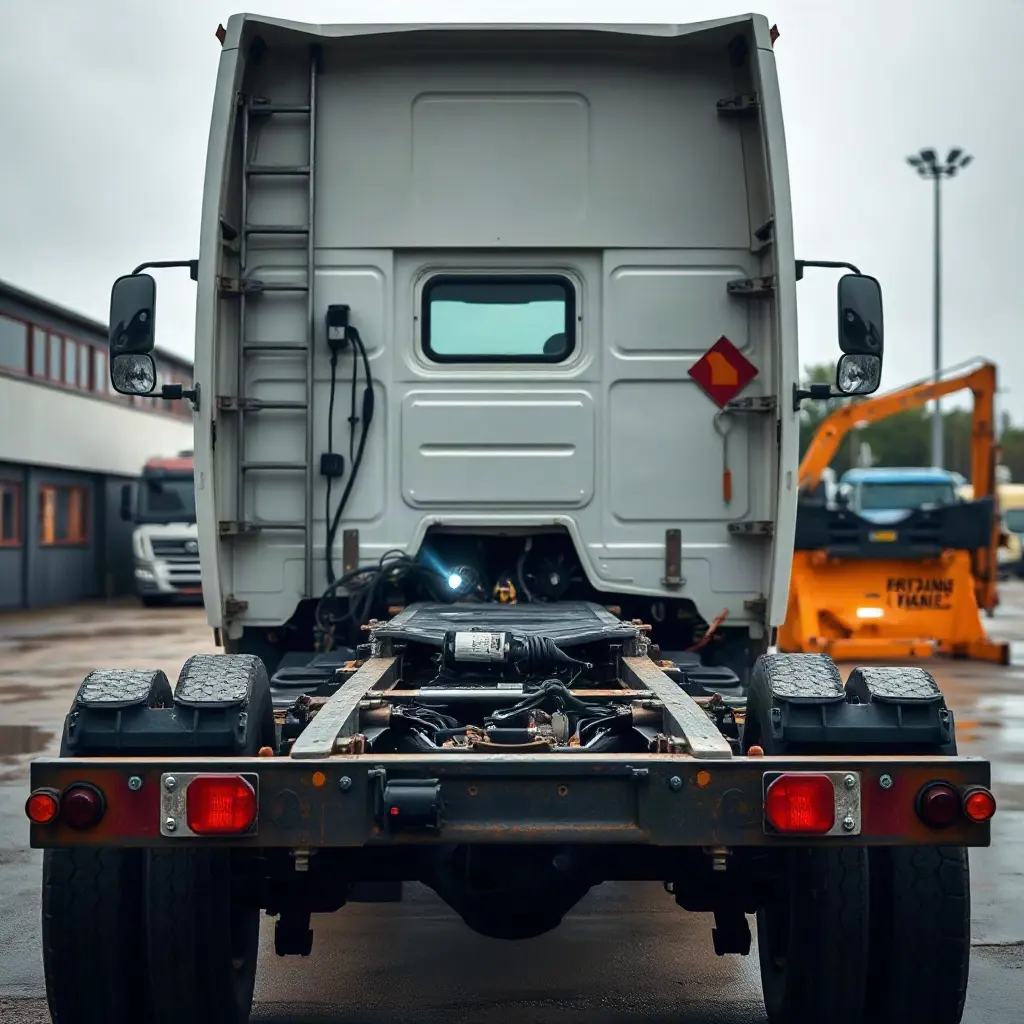
The frame is the highest-priority structural area. Inspect both rails, cross-members, spring hangers, cab mounts, body mounts and areas around previous welding or drilling. Surface rust is not automatically a failure, but deep scaling, perforation, distorted rails, cracked welds, loose fasteners or repairs that interrupt the original structure require specialist assessment. A body may conceal corrosion, so the underside and the points where the body attaches to the chassis should receive the same attention as the visible cab.
Specialist bodywork creates additional risk. Check hydraulic hoses, pumps, tanks, power take-offs, electrical connectors, warning lights, control switches and any auxiliary batteries. Look for oil contamination, damaged insulation, improvised wiring and water entry around body interfaces. A clean cab does not offset a bent frame or neglected hydraulic system. Commercial truck checklists consistently place chassis integrity, suspension, steering, brakes, tyres and documentation among the core inspection areas. 5 6
Auction reports versus independent inspection
An auction report is useful for establishing the lot’s declared identity, visible defects, photographs, mileage and stated paperwork. It is not normally equivalent to a full independent mechanical inspection. Auction descriptions are prepared for a sale process, and a vehicle may be offered without the same access, test time or diagnostic depth available to a specialist engineer. The phrase “sold as seen” should be treated as a reminder that responsibility for interpreting condition rests heavily with the purchaser. 1
An independent inspection should ideally include a cold start, underbody examination, diagnostic scan, fluid and leak assessment, brake and suspension checks, frame review and a road test where legally and practically possible. The inspector should record observed faults separately from likely future maintenance, because the two can have very different consequences. If access is restricted, the report should identify what could not be tested rather than presenting an incomplete examination as a clean bill of health.
UK roadworthiness and ownership planning
Before road use, confirm that the vehicle’s registration, identity, MOT position, taxation and required documentation align with its actual specification. Some ex-government vehicles, particularly certain ex-defence vehicles, may not have been registered for UK roads and can require first-registration paperwork, an MOT and potentially an additional inspection before lawful use. 3 Body changes, weight ratings, lighting, tachograph obligations and the vehicle’s plated weights should be checked against the intended operation.
Operating cost extends beyond the hammer price. Establish a maintenance baseline after acquisition with fluids, filters, belts, hoses, brake condition, tyres, lubrication points and diagnostic fault codes assessed by a qualified commercial-vehicle technician. Budget for transport if the truck is not road-legal, and allow for downtime while defects are corrected. The central risk is not simply an old engine or high mileage. It is an unidentified structural, braking, emissions, transmission or body-interface fault that makes the truck unsuitable for its planned workload.
Sources
- UK Government Surplus Auctions Explained (2026): How They Work | GovAuctions.app: https://govauctions.app/uk/guides/uk-government-surplus-auctions-explained
- Used Commercial Truck Inspection Checklist: 2026 Guide: https://pacommercialtrucks.com/used-commercial-truck-inspection-checklist/
- How to Buy Ex-MoD & Ex-Government Vehicles in the UK (2026) | GovAuctions.app: https://govauctions.app/uk/guides/how-to-buy-ex-mod-government-vehicles-uk
- Buying Commercial Vehicles and Ex-Fleet Vans at Auction: WhatTrade Buyers Need to Know — Universal Auction Group: https://www.universalauctionsgroup.com/articles/buying-commercial-vehicles-andex-fleet-vans-at-auction-whattrade-buyers-need-to-know
- What to Check When Buying a Used Truck (Buyer’s Checklist) - MidWest Trucks & Machinery: https://mwtmgroup.com.au/buying-a-used-truck-checklist/
- The Complete Truck Buyer's Inspection Checklist | Yes Approved: https://www.yesapproved.com.au/truck-buyers-inspection-checklist/