Used dropside lorries from government fleet auctions: common maintenance checks and assessment guide
Key facts
- Former government fleet vehicles often require professional inspection as they may be sold in 'as-is' condition without repair works 1 2.
- Structural integrity checks should focus on the chassis, subframe, side-hinged panels, and load restraint points for signs of heavy-use fatigue or corrosion 3 4.
- Commercial dropside lorries, such as the Mercedes 1017 or MAN HX60, often feature distinct engine and drivetrain configurations that require specialized service history reviews 1 5.
- Payload and legal weight limits depend on individual vehicle plating, and operators must verify these figures against the specific vehicle documentation 3 4.
Purchasing a used dropside lorry from a government or military fleet auction requires a systematic approach to technical evaluation. These vehicles are often retired from service with varied mileage, ranging from low-use storage units to higher-mileage operational assets 1 6. Because many are sold in an as-is state, the responsibility for assessing mechanical condition and legal roadworthiness rests entirely with the prospective buyer 2 3. Understanding the specific duty cycle of a fleet vehicle, such as long-term idling or heavy-load transport, is a critical first step in determining the level of maintenance likely required upon acquisition.
Structural and Bodywork Inspections
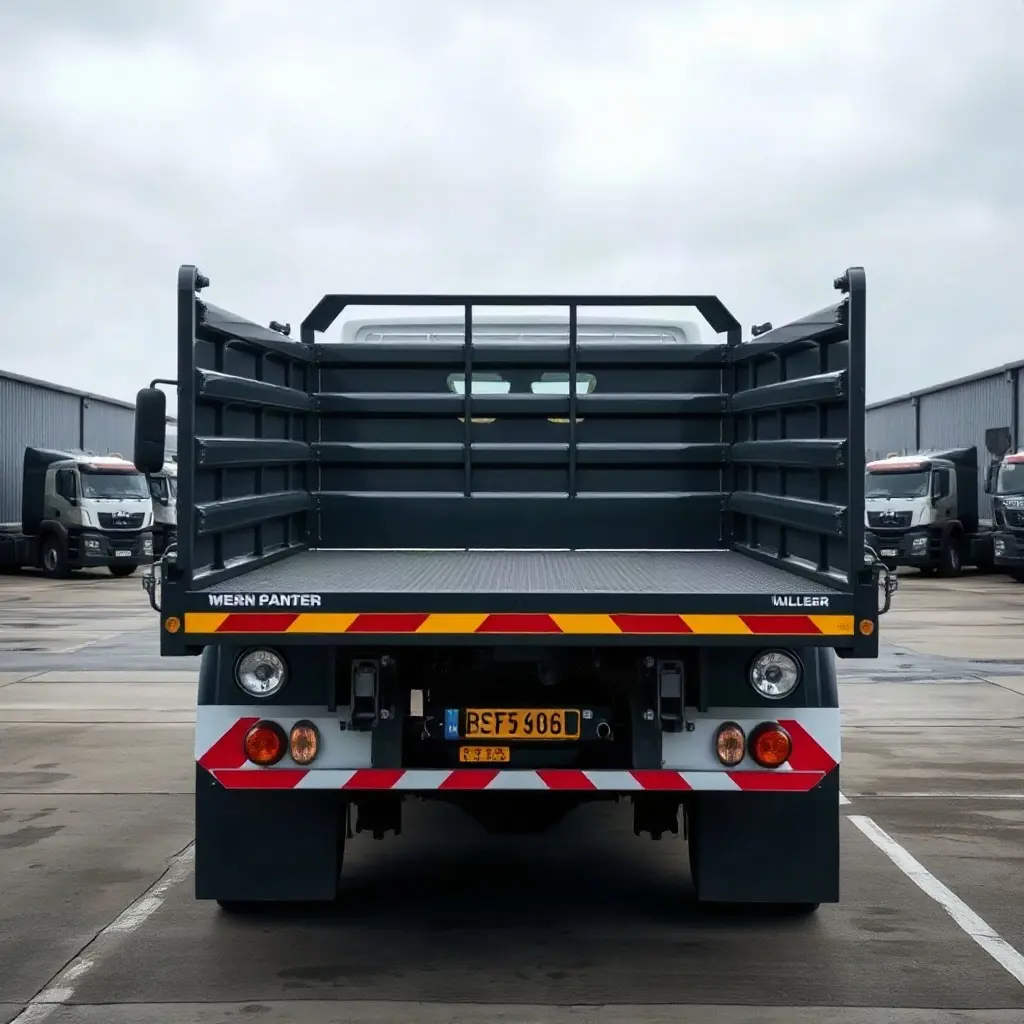
The defining feature of a dropside lorry is its load platform with hinged side and tail panels. Inspection should start with these components, as they are subject to significant wear and tear. Examine all hinges, latches, and locking mechanisms for signs of damage, deformation, or excessive rust that could prevent secure closure 4. The floor of the load bed should be checked for deep gouges, bowing, or structural weakness, particularly near the subframe mounts. Corrosion is a primary concern in older fleet vehicles; pay close attention to the chassis cross-members, body mounts, and steps, which are prone to moisture accumulation.
If the vehicle is equipped with a tail-lift or an integrated load-handling system, such as a hook-loader or crane, these require specialized scrutiny. Check hydraulic hoses for leaks, fraying, or hardening. Operate the system through its full range of motion, if auction terms allow, to ensure smooth performance without abnormal noises or jerking. Ensure all load restraint points, such as twist-locks or tie-down rings, are present and free from structural cracks or heavy oxidation, as these are essential for the safe transport of cargo in professional logistics settings 3 6.
Powertrain and Mechanical Assessment
Fleet lorries often feature robust, high-torque diesel engines designed for consistent power delivery 5 3. A cold start is highly recommended; listen for uneven idle, excessive exhaust smoke, or rattling at startup. Modern fleet vehicles often use complex engine management systems, while older military-derived units may prioritize mechanical simplicity 1 5. Verify fluid levels and look for signs of contamination in the engine oil or cooling system. Check the transmission, whether manual or automatic, for smooth engagement across all gears, noting that fleet vehicles can experience significant transmission stress during their service life.
The braking system, often air-actuated in heavier classes, requires specific verification. Listen for air leaks when the system is pressurized and ensure that the air compressor cycles correctly. Check the brake discs, pads, or drums for even wear; uneven wear patterns can indicate lingering issues with the braking hydraulics or suspension components 3 6. Furthermore, inspect the steering linkages and suspension bushings for excessive play. Commercial vehicles subjected to frequent heavy loading often show premature wear in these areas, which can affect handling and alignment.
Documentation and Historical Records
Reviewing the vehicle's history is as vital as the physical inspection. Compare the Vehicle Identification Number (VIN) and registration details against the provided documentation to ensure consistency. Examine the MOT records and service history to gauge how well the vehicle was maintained during its time in the fleet. While fleet vehicles typically adhere to strict service schedules, note that these logs may not capture minor repairs or temporary fixes performed in the field 1 3.
Verify the plated Gross Vehicle Weight (GVW) and the unladen weight. The difference between these figures determines the effective payload capacity, which is critical for legal compliance 4. Documentation should also confirm the vehicle’s classification, which dictates the type of license required to operate it-usually Category C1 for vehicles between 3.5 and 7.5 tonnes, or Category C for heavier units 4. Discrepancies in weight plates or documentation regarding vehicle modifications can lead to significant administrative and legal challenges during future registration or testing.
Auction Process and Acquisition Risks
Auction terms often state that items are sold as seen, meaning there is no implied warranty, and the buyer assumes all risks regarding the vehicle's condition 1 2. Prospective buyers should carefully read the auction catalogue for any disclosures regarding the vehicle’s operational history, such as whether it was held in reserve storage or actively deployed. Vehicles stored for long periods, while showing low mileage, may suffer from degraded seals, perished rubber components, and fuel system issues that are not immediately apparent until the engine has been run for an extended duration 6.
Finally, account for the costs beyond the hammer price. Auction houses typically charge buyer premiums, and you must arrange for professional recovery or legal transport of the vehicle, as an untaxed or untested lorry cannot simply be driven away from the facility. Compare the estimated total cost, including any necessary repairs or preparation, against the market price of equivalent commercial vehicles in the private sector to determine if the auction purchase remains a viable choice for your specific operational needs 1 7.
Sources
- Mercedes 1017 4x4 Drop Side Cargo Truck: https://www.exarmyuk.com/50475-mercedes-1017-4x4-drop-side-cargo-truck/
- Bedford TM 6x6 Drop Side Cargo Truck: https://www.exarmyuk.com/11535-bedford-tm-6x6-drop-side-cargo-truck/
- Iveco Eurotrakker 190E35 4x4 Cargo Truck: https://www.exarmyuk.com/50590-ex-army-iveco-eurotrakker-190e35-4x4-cargo-truck/
- Dropside Van Buying Guide 2026: https://www.idealcommercials.co.uk/dropside-vans-for-sale
- MAN HX60 18.330 4x4 Drop Side Cargo Truck: https://www.exarmyuk.com/50312-man-hx60-18-330-4x4-drop-side-cargo-truck/
- DAF YAZ 2300 6x6 Drops Load Handling Truck: https://www.exarmyuk.com/50481-daf-yaz-2300-6x6-drops-load-handling-truck/
- Vauxhall Movano Dropside (2026 - ) review | Autotrader: https://www.autotrader.co.uk/vans/content/vauxhall-movano-dropside-2026-review