Cataract surgery lens choices in the UK: monofocal and multifocal options explained for 2026
Cataract surgery replaces the eye's cloudy natural lens with an artificial intraocular lens, often called an IOL. In the UK, the main choice is usually between a monofocal lens that focuses at one distance and a multifocal or other advanced lens designed to provide a wider range of vision.
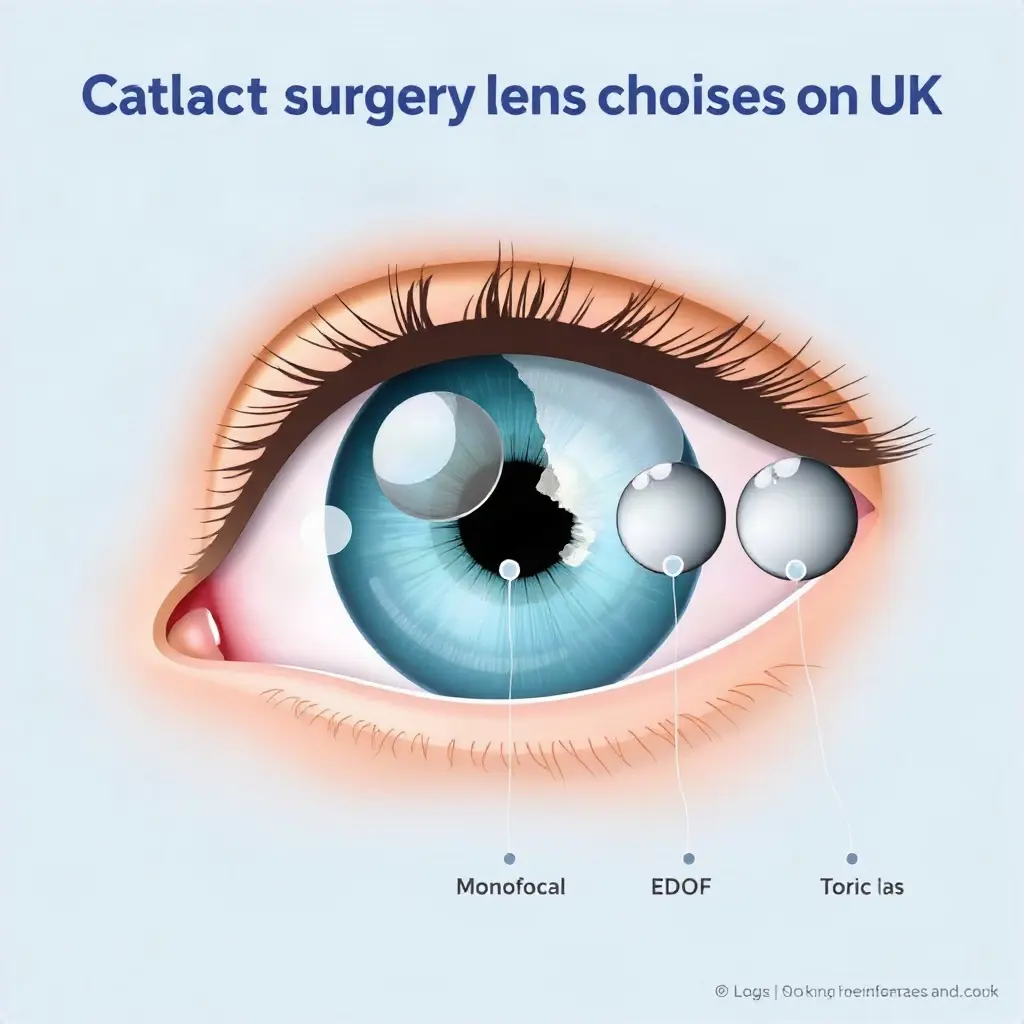
How lens choice fits into cataract surgery in the UK
During cataract surgery, the cloudy lens is removed through a small incision and replaced with an artificial lens. The procedure is commonly carried out under local anaesthetic, and the selected IOL remains inside the eye. Measurements of the eye, the health of the retina and optic nerve, and the person's usual visual needs all influence the recommendation.
Lens selection is discussed during an assessment with an ophthalmologist or optometrist working within the surgical service. In an NHS pathway, the standard lens provision and eligibility for additional lens types can vary between local services. Private clinics may offer a wider range of IOLs, but the clinical suitability of a lens still depends on the individual eye rather than on the setting alone.
Monofocal lenses and the distance they usually target
A monofocal lens is designed to give clear focus at one main distance. Many people choose a lens aimed at good distance vision, such as seeing road signs or watching television. Glasses may then be needed for reading, computer work and other close tasks. Another approach is to target one eye for distance and the other for a nearer range, known as monovision, although this is not suitable or comfortable for everyone.
Monofocal IOLs have been used for many years and generally provide predictable optical results. They do not usually attempt to create several focal points, so visual disturbances such as rings around lights may be less prominent than with some multifocal designs. However, they do not normally remove the need for reading glasses when both eyes are set for distance.
Multifocal lenses for near, intermediate and distance vision
Multifocal lenses divide light between more than one focal point. Depending on the design, they may support distance vision, reading and intermediate activities such as using a computer. The aim is to reduce dependence on glasses across different tasks, but the result is not the same as restoring the focusing ability of a young natural lens.
Some people notice halos, glare or rings around lights, particularly at night. Contrast sensitivity can also be affected, meaning that low-contrast objects may appear less distinct in certain conditions. The brain often adapts over time, but adaptation is variable and some people continue to notice visual effects. A multifocal lens therefore involves a balance between a broader range of focus and a greater possibility of optical symptoms.
Extended depth-of-focus and other lens designs
Extended depth-of-focus, or EDOF, lenses are designed to stretch the useful range of focus rather than create several sharply separated focal points. They may provide distance and intermediate vision, with some support for larger print at near range. Reading glasses can still be needed, especially for small text or prolonged close work.
Toric lenses are another category. They are made to correct significant corneal astigmatism, an imperfection in the shape of the front of the eye that can cause blur at several distances. A toric lens can be monofocal, multifocal or EDOF, so astigmatism correction and the choice of focus are related but separate decisions. Not every type is appropriate for every degree or pattern of astigmatism.
Who may be suitable for a multifocal or EDOF lens?
Suitability depends on more than the strength of the cataract. The cornea, tear film, macula, optic nerve and overall eye health are assessed because conditions affecting these structures can limit the quality of vision achieved with an advanced IOL. Previous laser eye surgery, irregular astigmatism, glaucoma, macular disease and serious dry eye may all influence the discussion.
Daily activities and tolerance of visual effects matter as well. Someone who drives frequently at night may place greater importance on avoiding glare and halos. Someone who spends much of the day reading may give more weight to near vision. Common factors considered include:
- Whether clear distance, computer or reading vision is the main priority.
- How important night driving and low-light contrast are.
- Whether both eyes are likely to receive surgery and how they will work together.
- Previous experience with glasses, contact lenses or monovision.
- The presence of retinal, corneal, optic nerve or ocular surface conditions.
What vision can realistically be expected after surgery?
Cataract surgery often improves vision affected by lens clouding, but the final result is influenced by the rest of the eye. An IOL corrects the focusing power of the removed lens, not every cause of blurred vision. Floaters, macular changes, glaucoma or corneal disease can continue to affect sight after the cataract has been treated.
Most people have some temporary blur, light sensitivity or gritty discomfort during early recovery. Vision may fluctuate while the eye settles, and the prescription can change slightly. Glasses may still be useful even when an advanced lens has been selected. The need for glasses is particularly common for very small print, prolonged reading, night driving or tasks requiring precise focus.
Risks and trade-offs between the main options
All cataract operations carry risks, although serious complications are uncommon. Possible problems include infection, bleeding, inflammation, changes in eye pressure, retinal complications and a need for further treatment. A cloudy capsule can develop behind the IOL months or years later and is commonly treated with a separate laser procedure called YAG capsulotomy.
The main trade-off between lens categories is usually optical range versus optical simplicity. Monofocal lenses offer one intended focus and may produce fewer multifocal-type light phenomena, while multifocal and EDOF lenses may reduce dependence on glasses but can create halos, glare or reduced contrast. Toric lenses add astigmatism correction but require accurate measurements and positioning. No lens removes every visual limitation or guarantees freedom from glasses.
NHS and private lens pathways in 2026
In the UK, standard cataract surgery through the NHS commonly uses a monofocal IOL as part of the treatment pathway. Local policies determine which additional lens features are available and in what circumstances. Eligibility can depend on clinical need, eye measurements and the service's commissioning arrangements, which are not identical across the four UK nations or between local areas.
Private cataract services may discuss multifocal, EDOF and toric options as additional choices. The total fee structure and what is included differ between providers, so comparisons need to distinguish the surgical procedure, assessments, lens type, aftercare and treatment of complications. A higher-cost lens is not automatically more suitable, and a standard monofocal lens can be the more appropriate clinical option for some eyes.
Questions that commonly arise during lens consultations
A consultation usually covers the target focus for each eye, the likely need for glasses, the chance of halos or glare, and whether the eye is healthy enough for an advanced lens. It also explains what happens if the chosen result is not fully achieved. These points are important because lens selection is difficult to reverse, and exchanging an IOL involves another operation with its own risks.
Useful discussion points include the expected vision for reading, computer use and driving, the effect of astigmatism, and how the two eyes will be balanced. The clinician should also explain alternatives, limitations and follow-up arrangements in terms that match the person's daily activities. A decision based only on a promise of reduced glasses use can overlook contrast, night vision and the possibility of needing glasses for particular tasks.