Free NHS eye tests: how to check if you qualify and book | A UK eligibility and cost guide
Key facts
- Eligibility for an NHS-funded sight test differs between England, Scotland, Wales and Northern Ireland.
- Scotland provides NHS eye examinations to people who usually live in the UK, with some provisions for refugees and asylum seekers. 1
- Routine private eye tests in the UK commonly range from about £20 to £30, depending on what the examination includes. 2
- Most NHS eye-care journeys begin with a local optometrist, while hospital eye services commonly handle specialist referrals. 3
Questions about NHS eye tests usually concern three separate issues: whether an NHS-funded sight test applies, where an appointment can be arranged, and what happens if further assessment is needed. The rules are not identical across the UK. A qualified optometrist or another appropriate eye-care professional should confirm individual clinical and eligibility details.
What an NHS-funded sight test means
An NHS-funded sight test is a sight and eye-health examination carried out by an optometrist under the relevant public service arrangement. It is not automatically the same as a hospital eye-clinic consultation, specialist investigation or treatment appointment. A standard examination may assess visual acuity, peripheral vision, eye coordination and the health of the eyes, while also identifying signs that could justify referral.
Optometrists can prescribe glasses or contact lenses when appropriate and may identify signs associated with conditions such as glaucoma, cataracts or macular degeneration. The examination does not guarantee a particular diagnosis or treatment. The College of Optometrists recommends regular examinations, commonly every two years for adults and children, or more often when advised by a professional. 4
Eligibility in England
In England, entitlement is generally linked to age, health circumstances, family history or qualifying income-related support rather than being universal. Common categories include children, people aged 60 or over, people with diabetes or glaucoma, people aged 40 or over with a close family member diagnosed with glaucoma, and people assessed by an ophthalmologist as being at risk of glaucoma. Some low-income benefit circumstances can also qualify. 5
Evidence may be needed before the practice can confirm NHS funding. Relevant information can include proof of age, details of a diagnosed condition, evidence of qualifying support or a professional statement about glaucoma risk. Eligibility should be checked with an NHS-participating optical practice or through current government guidance, because a general category does not decide an individual case.
Eligibility in Scotland, Wales and Northern Ireland
Scotland uses a broader community eye-care route. NHS Inform states that NHS eye examinations are available to people who usually live in the UK, refugees and asylum seekers, with some eligible overseas visitors also covered. Regular examinations are usually suggested every two years, although children, older people and people with certain medical conditions may be advised to attend more often. 1
Wales provides NHS eye-health services through optometrists, and many people eligible for NHS eye tests include children up to 16 and young people under 19 in full-time education. Most optometry practices offer NHS eye-health services, including urgent assessment routes. Northern Ireland has its own arrangements, so eligibility should be confirmed with the local NHS optical service or participating optometrist rather than assumed from English, Scottish or Welsh rules. 6
How booking normally works
The usual starting point is a community optometrist or optical practice that provides NHS services. A practice can ask for the person’s postcode, age, relevant medical information and any evidence connected with eligibility. In Wales, routine and urgent NHS eye-health care can generally be arranged by contacting a local optometrist directly. Scotland also directs people with eye concerns towards a community optometry practice. 6 1
Hospital eye departments and specialist clinics follow a different route. An optometrist may refer to a GP or hospital eye clinic when further investigation is needed, while a hospital service may require a referral before accepting a specialist appointment. NHS Essex describes local opticians, community eye-care clinics and NHS hospital eye departments as connected parts of the service, with most people starting at a local optician. 3
What happens during the examination
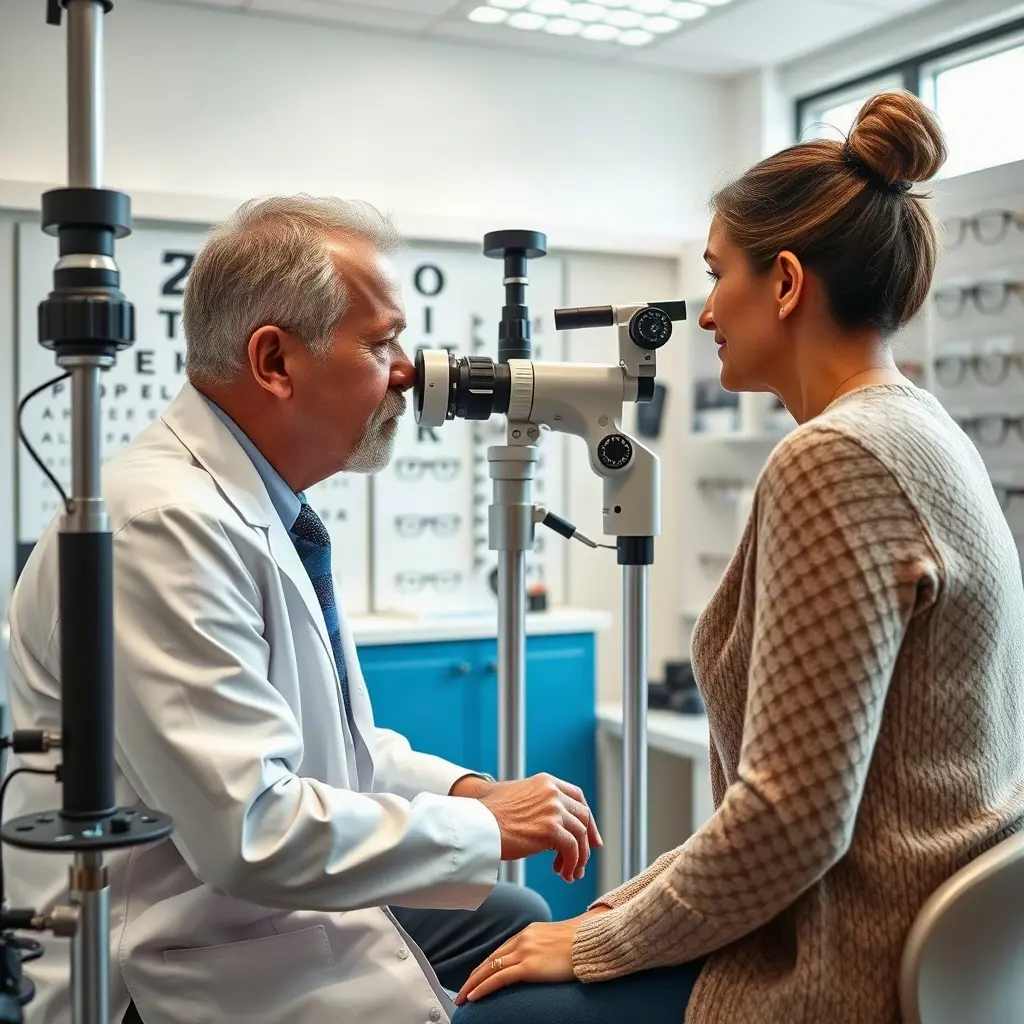
A sight test commonly begins with questions about vision, glasses or contact lenses and relevant eye-health history. The optometrist then checks how clearly each eye sees, examines eye movements and coordination, and assesses parts of the eye for signs that may need attention. Some appointments can include peripheral-vision checks or additional measurements, depending on age, symptoms, medical history and professional judgement.
The outcome may be a new or unchanged prescription, advice about routine follow-up, or referral for further assessment. Some examinations use drops to enlarge the pupils. These can temporarily make bright light uncomfortable and may blur near vision, so an optometrist should explain any practical limitations. Sudden loss or major change in vision, flashes, new floaters or a painful red eye should be discussed promptly with an eye-care professional rather than left for a routine appointment.
Costs when NHS funding does not apply
People outside the relevant eligibility rules may be offered a privately priced sight test. A 2026 UK pricing guide places many routine private examinations at approximately £20 to £30, although the scope varies between practices and additional retinal imaging may be charged separately or included in a higher-priced appointment. These are market figures, not prices offered by this article. 2
| Service or figure | Typical information | Source |
|---|---|---|
| Routine private eye test | About £20 to £30 in many UK practices in 2026 | 2 |
| NHS sight-test fee | £24.13 paid within the English NHS general ophthalmic service from April 2025 | 7 |
| NHS domiciliary fee | £40.80 for the first and second patients seen during one visit from April 2025 | 7 |
Referrals, home visits and practical limitations
An NHS-funded sight test is not necessarily the end of an eye-care journey. A finding may lead to a prescription, monitoring, a supplementary examination or referral to an ophthalmologist or hospital eye service. Scotland recognises supplementary examinations between regular appointments when an optometrist considers them necessary, including for urgent concerns or closer monitoring. 1
People unable to leave home because of physical or mental illness or disability may qualify for a domiciliary examination, subject to the applicable rules and provider arrangements. NHS Essex notes that local opticians, community clinics and hospital departments can provide different levels of care, so appointment availability, evidence requirements and referral times vary by location. A qualified professional should clarify the appropriate route, especially when symptoms are urgent.
Sources
- NHS community eyecare: https://www.nhsinform.scot/tests-and-treatments/eyecare/nhs-community-eyecare/
- How Much Is an Eye Test in the UK? Costs & Free Tests: https://www.cityspecs.co.uk/buying-guides/how-much-is-an-eye-test-in-the-uk-prices-free-tests-and-what-you-actually-pay/
- Eye care services - NHS Essex Integrated Care Board: https://www.essex.icb.nhs.uk/health/support/eye-care-services/
- College urges public to book their next regular eye test as part of New Year health resolutions - College of Optometrists: https://www.college-optometrists.org/news/2026/january/college-eye-test-new-year
- Getting Your Eyes Tested - BID Services: https://www.bid.org.uk/resources/getting-your-eyes-tested/
- Accessing Optometry services in Wales | GOV.WALES: https://www.gov.wales/accessing-optometry-services-wales
- Letter setting out general ophthalmic services fees and payments from 1 April 2025 - GOV.UK: https://www.gov.uk/government/publications/nhs-general-ophthalmic-service-fees-and-payments-from-april-2025/letter-setting-out-general-ophthalmic-services-fees-and-payments-from-1-april-2025