Rare 2p coins: which ones are worth more than face value? A collector’s guide to dates, errors and condition
Key facts
- The standout modern rarity is a 1983 2p bearing the obsolete New Pence wording instead of Two Pence.
- Published UK guides place auction outcomes for the 1983 error at roughly £300 to above £2,000, depending on condition and provenance 123.
- Standard 1971 to 1981 2p coins usually carry New Pence and are generally common circulation pieces.
- Coins dated before 1992 are bronze, while later issues are copper-plated steel and normally respond to a magnet 14.
Rare 2p coins are usually identified through an unusual date, design combination, metal composition or production error, rather than simply because they are old. Most British 2p coins remain worth their two-pence face value, but a small group has collector interest. The best-known example is the 1983 error carrying New Pence, while proof issues, unusual metal versions and well-preserved examples form a smaller specialist market.
Why most 2p coins are not rare
The decimal 2p was introduced in 1971 with a reverse showing the badge of the Prince of Wales. The wording initially read New Pence, helping distinguish the new decimal currency from the former system. From 1982, the inscription changed to Two Pence. Because the Royal Mint produced very large quantities, ordinary examples from the 1970s and 1980s are generally common, even when they look old or have a copper-coloured surface.
The scale of production is important when judging scarcity. The Royal Mint states that more than 10 billion 2p coins have entered circulation since the denomination began 5. A low mintage can create collector interest, but mintage alone does not guarantee a high price. Demand, survival in good condition, proof status and whether an issue is genuinely difficult to find all affect the result. A coin’s face value and its collector value are therefore separate concepts.
The 1983 New Pence error
The main modern 2p error to examine is dated 1983 and has New Pence on the reverse. By that year, the intended inscription was Two Pence, so the old wording indicates that an obsolete reverse die was paired with a current obverse die. This is known as a mule, meaning that dies not intended to be used together produced the same coin.
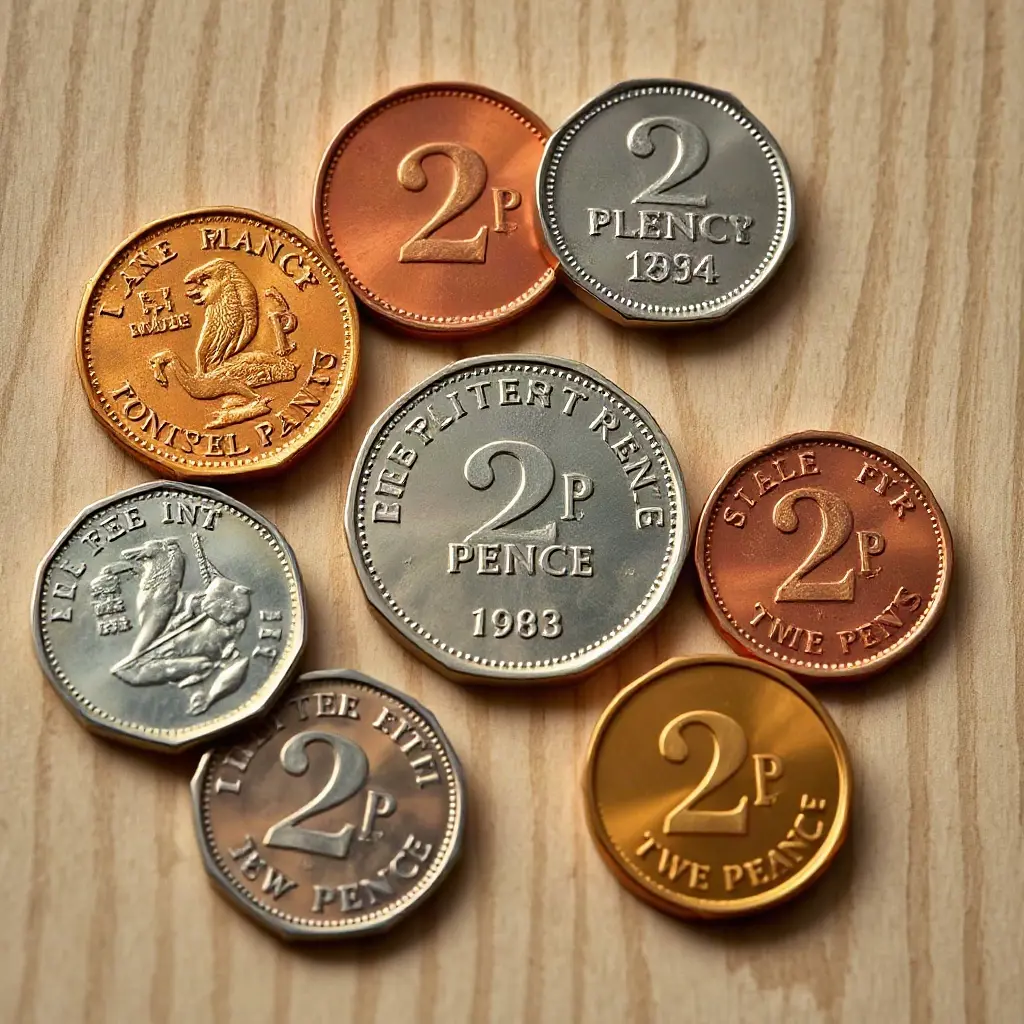
Both checks are essential: the date must be 1983, and the reverse must clearly say New Pence beneath the Prince of Wales feathers. A 1971 to 1981 coin with New Pence is normal, not an error. Published guides associate the 1983 examples mainly with Royal Mint proof or presentation sets rather than ordinary mass circulation, and estimates of realised prices vary from roughly £300 to above £2,000 according to grade, packaging and provenance 123.
Other dates, designs and metal types
Several other categories can have a premium, although they are usually less dramatic than the 1983 mule. Proof-only 2p coins, including some early decimal issues, were made for collectors rather than general circulation and can attract more than face value when retained in original cases. Specialist guides place some 1971, 1972 and early 1980s proof examples at approximately £3 to £40, depending on finish and condition 2.
Metal composition also helps identify a coin, but copper content should not be confused with guaranteed collector value. The 1971 to 1992 issues were bronze, with a 1998 2p also struck in copper, while later circulation pieces used copper-plated steel 46. A 2021 2p had a reported mintage of 117,700,000, which is lower than some high-production years but still does not by itself make every example valuable 4.
How condition changes a coin’s worth
Collectors grade coins by examining wear, scratches, dents, corrosion, colour and the sharpness of lettering and design details. A heavily circulated coin can lose much of its appeal even when it has an interesting date. Conversely, an uncirculated or proof example with strong detail, clean surfaces and original packaging may command a premium. Published guides specifically note that wear, cleaning and corrosion can reduce the value of mid-range pieces 2.
Cleaning is particularly risky because polishing can remove the original surface and leave fine scratches. Fingerprints, abrasive cloths, chemical treatment and attempts to brighten bronze can all make a coin less desirable. The safest initial assessment is visual and non-invasive: record the date, inscription, design, colour and visible marks without rubbing the surface. A premium estimate should be treated as provisional until condition and authenticity have been assessed independently.
Errors collectors look for
Mint errors can occur when dies are misaligned, incorrectly paired or used with an unintended planchet. Possible signs include an off-centre design, missing details, unusual doubling, a wrong edge or a mismatch between the date and inscription. However, damage after manufacture can resemble an error. Scratches, dents, bending, machine marks and plating loss are common explanations for unusual-looking pocket change.
The 1983 New Pence piece is unusually recognisable because the date and reverse wording form a specific, documented mismatch. It should not be confused with an ordinary New Pence coin from 1971 to 1981. Specialist guidance also warns that counterfeit and altered examples exist, particularly where a supposed error has a high catalogue price 3. A clear photograph, accurate measurements and a comparison with established reference images are useful preliminary checks, but they do not replace professional examination.
Authenticity and realistic valuation
A sensible assessment begins with identification rather than an assumed price. Check both sides under good light, note the date and wording, and determine whether the coin is bronze or copper-plated steel. Pre-September 1992 bronze 2p coins are generally non-magnetic, while later copper-plated steel pieces are magnetic 1. This test can help identify composition, but it cannot prove that a rare error is genuine.
For a coin that appears to be the 1983 New Pence error, independent authentication is important before relying on a published estimate. Auction results are not guaranteed prices, and condition, packaging, provenance, authenticity and buyer demand create substantial variation. The broader market also contains many ordinary coins described casually as rare. In practical terms, the vast majority of circulated 2p pieces remain face-value currency, while genuine errors and carefully preserved specialist issues are the exceptions.
Sources
- 2p Coin Values UK: 1983 New Pence Error Guide | MyCoinage: https://mycoinage.co.uk/guides/2p-coin-values-uk
- Most Valuable 2p Coins UK: The 1983 New Pence Error & More | MyCoinage: https://mycoinage.co.uk/blog/most-valuable-2p-coins-uk
- 1983 "New Pence" 2p Error: Most Famous UK Mule | MyCoinage: https://mycoinage.co.uk/guides/1983-2p-new-pence-error
- Guide to Collecting Two Pence - Coin Parade: https://coinparade.co.uk/2-pence-coin/
- UK 2p Mintage Figures: https://www.royalmint.com/collect/collector-resources/uk-coin-mintage-figures/2p-mintage-figures/
- Are my 1 and 2p coins now worth more than face value thanks to soaring copper prices? | This is Money: https://www.thisismoney.co.uk/money/saving/article-15535009/Are-1-2p-coins-worth-face-value-thanks-soaring-copper-prices.html