Used compact vans from government fleet auctions: a UK buyer's evidence-based guide
Key facts
- UK public-sector vehicles are commonly sold through appointed commercial auctioneers rather than one official government auction website. 1
- Compact electric alternatives include the Ford E-Transit Courier at up to 182 miles of range and 698kg payload. 2
- The 2026 Citroën Berlingo range is reported with up to 1,010kg payload, 4.4 cubic metres of load space and 57.4mpg diesel economy. 3
- Published 2026 electric-van guides place the Kia PV5 Cargo from about £27,355 to £27,635 before VAT, depending on the source and pricing basis. 4 5
Used compact vans from government fleet auctions can include council, police, public-health, military and other public-sector vehicles, but the label does not guarantee a particular condition, specification or history. A sound comparison requires the exact model, engine, payload, service record, auction charges and likely repair exposure to be assessed together.
What government fleet auctions actually mean
The UK does not have one official government auction website. Public bodies such as councils, police forces and the Ministry of Defence generally dispose of surplus vehicles through appointed commercial auctioneers or public-sector frameworks. Buyers normally register with the relevant auction operator, review the lot description and photographs, then bid under that operator's terms. 1
Public-sector origin can describe very different working lives. A small van may have carried tools, transported supplies, supported maintenance teams or moved staff. Some vehicles may have several drivers and heavy urban use, while others may have spent more time on longer routes. Auction catalogues are not substitutes for inspecting the vehicle, checking its identity and confirming who is selling it.
Compact models worth comparing
The small-van class includes the Citroën Berlingo, Peugeot Partner, Renault Kangoo, Volkswagen Caddy Cargo, Fiat Doblò, Toyota Proace City, Nissan Townstar and Ford Transit Courier. A 2026 UK comparison identifies these as leading compact alternatives, while noting that payload, load volume and equipment vary by version. 6 3
| Model or family | Published specification | Useful interpretation |
|---|---|---|
| Citroën Berlingo | Up to 1,010kg payload, 4.4m³ load space and 57.4mpg diesel economy | Strong capacity for urban trades and deliveries |
| Ford Transit Courier | Up to 820kg payload and 2.9m³ load volume | Compact footprint with useful load access |
| Electric compact group | Ford E-Transit Courier up to 182 miles and 698kg; related small electric vans up to 213 miles and 759kg | Potentially suitable for predictable urban routes and overnight charging |
These figures are maximum published values rather than promises for every auction vehicle. Wheelbase, body style, battery size, automatic equipment and fitted shelving can reduce payload or alter load dimensions. Passenger or crew versions also change the balance between seats and cargo, so the registration-year specification matters more than the badge alone.
New-model price context and used-vehicle assessment
New prices provide a reference point, not a valuation for an auction lot. A 2026 electric-van comparison lists the Ford E-Transit Courier from £24,500 excluding VAT after the stated grant, while another guide lists the Kia PV5 Cargo from £27,355 excluding VAT. A Fleet News review gives the PV5 Cargo a starting price of £27,635 including its stated on-the-road basis. 4 5
Used auction costs must be calculated from the final bid plus the buyer's premium, VAT where applicable, collection or transport, registration administration and immediate repairs. Auction guidance notes that lots may be sold as seen, with limited inspection time and separate treatment for vehicles described as plus VAT. 1 7 A lower hammer figure can therefore be misleading if tyres, brakes, bodywork, keys or missing equipment require attention.
How bidding, VAT and collection work
Before bidding, the auction terms should identify the seller, the vehicle's VAT status, the buyer's premium, payment deadline, collection window, documents supplied and any stated warranty or return provisions. Public-sector disposal is fragmented, and a commercial auctioneer may be acting for a public body rather than being part of government. Provenance should be verified in the individual lot documents.
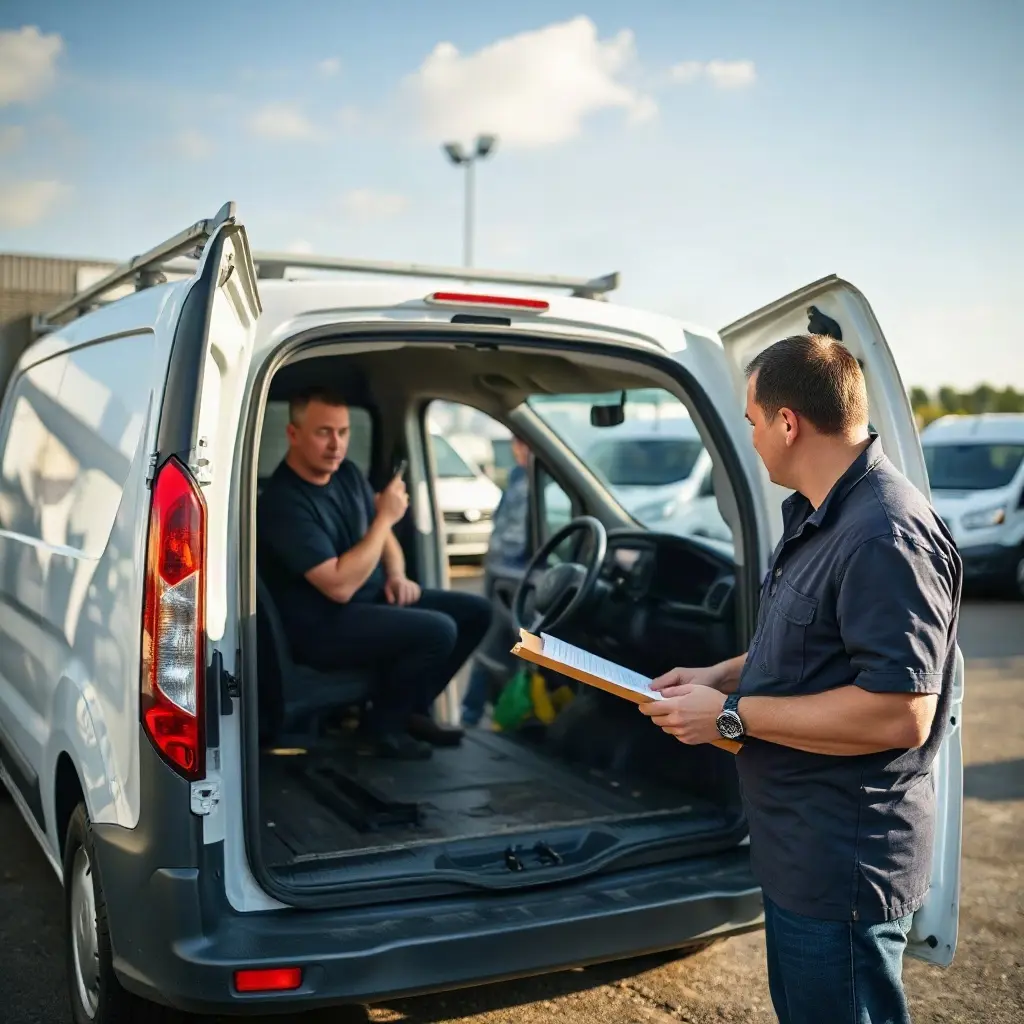
Online auctions commonly publish photographs, descriptions and a closing time, but those materials may originate from information supplied by the vendor. Guidance for ex-fleet buyers recommends setting a maximum bid and budgeting for the premium, VAT, transport or lawful drive-away costs. 8 A van that is not road-legal may need professional transport, and collection delays can create additional practical costs.
Inspection and history checklist
An inspection should begin with the registration number, VIN, mileage and the exact engine, gearbox, body and trim. Compare the odometer with MOT records, service invoices and advisories. MOT history can reveal patterns, but it cannot replace a mechanical inspection or a full history check. The load floor, bulkhead, sliding doors, rear hinges and interior panels deserve particular attention because commercial wear may be concentrated away from the driver's seat.
- Check cold starting, smoke, clutch operation, gearbox selection, steering, suspension and warning lights.
- Inspect tyres, brakes, windscreen, lights, body corrosion, dents and evidence of poor repairs.
- Confirm the number of keys, locking-wheel-nut equipment, charging cables and fitted shelving.
- Match the stated payload and dimensions to the intended tools, goods or passengers.
- Record defects before bidding and price transport, servicing and downtime into the ceiling figure.
Fleet history is neither automatically reassuring nor automatically negative. Scheduled maintenance records can help establish a pattern, but repeated short trips, overloaded operation, multiple drivers or specialist modifications may increase wear. Photographs can miss mechanical faults, underbody damage and warning messages, which is why an in-person inspection or independent commercial-vehicle assessment is important.
Running costs and suitability by use
Diesel compact vans generally suit higher annual mileage and longer journeys when payload and refuelling flexibility matter. Electric versions are more dependent on charging access, route length, temperature and load. A 2026 electric-van guide advises that official WLTP range is not the same as loaded winter use, and lists small electric models from 182 to 213 miles of official range depending on version. 2
| Use case | Likely priority | Risk to examine |
|---|---|---|
| Urban deliveries | Short turning circle, door access and low-speed efficiency | Repeated stop-start wear and restricted payload |
| Long-distance work | Diesel economy, seating comfort and service history | High mileage, clutch wear and motorway fatigue |
| Low-emission-zone driving | Exact emissions standard or electric powertrain | Model-year and local regulatory differences |
| Occasional private use | Seats, security, refinement and running costs | Commercial layout may be less practical for passengers |
Ownership budgeting should include fuel or electricity, servicing, tyres, repairs, road tax, insurance, breakdown arrangements, downtime and depreciation. Electric vans can reduce routine drivetrain maintenance, but battery condition, charging equipment and range suitability require specific checks. Safety equipment and ratings also vary by year and trim, so comparisons should use the exact vehicle rather than a general model reputation.
Faults, terms and consumer protection
Auction terms determine what happens when a van has a fault, missing item or inaccurate description. Some lots may be sold as seen, with limited rights after collection, while other terms may describe specific warranties or remedies. The catalogue, photographs, announcements and contractual conditions should be retained, and discrepancies should be reported through the auctioneer's stated process rather than assumed to create an automatic return right.
Consumer protection can depend on whether the buyer is acting privately or for a business, who the legal seller is and how the lot is described. VAT status also affects the total calculation. The safest approach is to treat every auction vehicle as an individual technical and legal assessment, verify public-sector provenance, inspect before bidding where possible and leave a reserve for defects that photographs cannot reveal.
Sources
- UK Government Surplus Auctions Explained (2026): How They Work | GovAuctions.app: https://govauctions.app/uk/guides/uk-government-surplus-auctions-explained
- Electric Vans UK 2026: Range, Payload & Price Compared: https://commercialevs.co.uk/electric-vans-uk/
- The 10 best small vans in 2026: https://www.howdeninsurance.co.uk/personal/motor/van/van-insurance/guides/best-small-van/
- Best electric vans 2026 | Auto Express: https://www.autoexpress.co.uk/best/electric-vans
- Kia PV5 Cargo | Review | Fleet News: https://www.fleetnews.co.uk/van/reviews/kia-pv5-cargo
- Best Small Vans to Lease for Businesses | VanLeasing: https://www.vanleasing.com/guides/choosing-a-van/best-small-vans-to-lease-for-businesses
- How to Buy Surplus Fleet Vans at Public Auction – Government Auctions Blog: https://www.governmentauctions.org/blog/2026/10/16/buy-surplus-fleet-vans-public-auction/
- Buying Commercial Vehicles and Ex-Fleet Vans at Auction: WhatTrade Buyers Need to Know — Universal Auction Group: https://www.universalauctionsgroup.com/articles/buying-commercial-vehicles-andex-fleet-vans-at-auction-whattrade-buyers-need-to-know