Used flatbed trucks from government fleet auctions: a guide to market dynamics and acquisition
Key facts
- Public-sector fleet vehicles are typically sold via commercial auction houses rather than directly through government websites 1.
- Commercial auction purchases commonly involve additional costs, including buyer premiums and VAT, which should be factored into the total acquisition price 1.
- Flatbed trucks are prized for flexible, unobstructed loading, but cargo remains exposed to the elements and necessitates careful securing and covering 2.
- Vehicles from government fleets may be sold in various states, ranging from 'as-is' condition to fully workshop-prepared, which directly influences initial repair requirements 3 4.
The market for commercial vehicles includes a diverse range of trucks released from public-sector service, including central government departments, local authorities, and the armed forces. These vehicles frequently enter the secondary market through commercial auction houses or vehicle remarketing specialists 1. A flatbed truck, characterized by its open, level load platform, serves as a versatile workhorse for various industries, offering the advantage of unobstructed access for loading and unloading with forklifts or cranes 2 5. Prospective buyers should be aware that these auctions do not operate under a unified government website; instead, they are handled by private remarketing firms tasked with achieving competitive value for the disposing body 1.
Understanding Public-Sector Fleet Disposal
Government bodies and local councils periodically refresh their fleets, leading to the disposal of various assets, including tippers, gritters, and flatbed transport vehicles 1. These items are listed by commercial auctioneers, and their provenance is typically verified through the documentation provided by these platforms 1. It is essential for buyers to distinguish between the seller's initial use and the auctioneer's role in the sale. While some vehicles are retired due to age or mileage, others may represent surplus equipment or specific fleet replacements that remain in high-functioning order 3 6.
When researching these auctions, buyers should monitor the catalogues published by major remarketing firms, as individual councils do not generally handle direct public sales 1. Inventory is transient, and the availability of specific configurations, such as dropside beds or specialized heavy-duty cargo trucks, varies significantly between different sales events. Prospective purchasers must register with the relevant auction house to access detailed lot information, including maintenance history where available, and to clarify the specific terms of sale for each item 7.
Auction Terms and Financial Considerations
Acquiring a vehicle at auction involves costs beyond the final hammer price. Most commercial vehicle lots are subject to buyer's premiums, which are fees charged by the auction house, and standard Value Added Tax (VAT) is typically applied to both the hammer price and any associated fees 1 2. Buyers are responsible for the collection of the vehicle within the specific deadlines dictated by the auctioneer’s storage arrangements; failure to remove a lot on time can lead to additional daily storage charges. It is critical to confirm whether the vehicle is sold with a current MOT certificate, as this will influence whether the truck can be driven away or must be transported to a facility for testing and potential repairs 2.
The condition of vehicles in these auctions is often described in the catalogue, but professional assessment remains the buyer's responsibility. Auction houses frequently categorize vehicles based on the extent of preparation, such as those sold 'as received' or 'fully prepared' with comprehensive servicing and cosmetic attention 3 4. Because inspection access can be limited depending on the venue, understanding the potential for hidden mechanical issues is vital, especially when dealing with heavy-duty machinery or complex hydraulics that may have been subjected to rigorous daily use 1 2.
Comparing Flatbed Specifications
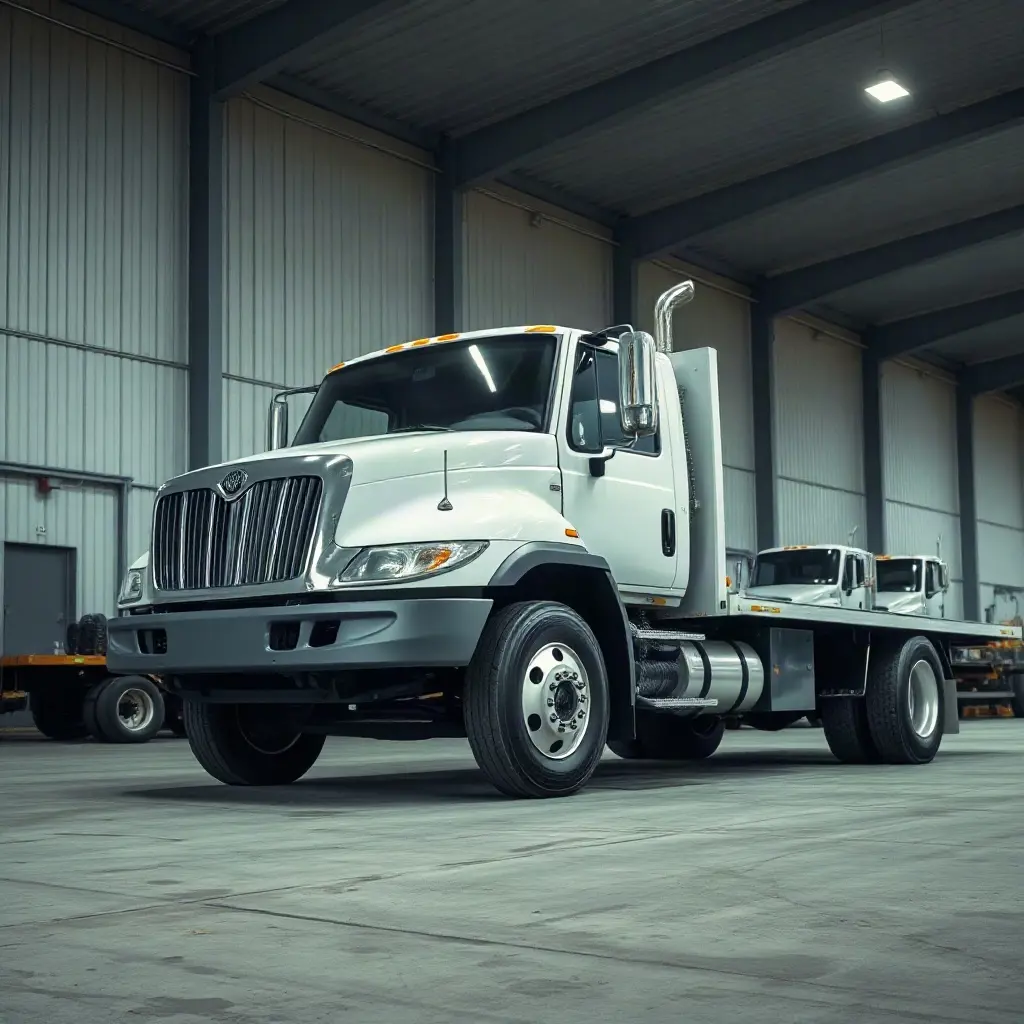
Flatbed trucks exist in various configurations, each suited to different operational needs. The gross vehicle weight (GVW) is a primary factor, ranging from smaller 3.5-tonne variants-often favored for local tasks because they can be driven on a standard licence-to much larger 18-tonne or multi-axle trucks intended for long-distance logistics 2 8. When comparing models, prospective buyers should analyze the payload capacity, which is the actual weight of the cargo the vehicle is legally permitted to carry after subtracting its own kerb weight, body, and equipment 3 6 5.
Key technical specifications to consider include the engine power (often measured in horsepower or BHP), the transmission type (manual versus automated manual), and the configuration of the bed. Some flatbed models feature dropside panels, which provide the flexibility of a flat load area while allowing for easier side loading of palletized cargo 3 4 5. Additionally, the presence of safety equipment such as ABS and EBS, cruise control, and air-conditioning should be evaluated to ensure the vehicle meets the operational standards required for the intended use, particularly for professional long-haul applications 6 2.
Assessment and Pre-Purchase Inspection
Prior to bidding, a thorough physical inspection of the truck is strongly advised. For a flatbed truck, this includes checking the structural integrity of the chassis and frame for signs of rust or previous weld repairs. The condition of the load platform itself should be checked for warping or damage that might affect the securing of loads. Furthermore, one should inspect all mechanical systems, including the suspension, braking components, and tyres, as replacing these on heavy commercial vehicles can be costly 2. Any hydraulic mechanisms, such as those found on tipper or crane-equipped models, require extra attention to ensure there are no leaks and that the controls operate smoothly 5.
Reviewing the vehicle's maintenance records provides essential context regarding how the unit was looked after during its time in a government or commercial fleet. While fleet operators typically adhere to strict service schedules, the intensity of the work performed can vary. A well-maintained vehicle with high mileage may, in some circumstances, be a more reliable choice than an under-utilized one that has sat idle for long periods. Always check the registration document (V5) and ensure the chassis number matches the records held by the auctioneer to verify the vehicle's legal identity 2.
Regulatory and Safety Requirements
Operating a flatbed truck in the UK necessitates strict adherence to weight and safety regulations. Loads on an open truck must be secured to prevent shifting, which can cause instability or pose risks to other road users 2. The driver must be aware of the specific requirements for lashing, sheeting, and weight distribution, as improper load management can lead to fines or prohibited use. Depending on the GVW of the truck, the owner may need to navigate operator licensing and specific road-tax categories, which differ significantly from private car ownership 2.
Furthermore, environmental compliance, such as adherence to Low Emission Zones or Clean Air Zones in major cities, is an increasingly important factor for commercial fleet owners. Older trucks sourced from auctions may not meet the latest emissions standards, potentially limiting where they can operate without incurring daily charges. Prospective buyers should research the vehicle's Euro emissions rating before purchase to understand the long-term impact on operating costs and geographical access 3 6 9.
Sources
- Ex-Council Vans, Mowers and Machinery Auctions in the UK (2026): Where They Sell and What to Check | GovAuctions.app: https://govauctions.app/uk/guides/ex-council-vans-and-machinery-uk
- Used Flatbed Trucks For Sale (244) | Truckpages UK: https://www.truckpages.co.uk/trucks/for-sale/body/flat/
- Iveco Eurotrakker 190E35 4x4 Cargo Truck: https://www.exarmyuk.com/50590-ex-army-iveco-eurotrakker-190e35-4x4-cargo-truck/
- Leyland Daf T45 4x4 Drop Side Cargo: https://www.exarmyuk.com/32828-leyland-daf-t45-4x4-drop-side-cargo/
- Ford E-Transit 425 L4 RWD 135kW 89kWh Trend Premium Dropside Auto [Nav] Specification Details | Dawsongroup vans: https://www.dawsongroupvans.co.uk/van/ford-e-transit-425-l4-rwd-135kw-89kwh-trend-premium-dropside-auto-nav/
- MAN HX60 18.330 4x4 Flatbed Cargo Truck (UNUSED): https://www.exarmyuk.com/50321-man-hx60-18-330-4x4-flatbed-cargo-truck-unused/
- 🚨 GOING TO AUCTION THIS TUESDAY – DON'T MISS OUT! 🚨: https://www.linkedin.com/posts/commercial-vehicle-auctions-ltd_mercedes-atego-mercedestrucks-activity-7486676740879183872-jyTV
- Best large vans 2026: our detailed list includes specs, full review links: https://www.parkers.co.uk/vans-pickups/best/large-vans/
- Isuzu D-Max 2.2 diesel uncovered at CV Show 2026: https://fleetworld.co.uk/isuzu-d-max-2-2-diesel-uncovered-at-cv-show-2026/