Used box vans from government fleet auctions: an independent guide to the disposal market
Key facts
- Government and public-sector surplus vehicles are sold through commercial auction houses under specific frameworks rather than a central government-run website 1.
- Ex-fleet vehicles often come with documented service histories, but potential buyers must account for the specific wear patterns associated with their previous public-sector use 2.
- Total cost of ownership for a used commercial van typically includes fuel, insurance, tyres, and a repair allowance, with annual running costs often reaching thousands of pounds 3.
- Buyers should budget for additional costs beyond the hammer price, including the buyer's premium and 20% VAT on both the sale price and fees 1.
The market for used box vans formerly operated by government bodies, local authorities, and utility companies represents a specialized segment of the commercial vehicle trade. These vehicles are generally retired from active service based on predetermined replacement cycles, mileage targets, or shifts in departmental fleet requirements 4. Unlike retail vehicles found on dealership forecourts, these assets are typically sold through commercial auction houses that act as disposal agents for the public sector 1.
Understanding Public-Sector Fleet Disposals
There is no single official portal for government vehicle sales. Instead, public bodies-ranging from the Ministry of Defence and police forces to municipal councils-utilize established procurement frameworks to appoint commercial auctioneers 1. Consequently, the inventory fluctuates depending on which agencies are currently refreshing their fleets. For the prospective buyer, this necessitates a methodical approach to monitoring the auction landscape, as listings are distributed across various platforms, including Witham Specialist Vehicles for military assets, and other commercial auction groups handling council and utility equipment 1.
A critical distinction exists between "ex-council" and "ex-utility" vehicles. Council vans, often used for local maintenance or parks, may endure frequent stop-start conditions and short-distance cycles 2. Conversely, utility fleet vans, operated by energy or telecommunications contractors, often accumulate higher mileage on longer, motorway-heavy routes. Recognizing the distinction is vital, as the usage history serves as a primary indicator of the likely mechanical wear and the condition of components such as the transmission, clutch, and diesel particulate filter 2.
Evaluating Box Van Specifications
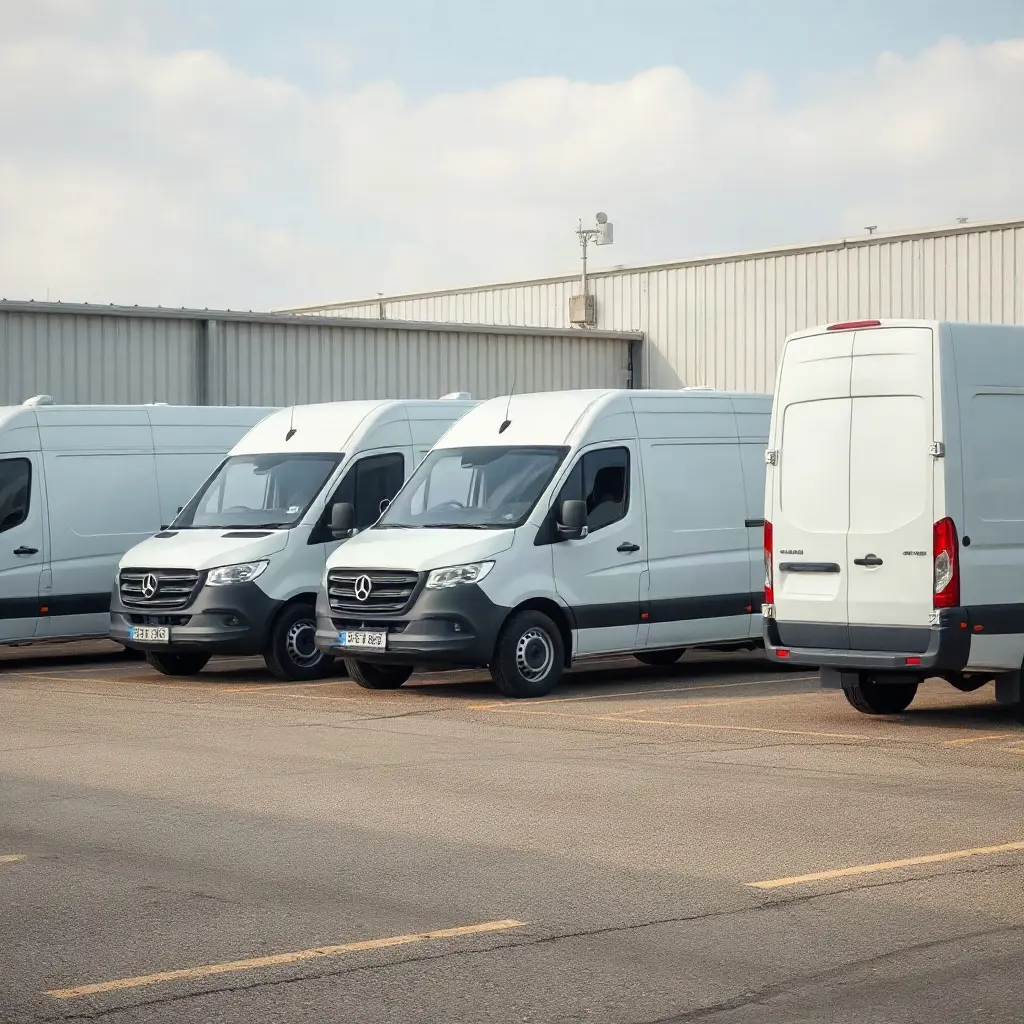
When selecting a box van, defining the required payload and internal cargo dimensions is essential to operational efficiency. Small vans typically accommodate payloads up to 700 kg, while medium vans range from 900 kg to 1,100 kg, and large models can exceed 1,300 kg 5. Popular models frequently appearing in commercial auctions include the Ford Transit, Volkswagen Crafter, and Mercedes-Benz Sprinter 6. These vehicles are preferred for their availability in the used market, which ensures a wider network for parts and technical servicing 7.
Beyond headline capacity, buyers must scrutinize load bay accessibility, floor length, and height. Fleet vans are often "racked out" with shelving or partitions; while these may be useful for some trades, they can also limit usable volume and mask the condition of the underlying panels 4. Assessing the load area for signs of structural stress or excessive corrosion from previous cargo is a necessary step in the evaluation process 8.
Auction Mechanics and Financial Considerations
The financial commitment at a government-affiliated auction extends beyond the final bid price. Buyers are generally required to pay a buyer's premium on top of the hammer price 9. Furthermore, VAT at the current standard rate of 20% is typically applied to both the vehicle price and the auction fees, unless the lot is specifically noted as exempt 1. Transport arrangements must also be factored in, as many auction vehicles are sold "as seen" and may not be immediately road-legal or capable of being driven from the site upon completion of payment 9.
Because auctions often limit or prohibit test drives, performing thorough pre-bid due diligence is imperative. This includes verifying the vehicle's MOT history through public government records to identify recurring advisories, cross-referencing mileage against recorded service intervals, and conducting a comprehensive vehicle history check to ensure there are no outstanding financial interests or write-off markers 9.
Maintenance and Total Cost of Ownership
The purchase price of a used van is only the initial expense in its lifecycle. Annual running costs for a typical commercial van, assuming 20,000 miles of operation, can range from £4,500 to £7,500 3. This estimate incorporates fuel consumption, insurance, routine servicing, tyre replacement, and a contingency for unexpected mechanical repairs 3. Older fleet vehicles, particularly those meeting older emissions standards, may face increased scrutiny regarding their compliance with local low-emission zones, adding another layer of cost to the operator's budget 7.
Depreciation remains a significant factor for commercial assets. While fleet vehicles often have the advantage of rigorous adherence to service schedules, their high initial usage and the potential for cosmetic wear mean their residual value can differ from private-use equivalents 2. Buyers should weigh the benefit of a transparent maintenance record against the potential requirement for refurbishment or cosmetic repairs to bring the vehicle up to a professional standard for daily operations 8.
Operational Risks and Due Diligence
The primary risk when purchasing from an auction is the lack of traditional consumer protections found in retail transactions. Assets are sold in their current condition, meaning the onus is entirely on the bidder to identify mechanical faults before the hammer falls 4. A "clean" look in a catalogue listing does not guarantee mechanical health, and bidders are advised to build a comprehensive biography of the vehicle-using MOT data and service logs-before setting a strict bidding ceiling 8.
Finally, prospective buyers should distinguish between the various types of public-sector disposals. Sales conducted by reputable auction houses using established frameworks provide a level of administrative certainty, but the buyer must always verify the terms of sale and the documentation provided for the specific lot 1. By treating the purchase as an intelligence-gathering exercise rather than a simple transaction, a buyer can mitigate the inherent risks of the auction environment and secure an asset that aligns with their specific operational needs 8.
Sources
- UK Government Surplus Auctions Explained (2026): How They Work | GovAuctions.app: https://govauctions.app/uk/guides/uk-government-surplus-auctions-explained
- Ex-Council and Ex-Utility Vans: Are They Worth Buying?: https://www.merseysidevansales.co.uk/used-van-guides/buy-a-van/ex-council-and-ex-utility-vans/
- What a Budget Van Actually Costs to Run 2026 | Merseyside Van Sales: https://www.merseysidevansales.co.uk/what-budget-van-costs-run/
- How to Buy Surplus Fleet Vans at Public Auction – Government Auctions Blog: https://www.governmentauctions.org/blog/2026/10/16/buy-surplus-fleet-vans-public-auction/
- Buying a Van in the UK: Types, Costs, Finance & Inspection Guide 2026: https://car-finance.co.uk/blog/van-buying-guide
- Used Van Comparison Guide: Find the Best Fit - Carlton Motor Co (North East) Limited: https://www.carltonmotorco.co.uk/blog/used-van-comparison-guide-find-the-best-fit
- Diesel vs Petrol vs Electric Used Vans: Pros and Cons: https://www.diesels.co.uk/diesel-vs-petrol-vs-electric-used-vans/
- Government Auction Vehicles: A UK Motor Trade Sourcing Guide | AutoProv: https://autoprov.ai/blog/government-auction-vehicles
- Buying Commercial Vehicles and Ex-Fleet Vans at Auction: WhatTrade Buyers Need to Know — Universal Auction Group: https://www.universalauctionsgroup.com/articles/buying-commercial-vehicles-andex-fleet-vans-at-auction-whattrade-buyers-need-to-know