Irish half crown and florin coins: what collectors pay today: A researched guide to dates, condition and realised prices
Key facts
- The 1937 Irish half crown had a mintage of 40,000 and circulated examples can reach three-figure prices.
- Reported 1943 Irish half crown prices range from €120 worn to €1,800 near mint, depending heavily on grade.
- A 1943 Irish florin has been reported at €8,000 hammer and up to €18,000 in uncirculated condition.
- Most old Irish coins are ordinary circulated pieces, while rare dates and exceptional grades form the high-value market.
Irish half crown and florin coins belong to Ireland's pre-decimal currency and are related, but they are separate denominations with different designs, dates and collector demand. Current values are driven less by age alone than by scarcity, surviving population, striking quality, condition, varieties and authenticity. Reported auction and specialist-market figures show a wide gap between ordinary worn examples and rare coins with strong detail. Asking prices can be substantially more optimistic than completed sales.
How to identify the two denominations
An Irish half crown was a larger pre-decimal denomination, while the florin was the two-shilling coin. Early Free State coinage introduced in 1928 used the Irish harp on one side and Percy Metcalfe's animal designs on the other. The half crown is associated with a horse design, while the florin carries a bull design in the standard animal series. These details help separate Irish issues from similarly sized British or Commonwealth coins.
The date is essential because the word Ireland, the harp and an animal design do not establish a value by themselves. Irish pre-decimal coinage ran from 1928 to 1971, before decimalisation, and different dates had very different mintages and survival rates. A florin should not be assessed as a half crown simply because both are large, older coins. Weight, diameter, edge details and lettering can confirm the denomination when a coin is worn or photographed poorly.
Indicative prices for notable dates
Published market reports place the better-known rare issues far above ordinary circulated examples. The 1937 half crown is among the scarcest Free State half crowns, with 40,000 struck. Circulated examples have sold in the three-figure range, while uncirculated pieces have reached four-figure prices, according to a 2026 specialist overview. 1 This is a date-specific result, not a typical value for every Irish half crown.
| Issue | Reported market evidence | Main qualification |
|---|---|---|
| 1937 half crown | Three-figure circulated prices; four-figure uncirculated prices | Scarce date and grade-sensitive |
| 1943 half crown | €120 worn to €1,800 near mint | Condition produces a very wide spread |
| 1943 florin | €8,000 hammer to reports of €18,000 uncirculated | Exceptional rarity and quality required |
The 1943 half crown has been reported at approximately €120 in worn condition and €1,800 near mint at an Irish auction, illustrating how grade can alter the result. 2 The 1943 florin is a much more exceptional case: one report records an €8,000 hammer result, while another gives a possible uncirculated level of €18,000. 3 2 Those figures should be treated as evidence for rare, high-quality examples rather than a general price guide.
Why date and rarity matter
Low mintage is one useful warning sign, but it is not the same as guaranteed value. A coin may have been struck in limited numbers yet remain relatively accessible if many pieces survived or demand is modest. Conversely, a date with a substantial original mintage can become desirable when few examples remain in strong condition. The 1937 half crown illustrates this distinction: its recorded mintage of 40,000 makes it a key date for collectors building a complete half-crown series. 1
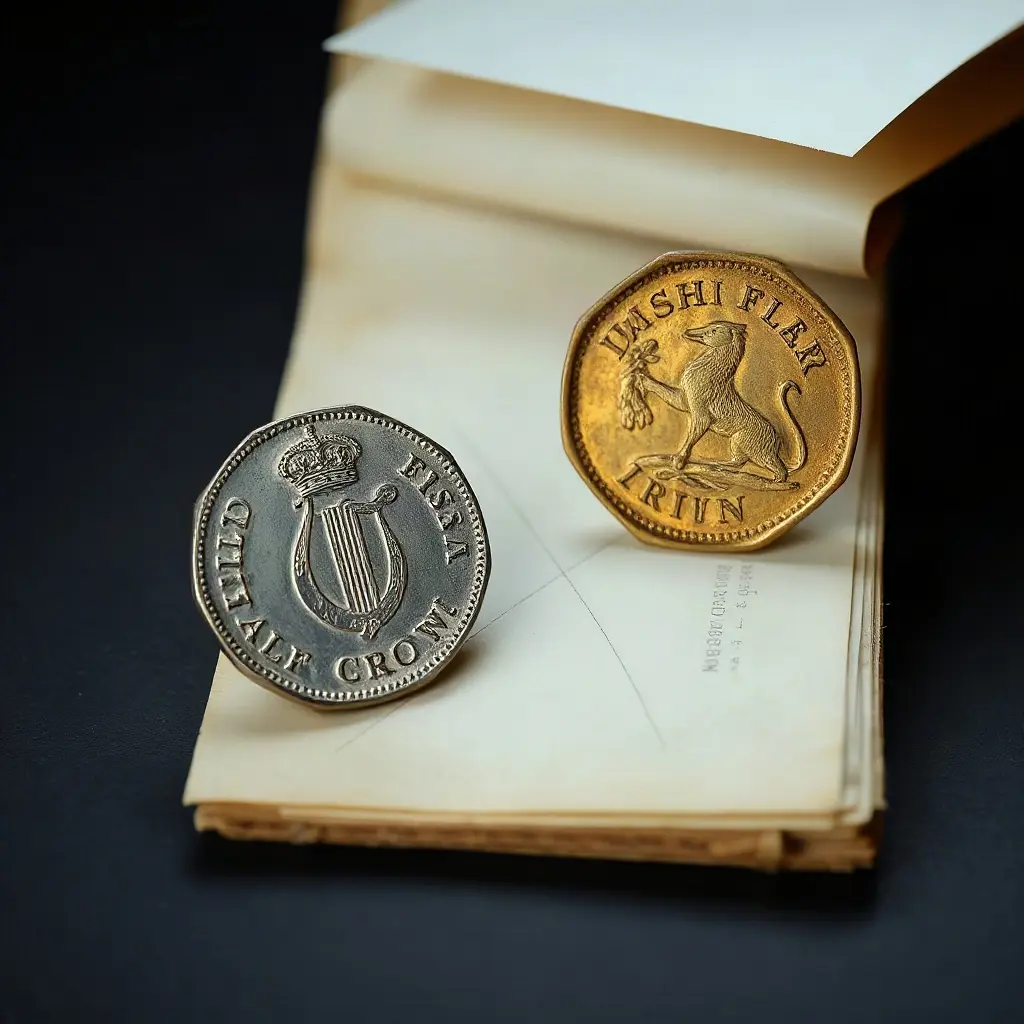
Collectors also examine design varieties, die changes, errors and unusual striking characteristics. Small differences in lettering, animal features, harp details, date spacing or edge treatment can be significant, but they require comparison with reliable catalogued examples. A coin that appears unusual in a photograph may simply be damaged, off-centre or poorly struck. The 1943 florin's reputation shows why an apparently ordinary denomination can command a very high result when rarity and condition combine.
Condition, cleaning and physical damage
Condition is commonly described by the amount of original detail remaining. Heavy circulation wear can flatten the animal, harp and date, while sharper examples preserve hair, lettering and edge definition. A rare coin can still be valuable when worn, as the reported €120 result for a worn 1943 half crown demonstrates, but the same date near mint was reported at €1,800. 2 Collectors therefore compare rarity and grade together rather than using condition in isolation.
Cleaning, polishing, scratches, dents and harsh chemical treatment can reduce collector appeal permanently. Bright metal is not automatically evidence of quality, and natural toning is not necessarily damage. A coin should be handled by its edges and photographed without rubbing the surfaces. A bent edge, applied coating or deep scratch may matter more than a small amount of ordinary wear. For valuable-looking pieces, preservation is safer than attempting an improvised restoration.
How to distinguish market evidence from estimates
A completed sale is stronger evidence than an unsold asking price because it records an actual transaction. Even then, the result may reflect grade, certification, provenance, venue, buyer interest and whether the published figure is a hammer amount or a total including fees. The €8,000 1943 florin result is specifically described as a hammer price, so it should not be compared directly with every all-in total. 2
Online claims often combine rare dates with ordinary examples and can create unrealistic expectations. A broad article on Irish coin values notes that most old Irish coins remain ordinary, while only a small number of rare pieces reach very high figures. 3 A sensible comparison uses several completed results for the same denomination, date and approximate grade. Currency, auction fees, shipping, certification costs and the difference between a dealer purchase and a public auction can all affect the final amount.
Checks before valuation or sale
Useful identification photographs show the obverse, reverse, edge, date, lettering and any suspected variety in sharp, even lighting. Measurements of diameter, thickness and weight can help distinguish an Irish issue from a similar foreign coin, although those tests do not replace authentication. Notes about where the coin came from may also provide provenance. Rare-looking pieces deserve particular caution because replicas, altered dates and damaged coins can imitate valuable varieties.
Professional grading may provide a consistent description of condition, but its cost and usefulness depend on the coin's likely value and collector demand. It is more relevant when a coin appears to be a scarce date, an exceptional grade or an important variety than when the piece is heavily worn and common. Before paying for authentication or grading, compare the likely market evidence, service charges, insurance, handling and return arrangements. No valuation can guarantee a particular sale result, especially in a thin specialist market.
Sources
- 5 Rare Irish Coins Worth Money: https://www.pcgs.com/news/5-rare-irish-coins-worth-money
- Valuable Irish Coins: Rare Dates And Real Auction Prices: https://irisharoundtheworld.com/valuable-old-irish-coins/
- A guide to valuing all your old Irish coins: https://www.irishcentral.com/roots/history/guide-valuing-old-irish-coins