Farm properties for sale in Ontario: A look at recent market listings
Key facts
- Ontario farmland values showed a measured increase of 2.4% during the first half of 2026 1.
- Buyer behavior in Ontario has shifted toward greater selectivity, focusing on high-quality, tiled parcels while showing less interest in marginal land 2 3.
- Regional variations are significant, with Northern Ontario recording a 10.6% increase in cultivated farmland values in recent reporting 2.
- Prospective buyers should verify zoning, environmental conditions, water access, and the status of existing agricultural infrastructure before any transaction 4.
The Ontario rural landscape comprises a diverse range of holdings, spanning from large-scale cash crop operations to smaller hobby farms and vacant agricultural tracts. Recent market activity reflects a transition in buyer priorities, characterized by a more deliberate and cautious approach compared to previous years 2 3. While farmland remains a core asset, stakeholders are increasingly focused on soil productivity, drainage infrastructure, and the specific utility of existing outbuildings rather than generalized expansion 2.
Understanding Farm Property Classifications
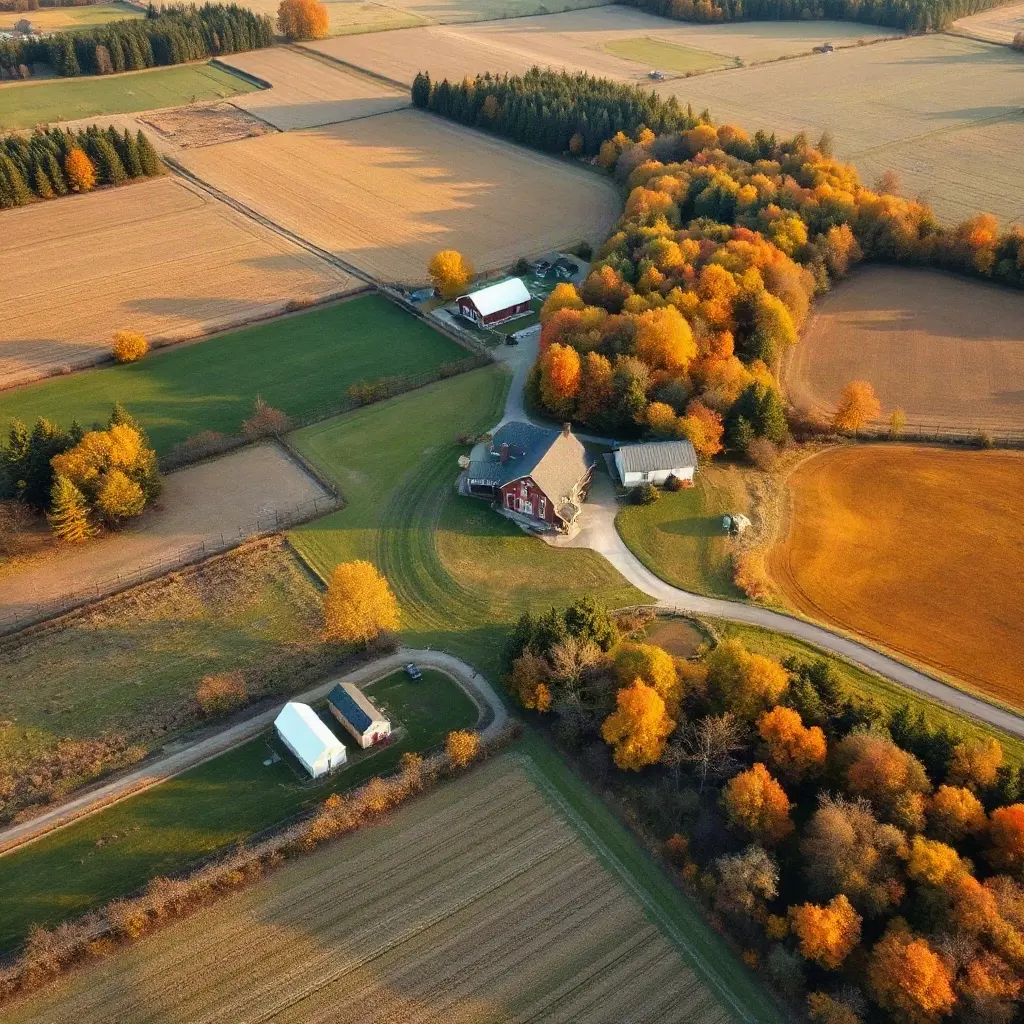
Farm properties in Ontario are categorized by their intended use and physical attributes, which fundamentally influence their market positioning. A working farm often includes highly productive, workable acreage, specialized agricultural buildings such as barns or silos, and necessary infrastructure like industrial-grade wells or drainage systems 4 5. In contrast, hobby farms or rural residential properties with significant acreage may prioritize the dwelling and aesthetic or lifestyle potential over maximum agricultural yield 5.
Vacant agricultural land represents another segment of the market, where the absence of buildings shifts the focus entirely to land quality, soil classification, and tile drainage capacity. When evaluating these properties, it is essential to distinguish between land suited for intensive cash crops-such as corn or soy-and land better suited for pasture or forestry 4 5. The presence of restrictive covenants or specific agricultural zoning designations, such as AG1, can also play a pivotal role in determining what operations are permitted on the site 4.
Market Value Trends and Regional Variation
Ontario’s farmland market has experienced a period of moderate growth, with values rising by 2.4% in the first half of 2026 1 6. This represents a normalization compared to the sharper increases observed in preceding years 3. Market reports indicate that the pace of growth is highly regional, often dictated by local commodity prices, input costs, and the presence of intensive livestock sectors 1 7.
Regional disparities remain a hallmark of the Ontario landscape. For instance, the Northern region has recently seen notable growth in land values, reaching approximately 10.6% in recent annual reporting 2. Meanwhile, areas such as Southwestern Ontario, while maintaining historically high values, have seen more modest growth or stabilization in certain counties 8 2. This stabilization is often attributed to a lack of demand for marginal properties, where expired listings have become more common than successful sales 8.
Factors Influencing Property Evaluation
When assessing a farm property, the asking price is only one component of the total consideration. Market analysts emphasize that top-quality, tiled parcels generally command premium interest, whereas marginal land may face softer demand 2 3. Key technical attributes that often influence value include the depth and quality of the soil, the layout of the fields, and the functionality of existing drainage systems 4 5.
Beyond the physical land, the condition of structures-such as heated workshops, storage barns, and residential dwellings-significantly impacts the overall valuation. A property with modern, versatile buildings that can serve multiple agricultural or operational purposes often commands a different market interest than one requiring extensive renovation 4 5. Prospective buyers often perform a rigorous assessment of utility costs, site access for large machinery, and the existence of any current tenancy agreements or production contracts 4 5.
Due Diligence and Regulatory Considerations
Acquiring rural property in Ontario involves a distinct set of due diligence requirements compared to urban real estate. Buyers typically review official municipal plans and zoning bylaws to ensure their intended activities align with local regulations 4. This includes checking for environmental assessments, the status of septic and well systems, and any heritage or conservation easements that might limit development or land use 4.
Furthermore, the transaction process includes considerations such as Land Transfer Tax, potential sales taxes on non-residential portions of a property, and legal costs associated with verifying title and boundary lines 4. Given the complexity of agricultural operations, it is standard practice to verify the status of current drainage tiles and confirm that all structures meet modern building standards for their specific classification 4 5.
Limitations of Market Data
It is important to recognize that market trends based on aggregated statistics do not always mirror the dynamics of a single property listing. Asking prices listed on property portals are determined by sellers and may not reflect the price at which a property ultimately trades 8. The market for farm properties is often private and specialized, meaning that high-volume trends may not capture the nuances of specific niche agricultural holdings.
Research suggests that buyers should focus on long-term data rather than reacting to short-term fluctuations in listing prices. Because farmland ownership is increasingly shifting toward non-farming owners, the market for these assets remains complex, requiring an understanding of both the agricultural sector’s economic cycles and local regional land-use pressures 9.
Sources
- 2026 mid-year farmland values in Canada: Momentum continues | FCC: https://www.fcc-fac.ca/en/knowledge/economics/2026-farmland-values-mid-year-update
- Farmland value stagnates in Ontario in 2025 | Farmtario: https://farmtario.com/news/farmland-value-stagnates-in-ontario-in-2025/
- Map: Ontario Farmland Values Up J... | Syngenta CA: https://www.syngenta.ca/market-news/map--ontario-farmland-values-up-just-modestly
- 7934 Olde Drive, Strathroy-Caradoc, ON N0L 1W0 | MLS # X12899898: https://www.squareyards.ca/sale/on/middlesex/strathroy-caradoc/mount-brydges/7934-olde-drive
- 7100 Line 28 N/A, West Perth, ON N0K 1E0 | MLS # X13487952: https://www.squareyards.ca/sale/on/perth/west-perth/hibbert/7100-line-28-n-a
- Canadian farmland values rose 3.8 per cent in first half of 2026: https://www.fcc-fac.ca/en/about-fcc/media-centre/news-releases/2026/canadian-farmland-values-rise-first-half-2026
- Southwestern Ontario Farmland Val... | Syngenta CA: https://www.syngenta.ca/market-news/southwestern-ontario-farmland-values-up-2-7--in-2025
- Southwestern Ontario farmland values up 2.7 per cent in 2025 | Farmtario: https://farmtario.com/news/southwestern-ontario-farmland-values-up-2-7-per-cent-in-2025-2/
- Every Acre Matters: Why Non-Farming Farmland Owners Have a Growing Role in Ontario’s Food Future | Greenbelt Foundation: https://greenbelt.ca/farms-at-work/