3-day Limerick getaway by train with central hotel options: an independent travel guide
Key facts
- Limerick Colbert is the city’s main rail station, with connections toward Dublin, Ennis, Galway and Limerick Junction. 1
- Direct Limerick to Dublin trains take about two hours, with reported 2026 fares typically ranging from €18 to €25. 2
- Ireland-wide 2026 travel estimates range from €50 to €70 daily for basic travel and €100 to €160 for mid-range travel. 3
- Limerick’s historic core includes King John’s Castle, St Mary’s Cathedral, the Hunt Museum and the Georgian Quarter. 4
A three-day Limerick getaway by train works well as a compact city break because the main station sits close to the central districts, historic streets and riverside attractions. Central hotel options generally mean accommodation around Parnell Street, the city centre, the Georgian Quarter or the riverfront, rather than a single defined lodging zone. The practical questions are how the rail journey fits the itinerary, what a typical 2026 budget looks like, and which sights can be reached on foot.
Arriving in Limerick by train
Limerick Colbert, on Parnell Street, is the principal rail and bus interchange for the city. The station serves routes toward Dublin, Nenagh, Ballybrophy, Ennis and Galway, while connections toward Cork, Clonmel, Waterford and Kerry can be made at Limerick Junction. This makes rail particularly useful for visitors arriving from several parts of Ireland, although some journeys require a change rather than a direct service. 1
From Dublin, a direct service to Limerick takes about two hours, according to a 2026 travel account, with reported fares generally between €18 and €25 depending on booking timing and departure. 2 The exact timetable and fare structure can change, so the journey should be checked with the current Irish Rail information before departure. From Cork or Kerry, the transfer at Limerick Junction is an important part of the route plan.
| Origin or connection | Practical rail detail |
|---|---|
| Dublin | Direct services to Limerick Colbert take about two hours; reported fares are €18 to €25. |
| Ennis and Galway | Services operate through the western rail corridor toward Limerick. |
| Cork, Waterford and Kerry | Connections can be made at Limerick Junction. |
How to structure three days
Arrival day is best used for orientation rather than a distant excursion. After reaching Colbert Station, a central base allows time for the Georgian streets, the People’s Park and the river area. The second day can concentrate on King’s Island, where King John’s Castle and St Mary’s Cathedral form the historic centre. The third day can combine the Hunt Museum, riverside walking and a slower look at city galleries, shops and public spaces.
This schedule also leaves room for rail delays, rain and attraction opening times. Limerick’s appeal is concentrated rather than spread across a large metropolitan area, so walking can reduce dependence on local transport. Ireland.com describes the city as combining Shannon-side scenery, medieval history, Georgian architecture and a creative cultural scene. 4 A three-day duration should therefore be understood as a common itinerary length, not a packaged trip or a guarantee that every attraction will be open.
- Day one: arrive, settle in, explore the Georgian Quarter and take a riverside walk.
- Day two: visit King John’s Castle, St Mary’s Cathedral and the medieval core.
- Day three: see the Hunt Museum, revisit the riverfront and allow time for departure.
Typical 2026 costs
Published Ireland-wide planning guides place basic travel at about €50 to €70 per person per day, mid-range travel at €100 to €160, and comfortable travel at €200 to €320 in 2026. 3 These are national planning bands rather than a Limerick-specific quotation. A three-day visit therefore requires a broad allowance for lodging, meals, local transport and attraction admissions, with the final total shaped heavily by room type, dates and the number of paid sights.
Accommodation is the largest variable. A separate 2026 cost guide places comfortable three-star rooms outside Dublin, including cities such as Cork and Galway, at about €100 to €160 in summer and €70 to €110 in shoulder season. 5 Limerick prices can differ by event dates, weekends and property location, so these figures are useful regional context rather than a quoted Limerick rate. Rail fares should be added separately, especially when the journey includes a connection.
| Travel style | Published Ireland-wide daily range, 2026 | What it generally covers |
|---|---|---|
| Basic | €50 to €70 | Simple lodging, everyday meals and modest sightseeing. |
| Mid-range | €100 to €160 | Standard accommodation, restaurant meals and several attractions. |
| Comfortable | €200 to €320 | Higher room standards, more dining flexibility and paid activities. |
What counts as central accommodation
In practical terms, central accommodation means a walkable position between Colbert Station and the historic centre, or close to the Georgian Quarter and the river crossings. Parnell Street is convenient for rail and bus connections, while the area around King’s Island is better placed for medieval sights. Georgian Limerick provides a different atmosphere, with broad streets and historic architecture a short walk from the central attractions.
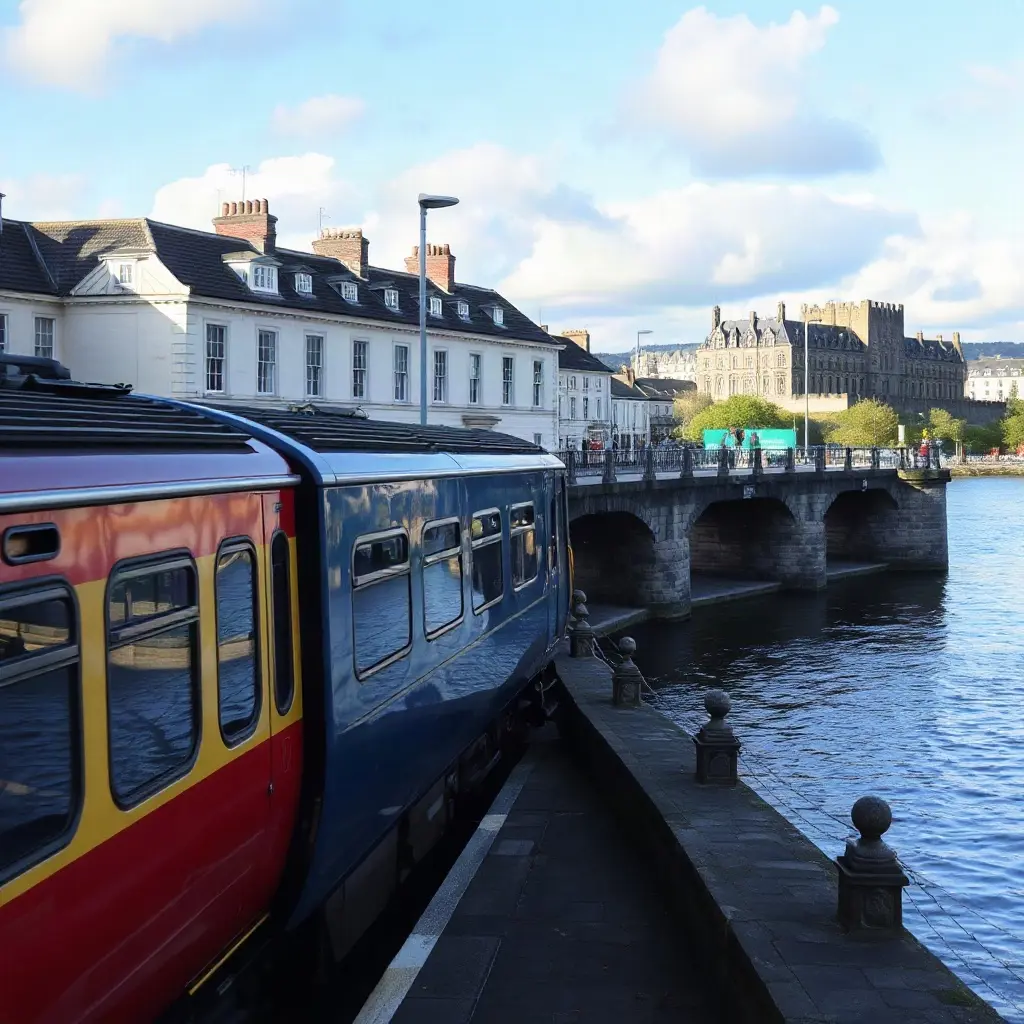
Hotel rooms, guesthouses, boutique properties and self-catering apartments are the main categories to compare. The relevant differences are walking distance, reception hours, breakfast arrangements, accessibility, noise and whether the room rate includes additional charges. A property described as central may still sit several streets from the station, so map distance and the route with luggage matter more than the label alone.
| Area type | Useful for | Points to check |
|---|---|---|
| Near Colbert Station | Early trains, buses and short arrival transfers. | Street noise, luggage access and evening surroundings. |
| Historic centre and King’s Island | King John’s Castle, St Mary’s Cathedral and river walks. | Walking surfaces, opening hours and evening transport. |
| Georgian Quarter | Architecture, parks and a quieter central setting. | Distance to the station and breakfast arrangements. |
Walkable sights and cultural stops
King John’s Castle is the defining medieval attraction on King’s Island. Ireland.com describes its exhibitions as covering medieval life, sieges and the area’s Viking connections. 4 St Mary’s Cathedral is identified by the same tourism source as the city’s oldest building in continuous use. 4 Together, these sites give the second day a clear historical focus without requiring a car or long regional transfer.
The Hunt Museum occupies the former Custom House and contains artefacts and artworks, including works associated with Picasso, Renoir and Jack B Yeats. 4 The Georgian Quarter adds architectural context, while the People’s Park provides an open-air pause. Admission prices, timed-entry rules and seasonal hours can change, so each attraction’s current visitor information should be checked before fixing the daily sequence. Weather is also relevant to river walks and outdoor photography.
Seasonal planning and practical rules
Summer generally brings longer daylight and stronger demand for accommodation, while shoulder seasons can alter room costs and opening patterns. The published regional accommodation guide places three-star rooms outside Dublin at €100 to €160 in summer and €70 to €110 in shoulder season. 5 These ranges illustrate why dates matter, but they do not represent a live rate or an availability statement. Public holidays, festivals and major sporting events can create additional pressure on rooms and trains.
Rail tickets should be checked against the current timetable, especially when a connection at Limerick Junction is required. Attraction hours may change by season, and some museums or historic sites may use timed entry. Entry requirements for Ireland depend on nationality, passport and travel purpose, so official government travel advice is the appropriate authority. Practical concerns include rain protection, comfortable footwear, luggage storage policies and allowing a margin between the hotel checkout and the departure train.
Limits and trade-offs of a rail-based stay
Rail travel places the visitor close to Limerick’s urban core and avoids the need to arrange a car for the main city itinerary. The trade-off is that regional sights outside the centre may require buses, organised excursions or additional changes. Limerick Colbert also combines rail and bus services, which can make onward travel practical, but transfer times and service frequency should be assessed for each specific day. 1
The most reliable three-day plan is therefore a flexible city-focused schedule with one or two headline attractions reserved for each full day. Central hotel options reduce walking time, but location alone does not resolve every issue: room costs vary, trains can be disrupted, weather affects outdoor plans and attractions can change their rules. A neutral comparison of transport, distance, room facilities and cancellation conditions gives a clearer picture than the word “central” by itself.
Sources
- Limerick Colbert railway station: https://en.wikipedia.org/wiki/Limerick_Colbert_railway_station
- Taking the Train from Limerick to Dublin: What to See, Eat and Do: https://www.ilovelimerick.ie/taking-the-train-from-limerick-to-dublin-what-to-see-eat-and-do/
- Ireland on a Budget 2026 — From $50/Day | BestTravelScout: https://besttravelscout.com/budget-travel/ireland/
- Limerick city | Ireland.com: https://www.ireland.com/en/destinations/county/limerick/limerick-city/
- Is Ireland Expensive? A Real 2026 Cost Breakdown - Next Stop Ireland: https://nextstopireland.com/is-ireland-expensive-a-real-2026-cost-breakdown/