Hernia repair surgery through the NHS: how the procedure evaluation works | A clinical pathway explained
Key facts
- A GP may refer suspected hernia cases for tests or specialist treatment when clinical assessment indicates it is needed. 1
- Preoperative assessment reviews medical history, medicines, vital signs and investigations before an operation is scheduled. 2
- Published 2026 comparisons place private hernia repair prices between £3,678 and £5,160, depending on provider and package. 3
- England’s referral-to-treatment statistics measure the pathway from specialist referral through elective treatment, rather than a hernia operation alone. 4
Hernia repair surgery through the NHS is assessed in stages rather than approved automatically. The usual pathway begins with a GP examination, may include imaging or referral to general surgery, and continues with a consultant assessment, shared discussion of treatment and a preoperative health check. The NHS provides clinically indicated care through its public pathway, while the timing and exact process can vary by location, urgency and hospital capacity.
How the NHS assessment usually begins
A hernia occurs when bowel, fatty tissue or another internal structure pushes through a weak area in the surrounding muscle or connective tissue. Common types include inguinal hernias in the groin, femoral hernias near the upper thigh, umbilical hernias around the navel and incisional hernias at a previous surgical site. The NHS lists several other locations, including hiatus, lumbar and stoma hernias. 1
The first clinical assessment generally involves questions about a lump, its movement when standing or lying down, discomfort, changes in size and any effect on ordinary activity. A GP may examine the abdomen or groin and decide whether referral, diagnostic testing or monitoring is appropriate. The NHS states that people who think they have a hernia should see a GP, who may refer for tests or treatment when needed. 1
Referral and specialist evaluation
A referral means that a hospital or specialist service has been asked to assess the suspected hernia. It does not necessarily mean that surgery has already been recommended. NHS referrals can be managed through the e-Referral Service, a digital system that lets clinical users create referrals, select services for triage and manage the patient journey. 5
At a general-surgery appointment, a consultant or another qualified clinician reviews the history, examines the swelling and considers its type, size, reducibility, symptoms and potential complications. Many straightforward external hernias can be assessed clinically. Ultrasound or other imaging may be considered when the diagnosis is uncertain, the hernia is difficult to feel or another cause of a lump needs investigation. The decision belongs to the treating team, based on clinical findings and the balance between symptoms, risks and expected recovery.
When surgery may be considered
Not every hernia is managed with an operation immediately. Observation may be discussed when symptoms are absent or limited and the clinical assessment suggests that planned surgery is not currently necessary. Surgery becomes more likely when a hernia causes persistent discomfort, enlarges, restricts activity, cannot be reduced or presents a meaningful risk of obstruction or strangulation. These decisions are individual and should be made with a qualified healthcare professional.
Emergency assessment is different from the planned pathway. A suddenly firm, very painful or discoloured lump, particularly with vomiting, abdominal swelling or inability to pass stool or wind, can indicate obstruction or compromised blood supply. NHS and hospital guidance describe strangulation as requiring urgent operative management. Planned waiting-list figures do not apply to such emergencies, which are assessed through emergency departments and surgical teams.
Preoperative checks before an operation
Once surgery is agreed, a preoperative assessment is used to identify medical issues that could affect anaesthesia, the procedure or recovery. University Hospitals of Liverpool describes this stage as a review of general health and existing conditions, with care planned around the operation and individual risk factors. 2 The assessment may take place in person or begin with a screening questionnaire.
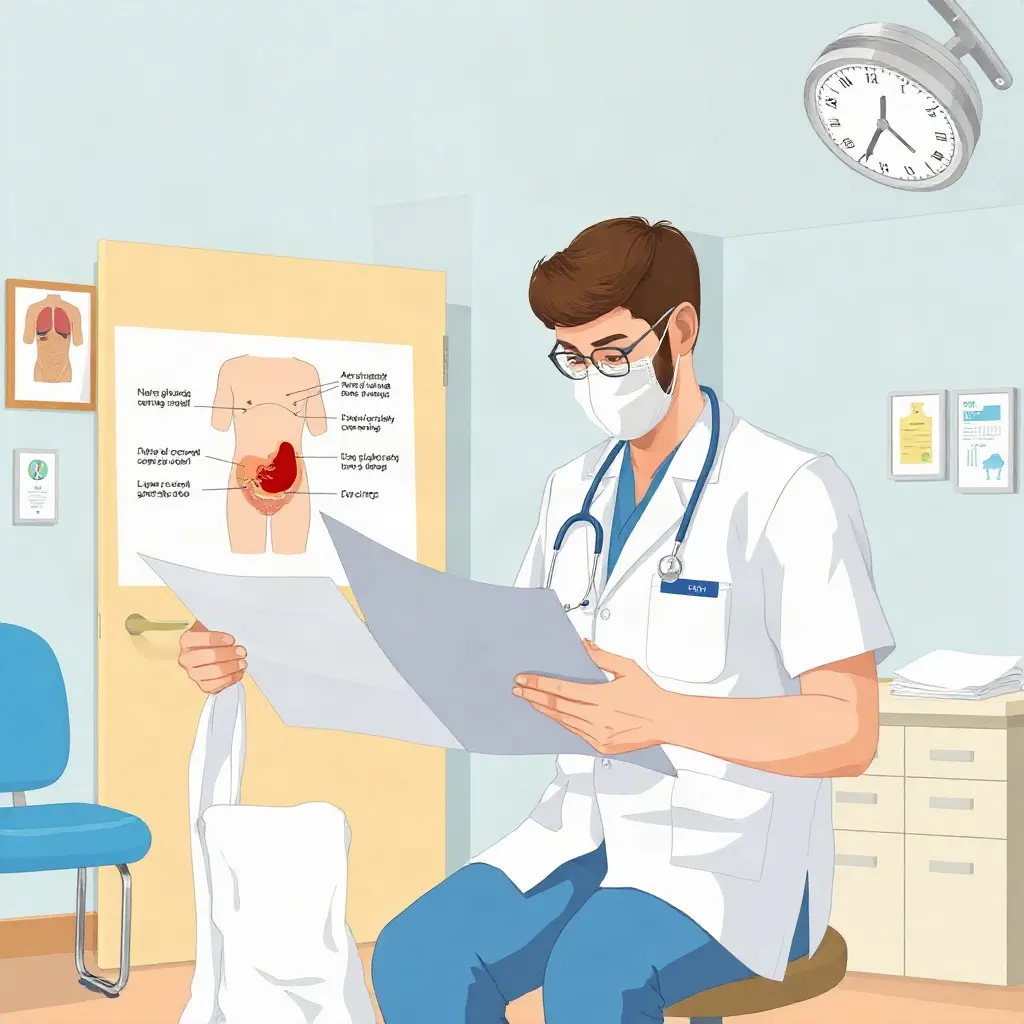
Possible checks include medical history, current medicines, blood pressure, pulse, breathing, blood tests, an electrocardiogram and other investigations when clinically indicated. The team may also review conditions such as diabetes, anaemia, high blood pressure, heart or lung disease. Smoking, alcohol use, fitness and weight can form part of optimisation discussions, but the appropriate preparation depends on the operation and overall health. The assessment is also an opportunity to discuss anaesthesia, consent, discharge arrangements and possible complications.
Open and laparoscopic repair options
Open repair uses an incision over the hernia, returns protruding tissue to its usual position and reinforces the weak area, commonly with surgical mesh where appropriate. Laparoscopic, or keyhole, repair uses several smaller incisions, a camera and specialised instruments. The choice depends on hernia location, size, previous operations, whether one or both sides are affected, anaesthetic suitability and the surgeon’s assessment.
Guy’s and St Thomas’ NHS Foundation Trust reports that hernia repair is often performed as day surgery, although an overnight stay can be required. 6 Possible risks include infection, bleeding, fluid collection, recurrence, persistent pain, reactions to anaesthesia and injury to nearby structures. Laparoscopic surgery has specific risks related to access and general anaesthesia, while open surgery has its own wound and recovery considerations. No technique is suitable for every case.
Waiting times, locations and costs
NHS waiting times are not normally published as a single national figure for every individual hernia operation. NHS England’s referral-to-treatment statistics monitor consultant-led elective pathways from referral through treatment, and the data are reported by specialty and pathway status. 4 A 2026 comparison using NHS England data places the general-surgery median at about 13 weeks, but describes this as a specialty-level measure rather than a forecast for one hernia procedure. 3
Assessment and treatment may take place at a district general hospital, a specialist general-surgery unit or a larger teaching centre. Examples include Guy’s and St Thomas’ NHS Foundation Trust in London and the Aintree, Broadgreen and Royal Liverpool sites within University Hospitals of Liverpool. Local referral arrangements, urgency, available theatre capacity and whether the pathway is routine or emergency can affect timing. NHS-funded treatment is governed by clinical need and local service arrangements rather than a commercial quotation.
| Route | What the figure represents | Cost context |
|---|---|---|
| NHS planned pathway | Referral, specialist assessment, decision, waiting list and treatment | Provided through NHS funding when clinically indicated |
| Private self-pay comparison | Published prices for hernia repair packages | About £3,678 to £5,160 in 2026 comparisons, with inclusions varying by provider 3 |
Recovery and follow-up after repair
Discharge planning usually covers wound care, pain relief, movement, driving, work and signs of complications. Day-case discharge is common in suitable cases, but the need for overnight observation depends on the operation, anaesthesia, health factors and recovery in the immediate postoperative period. Recovery length varies with the hernia, technique, physical demands of work and individual healing, so the hospital’s instructions take priority.
Follow-up may be arranged routinely or only if concerns arise, depending on the hospital and procedure. It can address wound healing, pain, swelling, activity progression and recurrence. Persistent or worsening symptoms should be discussed with the surgical team or another qualified professional. The NHS page and hospital guidance provide general information, but an individual assessment is required to determine diagnosis, urgency, suitability for surgery and the safest operative approach. 1 6
Sources
- Hernia - NHS: https://www.nhs.uk/conditions/hernia/
- Preoperative Assessment and Optimisation: https://www.uhliverpool.nhs.uk/services/service-finder/pre-op
- Hernia repair UK 2026: NHS Wait 13 Weeks vs Private from £3,678 | TreatCompare: https://www.treatcompare.com/nhs-vs-private/hernia-repair
- Referral to treatment waiting times statistics for consultant-led elective care for June 2026 - GOV.UK: https://www.gov.uk/government/statistics/referral-to-treatment-waiting-times-statistics-for-consultant-led-elective-care-for-june-2026
- e-Referral Service - NHS England Digital: https://digital.nhs.uk/services/e-referral-service
- Hernia repair - Overview: https://www.guysandstthomas.nhs.uk/health-information/hernia-repair