Knee osteoarthritis: 5 approaches to relieve daily discomfort: A UK treatment and cost guide
Key facts
- Common care begins with exercise, physiotherapy, activity adjustment and medicines selected with clinical advice.
- Published 2026 UK guides place private total knee replacement prices at about £10,000 to £17,000, depending on provider and package. 1 2
- Private knee replacement waiting times can be around four to six weeks at one provider, while NHS waits vary by area and service. 3
- NHS referral pathways can direct suitable cases to musculoskeletal services, orthopaedics or knee replacement assessment. 4
Knee osteoarthritis involves changes to the cartilage and other tissues inside the joint, and may cause pain, stiffness, swelling or reduced movement. The five approaches below describe commonly used strategies for managing daily discomfort, rather than guaranteed results. Diagnosis and treatment choices require assessment by a qualified healthcare professional, because similar symptoms can arise from injury, inflammatory arthritis or other conditions.
How knee osteoarthritis is assessed
Assessment commonly starts in primary care or a musculoskeletal service. A clinician considers symptoms, movement, stability, previous injury and other medical conditions. X-rays may help show cartilage loss, narrowing of the joint space or bony changes, although imaging findings do not always match the level of discomfort. NHS Highland describes osteoarthritis as involving worn or damaged cartilage, possible inflammation of surrounding tissues and osteophytes, sometimes visible on X-rays. 5
Referral pathways vary across the UK. The Devon commissioned pathway covers knee pain linked to osteoarthritis and referrals for elective knee replacement, while directing suspected infection, inflammatory arthritis, a locked knee or serious pathology into different routes. 4 A qualified professional should be consulted before treatment begins. Recent major trauma, a hot swollen joint, fever, a new mass or a genuinely locked knee may require urgent assessment rather than routine osteoarthritis care. 6
Approach 1: exercise and physiotherapy
Therapeutic exercise is a core non-surgical approach. Physiotherapy may use strengthening exercises for muscles supporting the knee, flexibility work, balance training and graded activity. The practical aim is to support movement and everyday function while avoiding a sudden increase in joint loading. Newcastle Hospitals describes conservative treatment, including physiotherapy and activity modification, as part of osteoarthritis management. 7
A physiotherapist can adjust exercises around mobility, strength, work demands and other joints affected by symptoms. Temporary muscle soreness or a short-term increase in discomfort can occur, particularly when activity changes quickly. A clinician may modify the programme if swelling, instability or unusual pain develops. Digital tools for mild to moderate hip or knee osteoarthritis are also covered by NICE guidance, but implementation and clinical suitability require professional judgement. 8
Approach 2: weight management and activity adjustment
Where excess body weight contributes to loading across the knee, a structured weight-management plan may form part of care. The purpose is not a particular appearance or a guaranteed outcome, but reducing mechanical stress and supporting general mobility. NHS Highland lists obesity as one factor associated with knee osteoarthritis, while also noting that causes are often a combination of factors rather than a single explanation. 5
Activity adjustment can include pacing demanding tasks, using lower-impact exercise and alternating movement with recovery periods. Walking aids, footwear changes or occupational advice may be considered after assessment. Weight management can be difficult where pain limits activity, and restrictive diets may carry nutritional risks. A GP, physiotherapist or registered dietitian can help determine a safe approach, particularly when other medical conditions or medicines affect exercise and diet.
Approach 3: medicines for symptom control
Medicines may be considered alongside exercise rather than as a replacement for rehabilitation. Depending on medical history, clinicians may discuss topical anti-inflammatory treatments, oral analgesics or anti-inflammatory medicines. Choice depends on age, kidney and stomach health, cardiovascular risks, allergies and other medicines. A pharmacist, GP or prescribing clinician should explain dosage, duration and possible interactions before use.
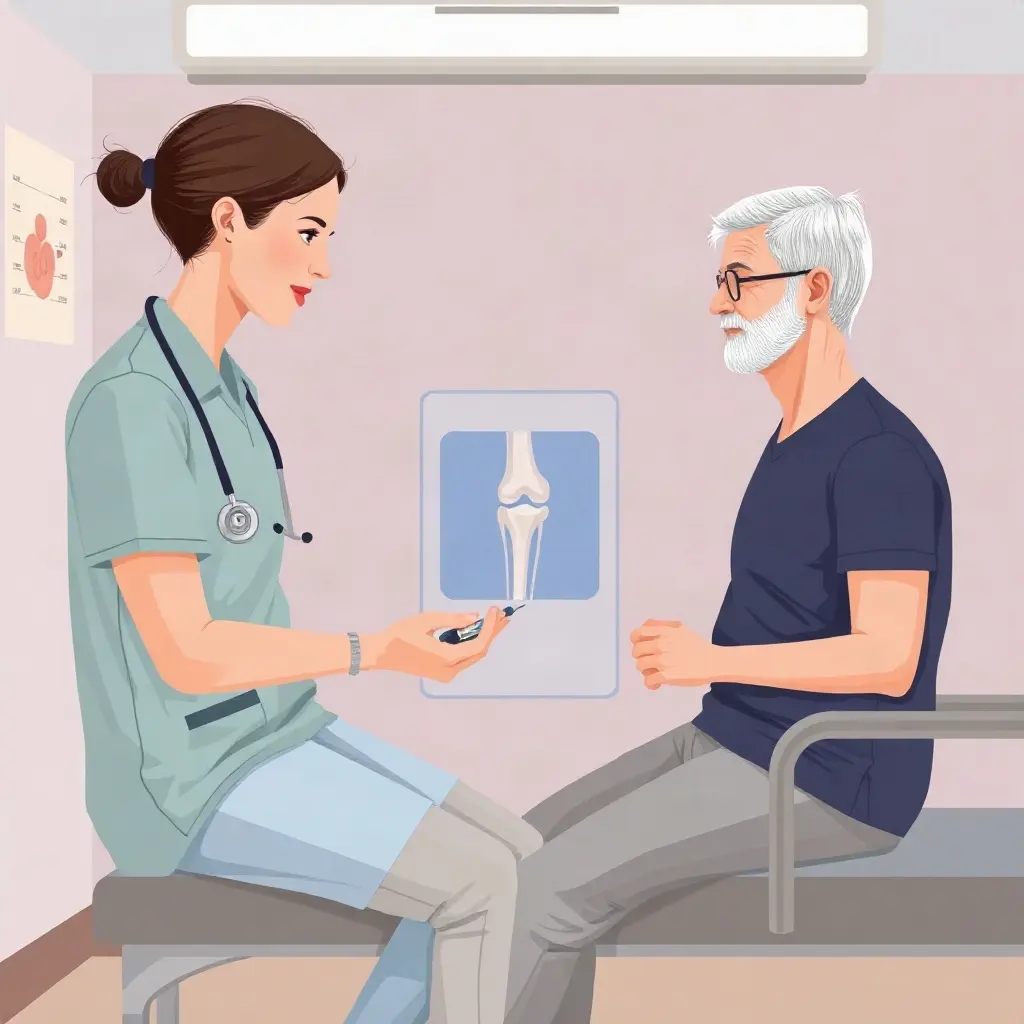
Potential adverse effects vary. Topical medicines can irritate the skin, while oral anti-inflammatory medicines can affect the stomach, kidneys or cardiovascular system in some people. Pain medicines may also cause drowsiness, constipation or dependence risks depending on the product. The safest option is therefore individualised, time-limited treatment review rather than routine long-term self-medication. Persistent symptoms despite medication may lead to physiotherapy, musculoskeletal assessment or specialist referral.
Approach 4: injections and other specialist options
Intra-articular corticosteroid injections are sometimes used when symptoms remain troublesome despite non-invasive measures. The medicine is placed into the joint by a trained clinician, with the intention of reducing inflammation and discomfort for a limited period. It is not a way to restore worn cartilage. Possible risks include infection, bleeding, temporary worsening of pain and changes in blood glucose, with suitability affected by other health conditions.
Hyaluronic acid injections may also be discussed in some private or specialist settings, but availability, local policy and evidence interpretation differ. Injection decisions should account for diagnosis, previous treatments and the possibility that symptoms come from another source. A clinician should explain expected duration, alternatives and complications. Injections should not delay urgent investigation of a hot, acutely swollen or severely restricted joint.
Approach 5: surgery and specialist referral
Knee replacement is generally considered when pain and functional limitation remain substantial despite appropriate non-surgical care and assessment confirms advanced joint disease. Total replacement substitutes damaged joint surfaces with an implant, while partial replacement is suitable only for selected patterns of disease. Surgery involves anaesthesia, infection and blood-clot risks, possible stiffness or persistent symptoms, rehabilitation and the possibility of later revision.
Arthroscopy is not a routine solution for uncomplicated degenerative osteoarthritis. Referral may involve a GP, physiotherapist-led musculoskeletal service, orthopaedic clinic or multidisciplinary pathway. Named examples in UK private care include Circle Health Group, Nuffield Health, Practice Plus Group, Ramsay's Woodthorpe Hospital and Spire Washington Hospital, but suitability depends on consultant assessment, location and clinical criteria. A Devon pathway specifically includes referrals for elective knee replacement and directs certain red-flag presentations elsewhere. 4
NHS and private pathways, prices and waiting times
The NHS route is publicly funded for eligible residents, with referral rules, clinical thresholds and waiting times varying across England, Scotland, Wales and Northern Ireland. A 2026 private provider comparison reported a four-to-six-week waiting time for its knee replacement service, while another 2026 guide reported an average NHS knee replacement wait of 28.7 weeks in January 2026. These figures describe different systems and should not be treated as a prediction for an individual case. 3 1
| Route or provider example | Published 2026 price or timing | Important context |
|---|---|---|
| Private UK total knee replacement | About £10,000 to £17,000 | Estimates vary by hospital, implant, consultant, location and package inclusions. 1 2 |
| Circle Health Group | From £13,020 | Consultation from £200 in the cited comparison; diagnostics and follow-up should be checked. 9 |
| Practice Plus Group | £13,799 | One cited page reports a four-to-six-week waiting time; package details can vary. 3 |
| Nuffield Health | £16,914 in the cited guide | Initial consultation from £200 in that comparison. 9 |
Private package prices commonly require careful checking for scans, extra hospital nights, enhanced implants, outpatient physiotherapy, readmission and complications. The cited comparison identifies consultations as an additional cost at several providers, while prices can differ between hospitals in the same group. 9 A qualified orthopaedic professional should determine whether surgery is appropriate before cost or waiting time is considered.
Sources
- Private Knee Surgery UK 2026: Costs, Hospitals & NHS Wait Times: https://goingprivateuk.co.uk/private-knee-surgery-cost-uk/
- Knee Replacement Cost UK 2026: NHS, Private, Abroad: https://www.theratravel.co.uk/blog/knee-replacement-cost
- How much do private knee replacements cost in the UK?: https://practiceplusgroup.com/knowledge-hub/how-much-does-knee-replacement-cost/
- Osteoarthritic Knee Pain Commissioned Pathway - South & West: https://southwest.devonformularyguidance.nhs.uk/referral-guidance/south-devon-torbay/musculoskeletal-joint-disorders/knee-pain-osteoarthritis
- Knee osteoarthritis - NHS Highland: https://www.nhshighland.scot.nhs.uk/your-services/all-services-a-z/orthopaedic/orthopaedic-conditions/knee-osteoarthritis/
- [PDF] Knee Pain Pathway (Age 16+): https://www.dgft.nhs.uk/wp-content/uploads/2026/10/Knee-Pain-v1.5.pdf
- Osteoarthritis (OA) hip and knee - Newcastle Hospitals NHS Foundation Trust: https://www.newcastle-hospitals.nhs.uk/services/newcastle-occupational-health-service/information-for-staff/physiotherapy/self-help-leaflets/osteoarthritis-oa-hip-and-knee/
- [PDF] Digital technologies for managing mild to moderate symptoms ...: https://www.nice.org.uk/guidance/htg766/resources/digital-technologies-for-managing-mild-to-moderate-symptoms-of-hip-or-knee-osteoarthritis-early-value-assessment-pdf-1809600887610565
- Knee Replacement Prices by UK Hospital Group 2026: https://www.orthovoyage.com/guides/private-knee-replacement-cost-by-hospital