Used panel trucks from government fleet auctions: a UK buyer's evidence-based guide
Key facts
- UK public-sector vehicles are generally sold through appointed commercial auctioneers rather than one central government auction website. 1
- Many auction sales add a buyer’s premium, VAT on that premium and, on some lots, 20% VAT on the hammer price. 1
- Commercial vans up to 3,500 kg usually need their first MOT after three years and an annual MOT thereafter. 2
- Manufacturer servicing commonly falls between 12,000 and 25,000 miles or 12 months, whichever comes first. 2
Used panel trucks from government fleet auctions are normally closed-body commercial vans that have completed public-sector work before being offered through an auctioneer. The process is different from buying through a retail showroom: vehicles are commonly sold as seen, inspection time can be limited, and the winning bid is only one part of the total cost. The important questions concern the selling authority, vehicle history, mechanical condition, VAT treatment, road legality and the work needed before regular commercial use.
How UK government fleet auctions operate
There is no single official UK government auction website. Central government departments, the Ministry of Defence, police forces and councils generally appoint commercial auctioneers to dispose of vehicles and other surplus assets. A 2026 guide identifies Witham Specialist Vehicles as an MoD sales agent, while police and council disposals can pass through auctioneers including Wilsons Auctions, John Pye, Brightwells, BPI Auctions and others. 1 3
Sales may be online, physical, public or restricted to the trade, depending on the auctioneer and the public body. Registration rules, bidding deposits, collection deadlines and payment procedures are set by the individual sale conditions. A public sale can permit private participation, but trade-only terms may require a business account or commercial credentials. The auction catalogue should therefore be treated as a legal document, not merely a vehicle description.
What panel trucks and government fleets usually involve
A panel truck is a light commercial vehicle with a fixed enclosed load body, usually configured with a short, medium or long wheelbase and a standard or high roof. Common uses include facilities work, engineering support, parks maintenance, deliveries and equipment transport. Government fleets can include council service vans, utility vehicles, police support vans and departmental transport, so the former use matters as much as the badge on the grille.
Make, model, engine, payload and wheelbase vary by department and replacement policy, meaning a government label does not identify one standard specification. Some vehicles may have shelving, racking, tow equipment, warning-light wiring or bulkheads. Specialist fittings can be useful, but they may also reduce load flexibility or leave holes and electrical changes after removal. Check the permitted gross weight, payload, axle limits, seat count and body dimensions against the intended work before bidding.
Maintenance history and mechanical condition
Public-sector fleets often follow planned servicing and inspection routines because vehicle downtime affects operational work. Public procurement records show large organisations commissioning structured commercial servicing, inspection, maintenance and repair programmes for light commercial vehicles and mobile plant. 4 5 That documentation can be valuable, but it does not prove that every component is near the end of its service life or that faults were absent.
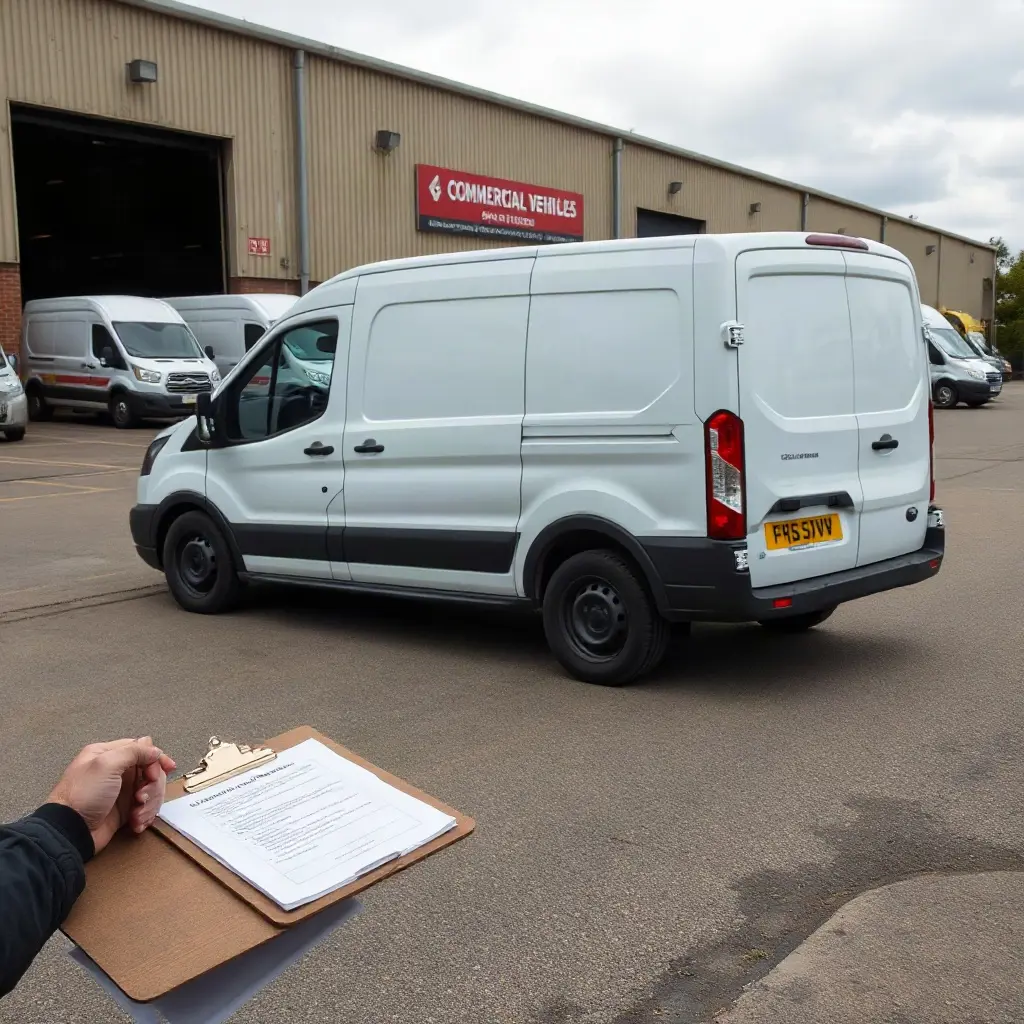
Read service invoices, inspection sheets and repair notes alongside the mileage. Examine cold-start behaviour, warning lights, clutch take-up, gearbox operation, steering play, braking performance, suspension noise, tyre wear, corrosion, leaks and the load floor. A van used for tools or roadside work may have heavy door, brake and suspension wear despite regular servicing. The MOT is only a snapshot, not a substitute for a mechanical inspection or a record of future maintenance needs. 2
Fees, VAT and the real acquisition cost
The hammer price is not the complete financial calculation. UK public-sector auction guides state that many sales add a buyer’s premium, VAT on the premium and, where a lot is marked plus VAT, 20% VAT on the hammer price. 1 3 The exact treatment depends on the auction conditions, the seller’s VAT status and the wording attached to each lot.
Additional costs can include transport, collection storage, diagnostic work, tyres, brakes, battery replacement, body repairs, decals or equipment removal, MOT work, road tax and registration administration. Commercial use may also require shelving, loading equipment or safety modifications. A sound comparison uses the full commissioned cost rather than comparing only the bid against a retail reference. Insurance classification can depend on vehicle use, weight, modifications and driver details, so it should be checked before commitment.
Checks before bidding and collecting
Start with the registration number, VIN, mileage, MOT record, taxation position and any recorded category or damage information. Match the VIN on the vehicle to the auction description and documents. Inspect the underside, chassis rails, sills, wheel arches, roof seams and rear doors, because commercial corrosion and water ingress may be more significant than cosmetic paint damage. Photograph evidence of missing keys, damaged locks, warning lights and incomplete fittings before the sale closes.
Ask whether the vehicle starts, whether a road test is permitted and whether the auction house offers inspection appointments. If independent inspection is restricted, the risk is higher and the bidding limit should reflect that uncertainty. Review collection rules carefully because storage charges can apply after the stated deadline. Government origin also does not guarantee low mileage, gentle use or complete records, and auction sales commonly provide limited or no warranty.
Making an ex-government van road legal
Before public-road use, confirm that the vehicle is correctly registered, has the required MOT, is taxed where applicable and meets construction and use requirements. For a van that has failed its MOT or is unsafe, moving it on public roads may be unlawful except in narrowly defined circumstances connected with a pre-arranged test. A transporter or recovery service may be necessary while repairs are completed.
Remove or properly alter government logos, callsigns, reflective markings, warning equipment and other identifiers that could imply official status. Check that modifications do not obstruct lights, registration plates, load restraints or driver visibility. Many panel trucks fall within the N1 light commercial category, which can affect rules such as speed limits on particular roads. After commissioning, keep invoices, inspection records and modification details so future servicing, taxation and resale decisions are based on a clear paper trail.
Sources
- UK Government Surplus Auctions Explained (2026): How They Work | GovAuctions.app: https://govauctions.app/uk/guides/uk-government-surplus-auctions-explained
- UK vehicle maintenance schedule 2026: what's due - Autodue: https://autodue.co.uk/blog/vehicle-maintenance-schedule-when-everything-needs-doing-uk-2026
- Best UK Government Auction Sites & Auctioneers (2026): Ranked & Compared | GovAuctions.app: https://govauctions.app/uk/guides/best-uk-government-auction-sites
- Fleet Management & Maintenance Outsourced Services - Find a Tender: https://www.find-tender.service.gov.uk/Notice/022569-2026?origin=SearchResults&p=2
- Commercial Servicing, Inspection, Maintenance and Repair (SIMAR) 2027 | Public sector tender | Stotles: https://www.stotles.com/tenders/2026/W34/commercial-servicing-inspection-maintenance-and-repair-simar-2027