7-night all-inclusive Maldives beach holidays with flights included and typical prices
Seven-night all-inclusive Maldives beach holidays with flights included combine international air travel, a resort stay and meals under one package price, though the precise inclusions differ. This article explains the usual itinerary, typical costs, resort and flight arrangements, and the details that can change the final price.
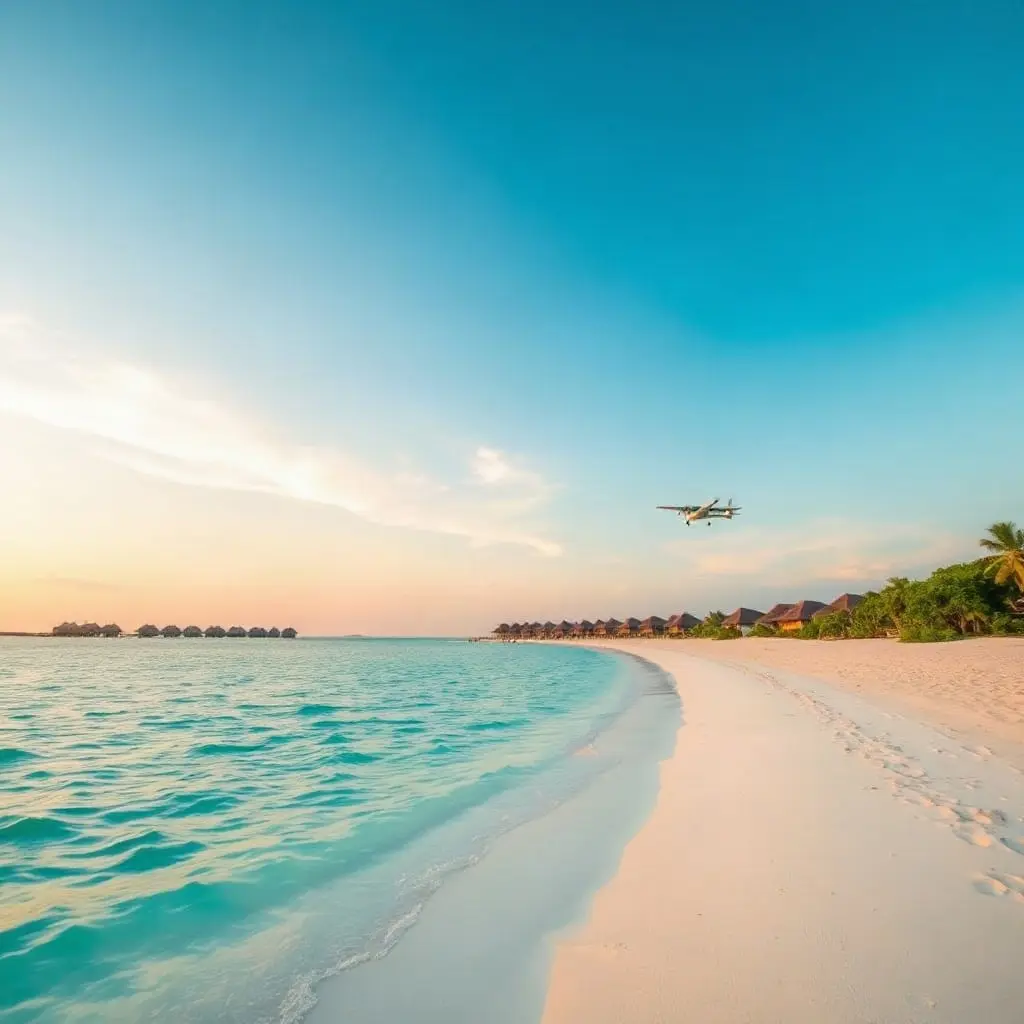
For two adults sharing a room, a broad estimate is about US$2,500 to US$5,500 per person for seven nights with economy flights from a major international hub; premium resorts and longer or more complex flight routes can push the total above US$7,000 per person. The package commonly includes accommodation, meals and some drinks, but transfers, taxes, baggage and activities may be treated differently. A seaplane or domestic flight may be needed after arrival in Malé, and that transfer can add substantial cost if it is not included.
What seven nights usually covers
A seven-night Maldives holiday normally means seven nights in a resort room, not seven full days at the destination. Flight schedules often mean the first day is largely spent travelling, while the return journey may begin before the final night has ended. For that reason, the flight itinerary and the resort’s check-in and check-out times matter when comparing packages.
Most itineraries start at Velana International Airport near Malé, followed by a transfer to an island resort. Depending on the island, the onward journey may be a speedboat, domestic flight, seaplane or a combination. Some seaplane services operate only during daylight, so a late arrival can require an overnight stay near the airport or a different transfer arrangement.
What all-inclusive usually includes
All-inclusive Maldives holidays generally cover accommodation, breakfast, lunch and dinner, with drinks included according to the resort’s plan. Some properties serve meals in a main restaurant, while others provide a choice of venues or set menus. The plan may include selected soft drinks, water, tea and coffee, and alcoholic drinks such as house wine, beer or standard spirits.
The label does not mean every item or activity is covered. Premium drinks, speciality restaurants, room service, spa treatments, diving, motorised water sports and excursions can cost extra. Resorts may also define serving hours, restaurant reservations and eligible outlets. A half-board plan usually covers breakfast and dinner, while full board adds lunch; these are not equivalent to all-inclusive, especially where drinks are separately charged.
How flights and transfers fit into the price
Packages described as Maldives holidays with flights usually include an international return flight from a specified departure airport, but the fare rules can differ. A ticket may involve one or more connections, and baggage allowances, seat selection and schedule changes depend on the airline and fare. The airport used for departure also makes a major difference to the total price, so there is no single airfare that applies to all travelers.
Velana International Airport is the principal international gateway. Resort transfers are separate from the international flight itself, even when bundled into a package. Nearby islands are often reached by speedboat; distant atolls may require a domestic flight and boat transfer or a seaplane. These transfers can cost several hundred US dollars per person for a return journey at some resorts, and seaplane baggage limits may be lower than the international allowance.
Typical prices for seven nights
Approximate package prices for one person, based on two people sharing a room and economy flights from a major international hub, commonly fall around US$2,500 to US$5,500 for seven nights. Lower room categories or simpler properties can sit near the lower end, while overwater villas, high-end resorts, distant transfers and peak travel dates can take a package above US$7,000 per person. These are broad market estimates, not fixed quotations.
Prices depend on departure city, connection length, travel season, room type, occupancy and what the meal plan covers. A beach villa is often less costly than an overwater villa, while a private pool or direct lagoon access can raise the rate. The total may also change if taxes, resort transfers or checked baggage are excluded from the displayed package figure. A single traveler usually pays more per person because the room cost is not shared.
How package prices change across dates and options
Maldives holiday packages are affected by demand and weather patterns. The drier period, broadly from December through April, is popular and can carry higher air and resort rates, especially around major holiday periods. The wetter southwest monsoon period, broadly from May through October, can bring more rain and rougher seas, although conditions vary and showers are not necessarily continuous.
Packages with similar headline prices may have different value because one includes return transfers and a broader drinks plan while another covers only accommodation and meals. Lower-cost options may use a standard beach room, a longer connection or a simpler resort. Prices can also differ between departure airports and when flights are combined with separate resort arrangements. These differences explain why price comparisons need to account for the whole itinerary rather than the room rate alone.
Who arranges the package and how booking works
Tour operators, travel agencies, airlines and resort operators can each offer package arrangements, while some travelers combine flights and accommodation independently. The airline sets its fare rules and flight schedule; the resort sets room rates, meal-plan details and many property rules; and the package organizer sets the terms for the combined itinerary. Local transfer providers operate the onward journey, sometimes under arrangements made by the resort.
The usual path is to choose a departure airport and dates, compare the flight itinerary and resort details, then review what the total covers before agreeing to the organizer’s terms. The confirmation should identify the accommodation, meal plan, flight baggage rules, transfer type and any excluded charges. Changes and cancellations are governed by the relevant airline, resort and package terms, which may not be identical across providers.
How resort types differ
Most Maldives resorts occupy their own islands, but they vary considerably in scale and setting. Some have a broad sandy beach and several restaurants; others are smaller, with fewer facilities and a quieter layout. Beach villas sit on land, while overwater villas extend above the lagoon. A room’s category affects both cost and practical details such as distance to dining areas, beach access and exposure to sun or waves.
House reefs are another point of difference. At some islands, snorkeling access is close to shore; at others, the reef is farther away or reached by boat. A resort island should not be confused with a local-island guesthouse stay: guesthouses can provide a lower-cost way to visit the Maldives, but they are not typically private-island all-inclusive resorts, and local rules and available services differ. Resorts may also have different transfer options depending on their distance from Malé.
Lower-cost ways to approach the trip
Travelers looking for lower-cost Maldives holidays can compare a standard beach room with an overwater villa, consider a guesthouse on a local island, or choose a meal plan that suits how much time will be spent dining at the resort. A guesthouse stay is a different kind of trip: meals and activities are usually paid for separately, and alcohol availability can be restricted on inhabited local islands. It should not be compared directly with an all-inclusive resort package without adding those costs.
Travel dates and transfers are also major cost drivers. A property reachable by speedboat may avoid the expense of a seaplane, while a longer flight connection may reduce airfare but add travel time. The lowest quoted package total may omit transfers or use a meal plan with limited inclusions, so the full cost can be higher after meals, transport and activities are added.
Insurance and practical risks
Maldives travel insurance is worth considering because medical facilities on remote islands are limited and serious cases may require evacuation to Malé or another country. A policy’s medical limit, emergency transport cover and assistance arrangements are especially relevant for resort stays far from the main airport. Coverage varies, and pre-existing conditions may need to be declared under the insurer’s rules.
Scuba diving, snorkeling excursions, water sports and travel disruption can have separate conditions or exclusions. A policy may restrict coverage by depth, certification, equipment or whether an activity is supervised. Flight delays can also affect a separately arranged transfer or overnight stay. The insurance contract, rather than the resort package description, determines what is covered and what documentation is needed if a claim arises.
Reading the package price clearly
Before comparing Maldives holiday packages, separate the main components: return international airfare, seven resort nights, meal plan, airport transfers and applicable taxes. Then note any extras such as checked baggage, premium beverages, resort dining, excursions or overnight accommodation caused by flight timing. The package price can be quoted per person while the resort room itself is priced per room, so occupancy assumptions should be clear.
For a realistic comparison, use the same departure airport, dates, room category and transfer basis. A package that includes all transfers and meals may have a higher headline figure than one that leaves those items out but a lower final cost than expected. This is also why the phrase all-inclusive should be read as a particular resort plan, not as a guarantee that every expense during seven nights is covered.