5 kW Home Solar Systems in Kenya: Typical Prices with Battery Backup
A 5 kW home solar system in Kenya generally combines solar panels with an inverter capable of supplying up to 5 kilowatts of power, plus batteries for use when sunlight is unavailable. This guide explains the equipment involved, approximate prices in Kenyan shillings, practical backup capacity, and the usual route through Kenyan solar installers and electricity authorities.
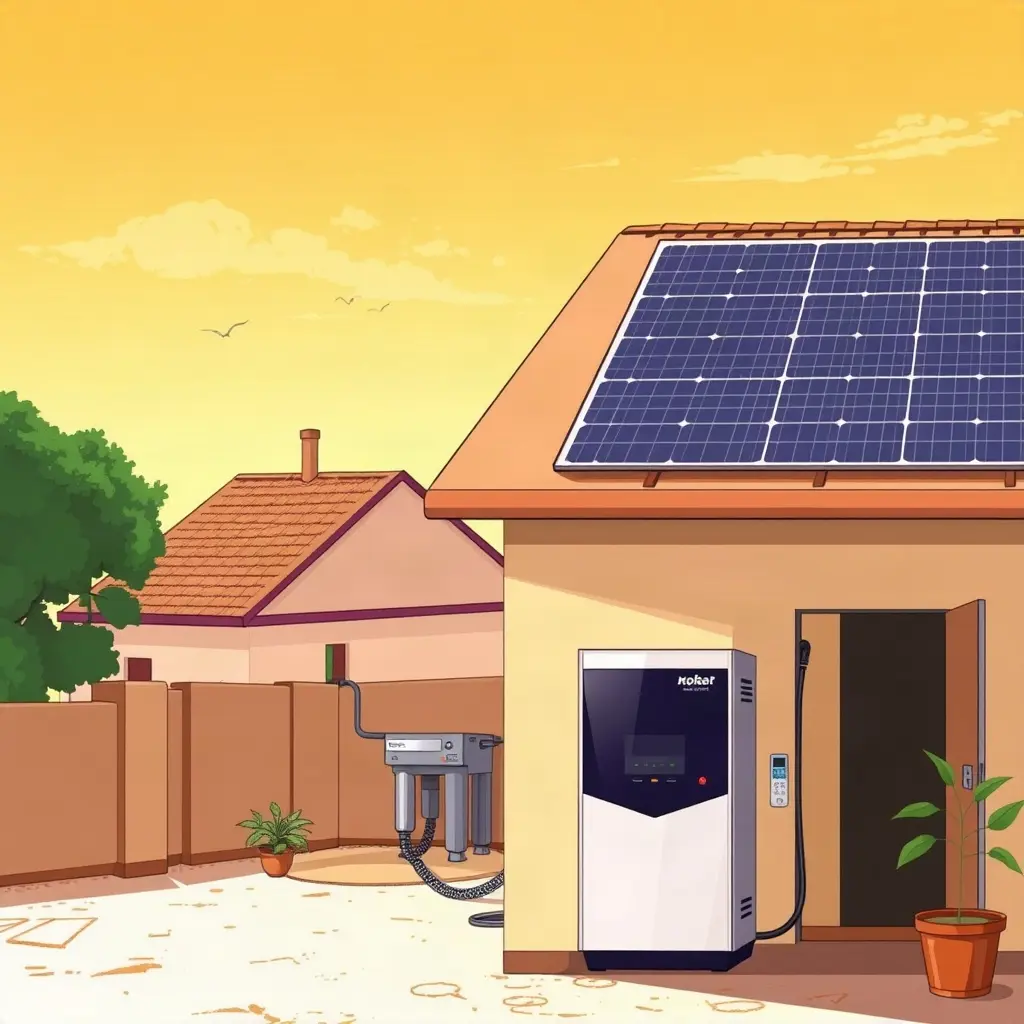
What a 5 kW home solar system means in Kenya
The 5 kW figure normally refers to the continuous output rating of the inverter, not the amount of energy stored in the battery. It indicates that the system can run loads totalling up to about 5,000 watts at one time, subject to the inverter's surge rating and the installer’s design. A kettle, refrigerator, television, lighting circuits, computers and a water pump may be used together, but high-power appliances can quickly approach the limit.
A typical design uses about 5.5 to 6.5 kilowatt-peak (kWp) of panels because panel output changes with cloud, heat, dust, shading and the angle of the roof. With common 450 to 550 watt panels, this represents roughly 10 to 14 panels. The full installation usually includes a hybrid inverter, roof or ground mounting, direct-current and alternating-current protection, isolators, earthing, cabling, a monitoring device and labour.
Typical equipment and system configurations
Most Kenyan homes considering battery backup use a hybrid inverter. It can take energy from the panels, charge the battery, supply household circuits and draw from the public grid when solar and stored energy are insufficient. A grid-connected system may export surplus electricity only if the relevant connection and metering arrangements have been approved. An off-grid system instead relies on its panels and batteries, commonly with a generator as an additional backup source.
The battery chemistry affects both price and usable capacity. Lithium iron phosphate batteries are widely used in newer residential installations because a larger share of their rated capacity can normally be used and their cycle life is generally longer than that of lead-acid batteries. Lead-acid banks can have a lower initial equipment cost, but their usable capacity is more limited and ventilation, temperature and maintenance requirements can be different. The inverter, battery management system and protection equipment must be electrically compatible.
- Solar array: Approximately 5.5-6.5 kWp of panels for many 5 kW designs.
- Inverter: A hybrid unit rated around 5 kW, with an appropriate surge rating for motors and pumps.
- Battery bank: Common residential choices range from 5 kWh to 15 kWh or more.
- Balance of system: Mounting rails, breakers, surge protection, earthing, cables and monitoring.
Typical prices for 5 kW systems in Kenya
Approximate market prices for a complete 5 kW installation with battery backup commonly fall between KSh 550,000 and KSh 1,300,000. The lower part of that range is more likely to involve lead-acid storage or simpler equipment. A system using about 10 kWh of lithium storage often falls around KSh 650,000 to KSh 1,000,000, while a system with approximately 15 kWh of lithium storage may be about KSh 800,000 to KSh 1,300,000. These are broad estimates rather than fixed quotations.
For context, the panels, inverter, mounting and electrical installation without a large battery may account for roughly KSh 350,000 to KSh 600,000. Adding a 5 kWh battery may add about KSh 150,000 to KSh 300,000, while 10 to 15 kWh of lithium storage can add approximately KSh 300,000 to KSh 700,000. Import duties, exchange rates, battery brand and model, roof complexity, cable distances, transport and the need to upgrade a distribution board can move the final figure outside these bands.
How much battery backup a 5 kW system provides
Battery capacity is measured in kilowatt-hours, or kWh. A 10 kWh battery does not normally provide 10 kWh to household appliances because reserve limits and conversion losses reduce the usable amount. A lithium battery might provide roughly 8 to 9 kWh of practical usable energy, while a lead-acid battery may be designed around a smaller usable portion to reduce wear.
Approximate examples illustrate the difference. A 5 kWh battery could run lights, a router, television and a refrigerator for several hours, but may not support those loads throughout the night. A 10 kWh battery may cover essential circuits for about 8 to 14 hours when average demand is around 600 to 1,000 watts. A 15 kWh battery can extend that period, although a home using electric cooking, instant water heating, irons or pumps may exhaust it much sooner.
- Essential lighting, internet equipment and refrigeration: often about 150-400 watts when running.
- Television, computers and charging: commonly another 100-400 watts, depending on use.
- Water pumps, kettles, irons and microwave ovens: often 800-2,500 watts individually.
- Electric showers, cookers and space heaters: usually unsuitable for long battery operation unless the battery bank is substantially larger.
What affects the price in Kenyan homes
Battery size is usually the largest cost difference, followed by battery chemistry and the inverter’s capabilities. A home that needs only lighting, refrigeration and communications during an outage can use a smaller battery than a home that wants to operate pumps, entertainment equipment and kitchen appliances. Designing a separate essential-load circuit can reduce the required storage compared with backing up every circuit.
Roof shape and location also matter. A shaded roof may require a different panel layout, optimisers or extra mounting work. Long cable runs, a detached building, difficult roof access, lightning protection and changes to the main distribution board add labour and materials. Prices can also differ between Nairobi, Mombasa, Kisumu, Nakuru and rural areas because of transport, local labour availability and site conditions. Solar production is affected by seasonal cloud and dust, so system sizing should use the actual roof and household load rather than the panel nameplate alone.
Who provides and approves installation in Kenya
Private solar companies, electrical contractors and independent solar technicians normally design and install residential systems. Technical licensing for solar photovoltaic work is overseen by the Energy and Petroleum Regulatory Authority, commonly known as EPRA. The installer’s quotation should identify the equipment ratings, battery capacity, expected backed-up circuits, labour scope and any electrical modifications rather than presenting only a single system label.
The usual process begins with an electricity-bill review, an appliance and outage assessment, and a roof or ground survey. The provider then selects the panel array, inverter and battery, prepares a written design and prices the equipment and labour. After installation, the system should be tested for polarity, earthing, protection operation, battery communication and changeover behaviour. If the system will operate in parallel with Kenya Power’s network, the interconnection and metering requirements are set by Kenya Power and the applicable national electricity rules. A standalone backup system does not follow the same grid-export pathway.
Practical limits and risks to understand
A 5 kW label does not mean that every appliance can run at once or that the battery will last all night. Motor starting currents, cloudy weather, panel shading, battery reserve settings and inverter efficiency all affect performance. Oversizing the panel array can improve daytime charging, but it does not automatically provide longer nighttime backup unless storage is also increased.
Electrical work carries fire, shock and equipment-damage risks when batteries, protection devices or earthing are poorly installed. Batteries should be placed in a suitable, ventilated or manufacturer-approved location away from heat and flooding. The most useful comparison between quotations is therefore not only the total KSh figure, but also the usable battery capacity, backed-up load, panel capacity, inverter output, protection equipment, installation scope and the party responsible for compliance testing.